
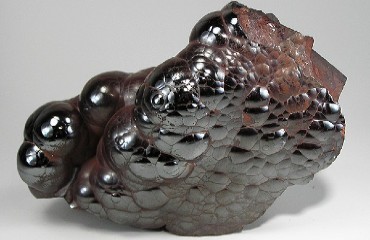
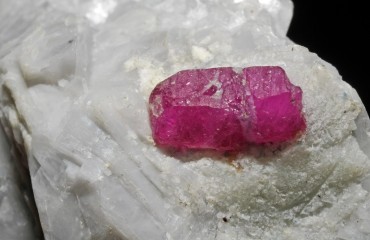
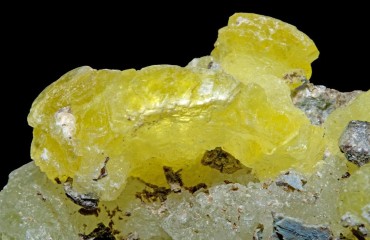
Hematite, Corundum var. Ruby & Brucite Image Credits – Robert M. Lavinsky CC-BY-SA-3.0, Parent Géry CC BY-SA 3.0, Parent Géry CC BY-SA 3.0
The oxide and hydroxide groups of minerals form a diverse and significant class that occupies an important position in mineralogy. While they are not as visually striking as silicates or as economically vital as sulfides, oxides and hydroxides are essential to our understanding of the Earth’s crust, weathering processes, and the chemistry of ore formation. They include familiar species such as hematite, magnetite, corundum, goethite, and bauxite, many of which are crucial industrial ores and prized collector minerals.
Composition and Classification
Oxide minerals are composed of one or more metallic elements combined with oxygen. Their general formula is expressed as Metal (M) + Oxygen (O), where the ratio of oxygen to metal depends on the metal’s valence state. Examples include hematite (Fe₂O₃), magnetite (Fe₃O₄), cassiterite (SnO₂), and corundum (Al₂O₃). These minerals are characterised by strong ionic bonding, hardness, and high specific gravity due to the close packing of atoms within their crystal lattices.
The hydroxides are closely related but include the hydroxyl radical (OH⁻) in their structure. In many cases, hydroxides form by alteration or weathering of primary oxides. Classic examples include goethite (FeO(OH)), brucite (Mg(OH)₂), and gibbsite (Al(OH)₃). Hydroxides tend to be less dense and softer than oxides, reflecting their lower bond strength and higher water content.
Mineralogists often classify these two groups together because they share similar chemical and structural characteristics, and many minerals show intermediate compositions – part oxide, part hydroxide – depending on environmental conditions.
Formation and Occurrence
Oxide minerals form in a variety of geological environments. They are common as primary minerals in igneous and metamorphic rocks, where they crystallise directly from magmas or recrystallise under high-temperature conditions. For instance, magnetite is a common accessory mineral in granites, gabbros, and basaltic rocks, while corundum develops in aluminium-rich metamorphic rocks such as marbles and gneisses.
Oxides are also typical residual products of weathering and hydrothermal alteration. When sulfides or silicates are exposed to oxygenated water at the Earth’s surface, metals such as iron, manganese, and aluminium combine with oxygen or hydroxyl ions to form new minerals. This process produces the earthy iron oxides and hydroxides – limonite, goethite, and hematite – that colour soils and give red and brown hues to landscapes.
Hydroxides, on the other hand, often represent the end products of weathering. In tropical and subtropical climates, prolonged leaching removes soluble silica and bases, leaving aluminium and iron concentrated as 'lateritic soils' rich in gibbsite and goethite. Such deposits are the world’s main sources of aluminium ore – bauxite – which is actually a mixture of several hydroxide minerals, including gibbsite, boehmite, and diaspore.
Notable Members and Properties
The oxide group includes many important species:
Hematite (Fe₂O₃): One of the most abundant and widespread oxides, hematite forms steel-grey metallic crystals or earthy red masses. It is the principal ore of iron and the pigment responsible for red ochre.
Magnetite (Fe₃O₄): A mixed-valence iron oxide and natural magnet, magnetite exhibits strong magnetic properties and occurs in both igneous and metamorphic rocks.
Corundum (Al₂O₃): Second only to diamond in hardness, corundum occurs as colourless, blue, or red crystals—the gem varieties are sapphire and ruby.
Cassiterite (SnO₂): The chief ore of tin, cassiterite forms in hydrothermal veins and alluvial deposits, displaying a brilliant adamantine lustre.
Chromite (FeCr₂O₄): The primary ore of chromium, occurring in ultramafic rocks and layered igneous intrusions.
Among the hydroxides, the most notable include:
Goethite (FeO(OH)): A common iron hydroxide forming brownish botryoidal masses or acicular crystals. It is often a pseudomorph after pyrite or marcasite.
Brucite (Mg(OH)₂): A soft, pearly mineral found in serpentinite and dolomitic marbles, sometimes forming flexible plates.
Gibbsite (Al(OH)₃): A major component of bauxite and a key ore of aluminium.
Economic and Scientific Importance
The oxides and hydroxides are among the most important ore minerals on Earth. Iron, aluminium, chromium, tin, manganese, and titanium are extracted primarily from these minerals. Entire industrial regions – such as the Mesabi Range of Minnesota, the iron provinces of Brazil, and the lateritic bauxite belts of Australia and Guinea – owe their prosperity to oxide and hydroxide deposits.
Beyond their economic significance, these minerals are also valuable indicators of geochemical conditions. The stability of an oxide or hydroxide depends on oxygen availability, pH, and temperature. By studying their assemblages, geologists can reconstruct the oxidation history of rocks or identify zones of hydrothermal alteration associated with ore formation.
Aesthetic and Collecting Interest
Although oxides are often viewed as utilitarian “ore minerals”, many of them are highly attractive. Fine crystals of hematite from Brazil or England display mirror-like metallic lustre, while radiating goethite and limonite pseudomorphs produce graceful natural sculptures. Transparent red spinel twins of cuprite (Cu₂O) and iridescent films of hematite on quartz provide dazzling colour.
Collectors appreciate oxides and hydroxides not only for their beauty but also for their scientific value – they illustrate oxidation, weathering, and pseudomorphism better than almost any other mineral group.
Conclusion
The oxide and hydroxide minerals embody the dynamic interplay between Earth’s deep interior and its surface oxygen-rich environment. From the magnetic grains of magnetite crystallised in molten rock to the rusty crusts of goethite formed by rainwater and time, these minerals record the planet’s continual transformation. They are the link between the fiery origins of ores and the gentle processes of decay that sculpt the surface – a quiet, enduring testimony to the chemistry of oxygen that shapes our mineral world.
If you are interested in adding specimens of oxide or hydroxide minerals to your collection, click HERE.


