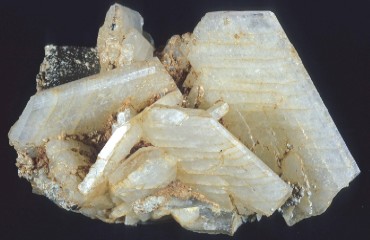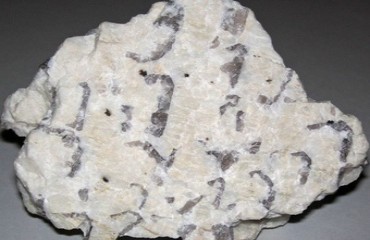
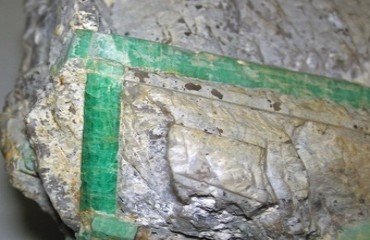
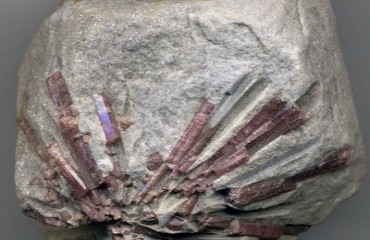
Pegmatite Graphic Granite, Emeralds in Pegmatitic Granite, Lepidolite Mica – Image Credits: all James St. John
Pegmatites are among the most fascinating and visually spectacular geological formations on Earth, prized by mineral collectors for their extraordinary crystal sizes, rare mineral species, and often gem-quality specimens. These coarse-grained igneous rocks form during the final stages of magma crystallisation and provide a unique window into the chemical evolution of the Earth’s crust.
What Are Pegmatites?
Pegmatites are extremely coarse-grained igneous rocks, typically composed of minerals such as quartz, feldspar, and mica. What sets them apart is the size of their crystals – often several centimetres across, but in some cases reaching metres in length. These giant crystals form because pegmatites crystallise from highly evolved, water-rich melts that allow ions to migrate freely, promoting rapid crystal growth.
Most pegmatites are granitic in composition, meaning they share a similar chemistry to granite but differ dramatically in texture. They often occur as dykes or veins intruding into surrounding rock, particularly in regions associated with continental crust and mountain-building processes.
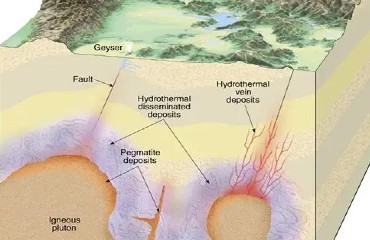
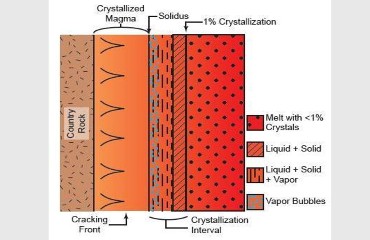
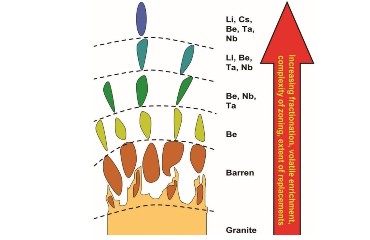
Pegmatite Origin, Pegmatite Zoning, Element Concentration - Image Credits : geodepositos, answersresearchjournal, MAC
Formation of Pegmatites
Pegmatites form during the final stages of magma crystallisation, a process known as fractional crystallisation. As a magma body cools, early-forming minerals such as olivine, pyroxene, and plagioclase crystallise first, removing key elements like iron, magnesium, and calcium from the melt. This leaves behind a residual melt enriched in silica, alkali elements (such as lithium, sodium, and potassium), and volatile components including water, fluorine, and boron.
This residual melt is crucial to pegmatite formation. The high concentration of volatiles lowers the viscosity of the melt and lowers its solidification temperature, allowing it to remain fluid even as surrounding rocks solidify. This enables the melt to migrate into rock fractures, cracks and cavities, where it rapidly crystallises to form pegmatites.
Water plays a particularly important role. It enhances ion mobility and promotes the growth of large, well-formed crystals. In some cases, pegmatites also involve hydrothermal processes, where mineral-rich fluids continue to deposit material after the initial crystallisation phase.
Chemical Processes and Zoning
Pegmatites are chemically complex systems and often display internal zoning, reflecting changes in temperature, pressure, and chemical composition during crystallisation. A typical pegmatite may be divided into several zones:
Border zone: Fine-grained material formed rapidly against the host rock.
Wall zone: Coarser crystals of quartz, feldspar, and mica.
Intermediate zone: Increasingly coarse crystals, often with accessory minerals.
Core zone: May contain massive quartz or large crystal aggregates.
Open spaces (mairolytic cavities), or "pockets," may develop where crystals freely grow into voids, producing the exceptional specimens so prized by collectors.
Classification
In very evolved pegmatites, rare elements start to build up to high levels. This happens because, as the melt cools and minerals begin to form, most common elements (like silicon, aluminium, iron, etc.) are used up first. The remaining melt becomes increasingly enriched in elements that don’t easily fit into those early minerals – these are called “incompatible elements".
Because they don’t become incorporated early on, these rare elements (such as lithium, caesium, tantalum, niobium, yttrium, and others) stay in the leftover melt. As crystallisation continues, they become more and more concentrated, eventually combining and forming their own rare minerals.
Pegmatites rich in lithium, caesium, and tantalum are known as LCT pegmatites. These are the classic sources of minerals like spodumene, lepidolite, and tantalite. Another group, called NYF pegmatites (niobium–yttrium–fluorine), form from slightly different source magmas and tend to produce minerals rich in niobium, yttrium, and rare earth elements.
Within these groups, pegmatites can be further divided into subtypes based on the main minerals present – for example, elbaite-type (rich in colourful tourmaline) or beryl–columbite-type (where beryl and niobium minerals dominate).
In simple terms: the rare elements come from the original magma but only become concentrated at the very final stages of crystallisation, when everything else has already formed.
Important Minerals Found in Pegmatites
Pegmatites are renowned for their mineral diversity and are a primary source of many rare and economically important elements. Common minerals include:
- Quartz – Often massive or forming large, well-developed crystals.
- Feldspar – Including orthoclase and albite, sometimes in giant crystals.
- Mica – Muscovite and biotite, often forming large sheets.
More specialised and collector-important minerals include:
- Spodumene – A lithium-bearing mineral, with gem varieties such as kunzite.
- Tourmaline – Particularly elbaite, found in a wide range of colours.
- Beryl – Including aquamarine and emerald.
- Lepidolite – A lithium-rich mica, often lilac in colour.
- Columbite–tantalite – Important ores of niobium and tantalum.
These minerals form due to the enrichment of incompatible elements in the final stages of crystallisation, making pegmatites critical sources for lithium, rare earth elements, and other strategic metals.
Key Pegmatite Localities
Several regions around the world are renowned for their pegmatites and the exceptional mineral specimens they produce:
Minas Gerais, Brazil – Perhaps the most famous pegmatite region globally, known for spectacular tourmaline, aquamarine, and topaz.
Himalaya Mine, California, USA – Known for its vibrant pink and green tourmalines.
Tanco Mine, Manitoba, Canada – A major source of lithium minerals such as spodumene and pollucite.
Erongo Region, Namibia – Produces a wide variety of high-quality collector specimens, including beryl and tourmaline.
Afghanistan and Pakistan (Hindu Kush region) – Famous for gem-quality tourmaline, kunzite, and aquamarine from high-altitude pegmatites.
Madagascar – World-renowned for gem-quality tourmalines, sapphires and rubies.
Other notable regions include Mozambique and parts of Scandinavia, all of which host important pegmatite fields.
Why Pegmatites Matter
Pegmatites are not only scientifically significant but also economically and aesthetically important. They are key sources of lithium and other rare elements essential for modern technologies, including batteries and electronics. For collectors, they represent some of the finest mineral specimens available, often combining large size, exceptional clarity, and vivid colour.
From a geological perspective, pegmatites provide insights into the final stages of magmatic evolution and the behaviour of rare elements in the Earth’s crust. Their study helps geologists understand processes such as fluid migration, element partitioning, and crystal growth under unique conditions.
In summary, pegmatites occupy a special place in both geology and mineral collecting. Their combination of extreme crystal size, chemical complexity, and rare mineralogy makes them one of the most intriguing and valuable rock types on Earth.