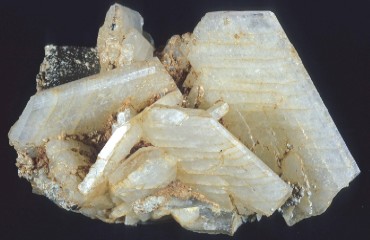
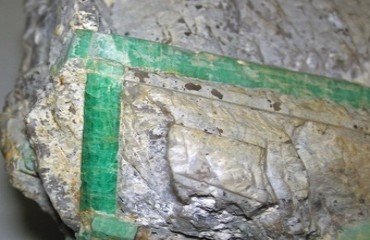
Magma Eruption, Sedimentary Deposition and Metamorphic Processes Image Credits – Giles Laurent CC BY-SA 4.0, Andrew Dunn CC BY-SA 2.0, James St. John CC BY 2.0
Minerals, the crystalline building blocks of the Earth’s crust, form under an extraordinary variety of geological conditions. Each mineral's composition and structure reflects the environment in which it was formed – whether deep in the mantle, within cooling magmas, in hydrothermal veins, or at the surface through evaporation and weathering. Understanding these formation processes reveals not only the origins of mineral diversity and why they form but also the geological and tectonic history of the planet itself.
1. Igneous Formation
The most fundamental mineral-forming environment is the cooling of molten rock, or magma. Most of the time, this melt comes from the Earth's mantle and rises to the surface, either breaking through as volcanic eruptions or by pushing into crustal rocks that have been stretched and cracked by tectonic processes. As magma cools, different minerals crystallise in a predictable sequence known as Bowen’s Reaction Series. At the highest temperature, the first minerals to form are olivine, pyroxene, and calcium-rich plagioclase, followed by amphibole, biotite, orthoclase, muscovite, and finally quartz as temperatures fall. The texture and size of the crystals in these igneous minerals depend on how quickly they cool. For example, granites have large, well-formed crystals because they cool slowly deep within intrusive bodies. On the other hand, obsidian and tachylite are fine-grained or glassy volcanic rocks that cool very quickly at the surface, leaving very little time for crystals to form.
2. Pegmatite Formation
Pegmatite minerals develop under very specific igneous conditions when a leftover body of a granitic melt contains high amounts of residual water, fluorine, boron, lithium, and various other elements. As the melt cools, fractional crystallisation and chemical diffusion concentrate these elements into residual pockets, allowing them to crystallise sequentially in highly distinct structural and chemical zones (for example, feldspar–quartz cores, lithium- or boron-rich intermediate zones, and rare-element pockets). Common pegmatite minerals include tourmalines and numerous types of beryl.
3. Metamorphic Formation
Metamorphic minerals form when preexisting rocks are subjected to new pressures, temperatures, or chemical environments without fully melting. Under these conditions, the original minerals and their constituent elements typically recombine and reorganise into new assemblages in the altered environment. Contact metamorphism usually happens when heat from nearby molten rock changes the surrounding rocks, leading to the formation of minerals like garnet, wollastonite, and vesuvianite. Regional metamorphism relates to high pressures rather than heat, typically when rocks are compressed by continental collisions or by mountain building. Such conditions lead to their own distinct suite of metamorphic minerals like chlorite, staurolite, kyanite, and sillimanite, with each one representing increasing grades of metamorphic intensity. For both types of metamorphism, the process of recrystallisation often enhances crystal size and purity, leading to minerals with strikingly aesthetic forms and near-perfect clarity.
4. Hydrothermal Formation
Hydrothermal activity is one of the most important processes for creating minerals that allow modern society to function, supplying many of the key industrial metals like lead, iron, copper, zinc, and even silver, gold, chromium, and manganese. It occurs from the flow of superheated aqueous solutions through the earth's crust from areas of high temperature to those where the rocks are cooler. Heated by magma or metamorphic activity, these liquids initially dissolve various metals deep in the ground before beginning their ascent through cracks, faults and voids toward the surface. As the fluids cool, mix with other waters, or react with new host rocks, their chemistry changes, and they can no longer hold those original metals in solution. The result is precipitation. In other words, the mineral content begins to crystallise and line cracks, gaps and cavities, or to replace parts of the host rock itself, forming veins and ore bodies rich in sulfides and oxides. The precise mineral assemblage depends on the temperature, pressure, and chemical composition of the fluids. Low-temperature hydrothermal systems typically create mineral assemblages containing fluorite, barite, and calcite, whereas higher temperatures favour sulfides and oxides. Hydrothermal replacement and open-cavity filling are responsible for many of the world’s greatest ore deposits, including the silver veins of Mexico and the copper lodes of Cornwall.
5. Sedimentary Formation
Minerals also precipitate directly from surface waters or by mechanical and chemical sedimentation. Evaporite minerals like halite, gypsum, and sylvite crystallise from tropical saline lakes or when enclosed seas dry out. Some of the world's best halite deposits can be seen at the deep mines of Wieliczka and Bochnia in Poland, as well as the planet's largest sedimentary borate deposit at Boron in California, USA. Minerals from surface erosion, such as quartz, zircon, and rutile, accumulate in sandstones through the wearing down and transport of preexisting rocks. Some sedimentary minerals, like glauconite or siderite, actually grow within the sediment after it has been buried. As pressure increases and the chemistry of the trapped minerals and water changes, new minerals can form directly in place rather than being transported there from elsewhere.
6. Weathering and Supergene Formation
At the Earth’s surface, weathering transforms many primary sulfide or oxide minerals into secondary ones through oxidation, hydration, leaching or by reacting with atmospheric carbon dioxide. For example, feldspar decomposes to form clays like kaolinite, and pyrite oxidises to produce limonite and goethite. Often, in sulfide ore deposits, the sulfur can be released to form sulfuric acid. The resulting acidic water can subsequently dissolve metals from upper zones and redeposit them at lower levels as they descend, creating enriched “supergene” zones containing minerals such as malachite, azurite, and smithsonite. In addition, the acid can react with other metallic elements present nearby to create sulfate minerals, also commonly found in the vicinity of weathered primary ore deposits. Together, these processes not only modify existing minerals but also produce spectacular secondary mineral suites prized by collectors, including brightly coloured classics like brochantite, chalcanthite, linnarite, connelite and langite.
7. Biological and Organic Formation
Living organisms can also contribute to mineral formation. Shellfish and corals, for example, produce calcite and aragonite to create their shells and protective structures, while some tiny organisms can cause minerals like pyrite and siderite to form through their biological processes. These “biogenic” minerals are far more widespread than many realise and are vital to the formation of sedimentary rocks and the way elements cycle through the biosphere. For instance, calcite of biological origin, compacted and cemented over time, becomes limestone – one of the most abundant sedimentary rocks on Earth. With deeper burial and increased pressure, that limestone can recrystallise into marble, turning an everyday biological product into one of humanity’s most valued ornamental stones.
8. Remobilisation
This type of mineral formation most commonly leads to the formation of agates and chalcedony. They form when silica from volcanic glass or other silicate minerals dissolves in hot water before being transported by groundwater as silica-rich solutions. When these fluids enter cavities, fractures, or porous zones, changes in temperature, pH, evaporation, or chemistry cause silica to precipitate as microcrystalline quartz (chalcedony). Repeated pulses of deposition create the banding characteristic of agate, with colours often produced by trace impurities such as iron and manganese. Silica can also form by replacement, infiltrating and gradually substituting organic material – turning shells, coral, or wood into silicified fossils while preserving fine detail.
9. Placer Formation and Mechanical Concentration
Placer deposits form through the mechanical concentration of dense, chemically resistant minerals during weathering and erosion. As rocks break down, durable minerals such as gold, cassiterite, magnetite, zircon, rutile, diamond, and platinum are released and transported by rivers, waves, or wind. Because these minerals are heavier than most common rock-forming materials, they settle out when water velocity decreases – collecting in river bends, behind natural obstructions, along beaches, or in ancient stream channels. Over time, repeated reworking further concentrates these heavy minerals into economically significant deposits. Unlike hydrothermal or magmatic processes, placer formation does not create new minerals; it simply sorts and enriches those that already exist, relying on gravity, density differences, and sedimentary processes to produce workable accumulations.
10. Sublimation and Extraterrestrial Environments
Some minerals form under exotic conditions rarely found on Earth’s surface. Around volcanic fumaroles, gases condense and sublimate directly into minerals like sulfur, hematite, and halite. Beyond Earth, meteorites reveal minerals crystallised in the vacuum of space or deep within planetary interiors, offering insight into the extremes of temperature and pressure where new mineral species can originate.
Conclusion
From the fiery depths of magma chambers to the gentle evaporation of desert lakes, minerals record the dynamic interplay of Earth’s internal and surface processes. Each environment, whether igneous, metamorphic, hydrothermal, sedimentary, or weathered, imprints its own signature on the minerals it creates. Together, these varied geological settings explain the incredible diversity of the more than 5,000 mineral species known today, each one a small but eloquent chapter in the planet’s continuing story of transformation.