
Ireland is surprisingly rich in mineral diversity given its relatively small size, owing to its complex and varied geological history. The island’s rocks span almost two billion years and stand witness to a complex story of ancient continents colliding, tropical seas, mountain building, volcanic eruptions, and glacial erosion. The oldest rocks are ancient Precambrian and Palaeozoic formations of the uplands, like the Sperrins and Antrim in the north. During the Carboniferous, warm seas deposited the limestones and carbonates of the central lowlands and Burren, followed by the deposition of red sandstones in the southwest during the Devonian. Subsequently, Paleogene volcanic activity produced the basalts of the Giant’s Causeway, and in the recent Ice Ages, deep glaciers have carved valleys, spread thick glacial drift, and helped create today’s bogs and lakes.
It's no surprise that this rich geology has led to a wide variety of mineral types, including copper deposits from volcanic activity, hydrothermal lead-zinc systems like those of the Mississippi Valley Type (MVT), baryte veins, beryls and garnets from the Donegal pegmatites, and decorative stones like Connemara marble. People have exploited these mineral resources since prehistory, with evidence of copper working during the Bronze Age at Avoca and the mining of placer gold deposits 4,500 years ago in the rivers of County Wicklow and Waterford. By medieval times, lead, silver, and iron were also being extracted, and the 18th to 20th centuries saw Ireland develop thriving copper and zinc mining industries across many counties. This mineral wealth played a major role in Ireland’s economic development and enriched global mineralogical knowledge, making the island a place of lasting significance for geologists, historians, and collectors alike.
For a Map of Mineral Locations in Ireland click HERE
|
Silvermines District, Tipperary County, Munster
Galena - Image Credit: The Assay House, Public Domain The Silvermines area in County Tipperary was one of Ireland’s most important and prolific mineral localities. Mining is recorded from the 1280s and continued intermittently until the late twentieth century, with the most recent operations at the Mogul metal mine and the Ballynoe (Magcobar) baryte mine. These workings exploited carbonate-hosted, zinc–lead–barite orebodies and related veins in the Lower Carboniferous limestone, an Irish-type deposit style closely related to classic Mississippi Valley-Type systems. The district, extending west from Silvermines village to Shallee Cross and along the northern side of the Shallee Mountains, became famed for superb specimens of mirror-lustre galena and honey-brown sphalerite, commonly associated with pyrite, calcite, dolomite and barite, along with marcasite and some rarer ore species also present. The name ‘Silvermines’ reflects early silver production, although the area later became best known for its zinc, lead and barite ores. Relatively few fine specimens were saved until the late 1970s, when Richard Barstow’s systematic purchasing from miners rescued many museum-quality pieces. With the mines long closed, specimens are now extremely scarce. |
|
Avoca District, Wicklow County, Leinster
Engine house and ore bins - Image Credit: Colin Park, CC BY-SA 2.0 The Avoca Mines in County Wicklow occupy the deeply incised valley of the River Avoca and represent one of Ireland’s oldest and longest-worked mining districts. There is evidence that the area was worked for copper as early as the Bronze Age, with continuous documented mining from the early 18th century until 1982. The deposits are classic volcanogenic massive sulphide (VMS) orebodies within Ordovician volcano-sedimentary rocks. East and West Avoca, encompassing the Tigroney–Cronebane and Ballymurtagh–Ballygahan mines, became significant copper producers in the 18th and 19th centuries, exploiting ores dominated by pyrite and chalcopyrite, with other sulfides such as sphalerite, galena and locally chalcocite. Since the deposits were shallow and mostly worked by open-cast methods, weathering of these sulfides has generated abundant secondary copper minerals, especially malachite, chalcanthite, tenorite and azurite, which still stain the cliffs, waste tips and open pits with striking green and blue colours today. |
|
Allihies Copper Mines, County Cork, Munster
Engine House Mountain Mine - Image Credit: Nigel Cox, CC BY-SA 2.0 The Allihies copper mines on the Beara Peninsula in west County Cork were among Ireland’s earliest large-scale industrial copper operations. Mining began in 1812 and reached its peak in the mid-nineteenth century with seven mines surrounding the village of Allihies. Major production ceased in the 1880s, but minor workings and exploration continued into the twentieth century, with the final activity ending in 1962. The orebodies consist of steeply dipping quartz veins cutting Devonian Old Red Sandstone, hosting a vein-type copper sulfide mineralisation. Chalcopyrite was the principal ore mineral, accompanied by other sulfides, including tetrahedrite and pyrite, as well as smaller amounts of chalcocite and bornite. Intense weathering of these ores produced abundant secondary copper minerals, especially malachite, azurite, langite, atacamite, and woodwardite, which still stain the mine dumps and vein outcrops in vivid greens and blues. The area is also known for minor occurrences of native gold, native selenium and native tellurium. The mining heritage is celebrated locally, where the Allihies Copper Mine Museum, housed in the former Methodist church built for Cornish miners, preserves the geology, history, and social story of two centuries of copper mining on the Beara Peninsula. |
|
Tynagh Mine, Killimor, County Galway, Connacht
Cerussite - Image Credit: The Assay House, Public Domain Tynagh Mine was discovered in the early 1960s when exploratory drilling in Lower Carboniferous limestones intersected a high-grade sulfide mineralisation. Commercial mining began in the mid-1960s and continued until about 1980, making Tynagh one of Ireland’s most productive base-metal operations, with several million tonnes of copper, zinc and lead ore extracted from a combination of open pit and underground workings. The deposit is a classic Irish-type hydrothermal carbonate-hosted Zn–Pb–Ba system within limestone, closely related to but distinct from typical Mississippi Valley-Type deposits. The ore at Tynagh consisted mainly of massive to breccia-hosted sulfides dominated by sphalerite, galena and pyrite, with significant chalcopyrite, while barite, calcite, dolomite and quartz formed the principal gangue minerals. Although Tynagh was developed primarily as a high-tonnage ore producer, it became renowned among collectors as one of the “jewels in the crown” of Irish mineralogy, yielding superb specimens of well-crystallised pyrite, lustrous sphalerite, sharp galena, straw-like cerussite and a wide range of secondary species, including colourful supergene zinc and copper arsenates and carbonates. With the mine long closed and much of the site inaccessible, fine specimens today are largely confined to older collections. |
|
Lisheen Mine, Moyne, Tipperary County, Munster
Sphalerite - Image Credit: The Assay House, Public Domain Lisheen Mine was one of Europe’s most modern zinc–lead operations. Discovered around 1990, it opened in 1999 and worked until late 2015, producing over 22 million tonnes of ore at high zinc and lead grades. The deposit is a classic Irish-type carbonate-hosted Zn–Pb system developed in strongly dolomitised limestone rocks centred on the towns of Lisheen and Galmoy. The ore consisted mainly of sphalerite, galena and pyrite, with minor accessory sulfides, in a gangue of calcite and dolomite. Almost all material was mined as industrial ore from room-and-pillar stopes, but occasional cavities yielded attractive specimens of galena, calcite and pyrite. Among the most prized specimens, however, were highly lustrous, gemmy crystals of honey-yellow sphalerite. In addition, the mine produced specimens of several rare nickel species, including annabergite, gersdorffite, millerite, nickeline, siegenite, and ullmannite. Lisheen represents a technologically advanced operation but marks a late chapter in Ireland’s long-standing metal-mining tradition. |
|
Tara Mine, Navan (An Uaimh), Meath County, Leinster
Tara ore terminal - Image Credit: Milepost98, CC BY-SA 4.0 Tara Mine is a still-working high-grade carbonate-hosted zinc–lead deposit and the largest zinc mine in Europe. Discovered in 1970, it entered production in 1977 and, despite intermittent temporary shutdowns, remains in operation today as a major supplier of zinc and lead concentrates. The orebodies are massive, largely stratabound sulfide lenses in dolomitised Lower Carboniferous limestones of the Navan Group, an Irish-type Zn–Pb mineralisation closely related to classic Mississippi Valley-Type deposits. The deposit is dominated by sphalerite and galena, with abundant pyrite and marcasite, while calcite, dolomite and barite form the principal gangue minerals, accompanied by minor chalcopyrite and several accessory minerals, including ankerite, boulangerite, hematite, stibnite and tenorite. Most of the ore is fine-grained and massive, so open cavities with well-formed crystals are rare, but a limited number of vugs have yielded sharp, lustrous galena and sphalerite specimens, making Navan an important yet relatively scarce source of display-quality Irish base-metal minerals. |
|
Glendalough and Glendasan Mines, County Wicklow, Leinster
Glendalough Engine House - Image Credit: Oliver Dixon, CC BY-SA 2.0 The scenic Glendalough and Glendasan valleys were the sites of active lead and zinc mining between the late 18th and early 20th centuries. The veins occur within Ordovician volcanic rocks and were worked primarily at Van Diemen’s and Glendalough Mines at the head of the steep Glendalough valley. The dominant ore minerals include galena, pyrite, sphalerite, and quartz, occasionally accompanied by cerussite and chalcopyrite. Specimens of galena in milky quartz are typical of the locality and remain classic examples of Wicklow mineralisation. Other notable minerals include green pyromorphite needles on quartz, cream-white hemimorphite, pale yellow cubes of fluorite and occasional native silver. Unfortunately, very few examples of good crystalline minerals can be found nowadays because material on the tips is very weathered. |
|
Benbulben (Glencarbury) Barite Mine, Sligo County, Connacht
Baryte - Image Credit: The Assay House, Public Domain Beneath the towering limestone cliffs of Benbulben lie the remnants of several small lead and baryte workings once scattered along the Gleniff Valley. The mineralisation occurs in Carboniferous limestone and shale, where a single north–south-trending baryte vein follows fault zones. This vein was worked by levels at the northern end of Gleniff and more extensively by levels and shafts at the main baryte mining site at Benulben (Glencarbury) further south. The extracted material was transported down to Tormore on the south side by a cable-car system, the pylons of which still stride up the hillside. The compact baryte vein yielded few cavities, so crystalline specimens are rare, but the adjacent limestone cliffs locally host small calcite- and quartz-lined cavities, often with platy baryte clusters, giving modest yet attractive mineral specimens in a spectacular landscape. |
|
Connemara Region, Galway County, Connacht
Connemara Marble - Image Credit: James St. John, CC BY-SA 2.0 Connemara is best known not for metal ores but for its distinctive green marble, quarried since the 18th century at various localities throughout the region. This decorative stone is a beautiful green metamorphic stone, prized for its unique swirling patterns of green, white, and grey, formed from ancient limestone rich in serpentine, calcite, and diopside. Considered Ireland's national gemstone, it's used for jewellery, decorative items, and prestigious architectural features like those in Trinity College and Westminster Abbey, symbolising Irish identity. The region also contains numerous granite quarries, worked mainly for aggregates, and at least twenty small, scattered copper, lead and zinc mines and trials, nearly all abandoned by the late nineteenth century. Collectible mineral specimens are uncommon, but galena, sphalerite, chalcopyrite, pyrite, baryte and occasional octahedral fluorite have been recorded from old workings such as Glenowla, Glan, Clooshgereen and Cregg mines, adding a modest metallic chapter to Connemara’s story. |
|
Croagh Patrick, Mayo County, Connacht
Native Gold on Quartz - Image Credit: The Assay House, Public Domain On and around Croagh Patrick, Ireland’s most famous pilgrimage mountain, small baryte–copper veins and one of the country’s best-known gold occurrences are found within Silurian quartzites of the Cregganbaun Quartzite Formation. The key site is the Lecanvey Prospect on the western slopes, where quartz veins and shear zones host coarse, native gold in iron-stained quartz, associated with pyrite, minor chalcopyrite and magnetite. Exploration in the 1980s discovered several gold-bearing veins along a 12-kilometre belt south of Clew Bay. Assays of the material reached unusually high grades (around 14 g/t Au, locally ~0.1% Au), raising the prospect of commercial mining. However, strong local and environmental opposition, reflecting both the mountain’s religious significance and scenic value, halted further development, and mining is now prohibited. Today, small specks of native gold can still be found in quartz and in local streams by persistent collectors. |
|
Bonmahon and Knockmahon Mines, County Waterford, Munster
Copper Secondaries - Image Credit: The Assay House, Public Domain Along the rugged Waterford coastline around Bunmahon, the ‘Copper Coast’ mines once exploited copper-rich vein systems cutting Ordovician volcanic rocks. Among the principal workings were Knockmahon, Tankardstown, Stage and Trawnamoe mines, worked by adits from the sea cliffs and later from inland shafts. The earliest reported working was the Stage mine in the late 17th century, which eventually reached a depth of almost 200 metres and extended for 250 metres under the sea. However, all work in the area ceased in the early 20th century after the exhaustion of the deposits. The primary ore was mostly chalcopyrite, chalcocite and some native copper. Exposure of these ores to air and water produced a stunning variety of colourful secondary copper minerals, including atacamite, botallackite, brochantite, chrysocolla, connellite, cuprite, devilline, langite and malachite, along with minor cobalt-rich and iron-sulfate species such as erythrite and jarosite. Perhaps the most sought after are striking specimens of vivid blue connellite from the Trawnamoe mine. Today the geological and mineralogical importance of the area has been recognised by being awarded UNESCO Global Geopark status. |
|
County Donegal Skarns and Pegmatites, Ulster
Beryl - Image Credit: The Assay House, Public Domain The west coast of County Donegal hosts some of Ireland’s most unusual rock types, which resulted from Devonian granitic intrusions into earlier limestones and other carbonate sedimentary rocks. The heat and pressure of these events produced contact zones of calcium-rich skarns containing grossular garnet, vesuvianite and rutile. Such skarn assemblages occur at Lettamackaward and Carrickavrickan. Those near Bunbeg and Maghery are specifically noted for containing actinolite and very attractive pink quartz. Other areas are notable for pegmatites formed by the slowly cooling granite intrusions. Outcrops of these rocks at places like Sheshkinnarone contain pockets of beryl, including pale aquamarine varieties, along with well-formed quartz crystals. Granite aggregate quarries in the south of the county, including Laghy, Keeldrum and Ballymagroarty, have uncovered minor mineralisations of zinc, lead and iron in the form of galena, sphalerite and pyrite. Collectively, these ore and pegmatite deposits reflect a complex geological history of deep burial, deformation and granitic magmatism, which together created the chemically rich fluids and high-temperature conditions needed for their growth. Today, Donegal continues to be one of Ireland’s key regions for metamorphic and pegmatite-derived mineral specimens. |
|
Sheshodonnell Mine, Ennis, Carran, County Clare, Munster
Smithsonite - Image Credit: The Assay House, Public Domain The Sheshodonnell Mine near Ennis in County Clare was a small 1860s operation exploiting lead, zinc, and baryte-bearing veins in Carboniferous limestone, like those worked a decade earlier at nearby Ballyvergin. Its real mineralogical significance, however, lay in a narrow vein, only 30–45 cm wide and extending for roughly 100 m, where the original zinc ores had been completely transformed into botryoidal smithsonite in various shades of green, yellow, grey, and white, the colours influenced by varying amounts of cadmium. Sheshodonnell also yielded fine, purple-zoned fluorite, often occurring in striking association with the yellow smithsonite. Both minerals were mostly discarded as waste, and even by the 1920s, several tonnes of mixed material still lay on the dumps. However, in later years, much of the debris was backfilled down the disused shaft, and the rest was stripped by overzealous collectors. Consequently, none remain today, and the rare specimens held in collections are highly valued for their uniqueness and as reminders of the area’s rich and unique mineral heritage. |
|
Gold Deposits
The Wicklow Nugget (Replica) - Image Credit: The Assay House, Public Domain In addition to the recent discovery of gold at Croagh Patrick, Ireland has been noted for a number of placer deposits in the country’s rivers, especially those of County Wicklow and the 'Gold Coast' of County Waterford. While gold was mined in antiquity, the country’s modern quest began in County Wicklow in the 1790s, centred around the Goldmines River, which flowed from Croghan Kinsella Mountain after the discovery of a large nugget. It weighed 682 grammes, and to date the ‘Wicklow Nugget’ is the largest gold nugget ever found in the British Isles. Marking the beginning of the ‘Irish Gold Rush’, prospectors rushing into the area soon found about 80 kg of the metal before the government stepped in to take control. Nevertheless, between 1796 and 1860, a further 300 kilogrammes of gold were mined in Ireland in total, both legitimately and by covert means. Other locations, possibly known for gold mining in antiquity based on place names, include Slieveanore ('Gold Mountain', County Clare), Tullynore ('Gold Hillock', County Down), Coomanore ('Gold Hollow', County Cork), Luganore ('Gold Hollow', County Tipperary) and Glenanore ('Gold Valley', County Cork). In 2008 a major discovery was announced near Clontibret, estimated at 16,000 kg, but the commencement of mining has been slow due to environmental concerns and local opposition. Otherwise, recreational gold panning in Irish rivers is permitted, but the gold cannot be openly sold, and discoveries exceeding 2 grams must be reported. |


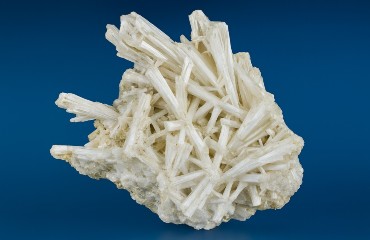
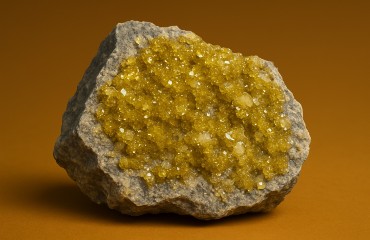


Ireland’s mineral localities, though often modest in scale, together form a remarkably rich and varied record of the island’s geological past. From ancient metamorphic terrains to Carboniferous limestone basins and volcanic arcs, each region has produced distinctive minerals that reflect the processes that shaped it. While many of the old mines are long closed and much material is now scarce, the specimens they yielded – galena, sphalerite, baryte, copper minerals, skarn species and rare secondary species – remain important both scientifically and historically. Today, these sites stand as reminders of Ireland’s mining heritage and as valuable natural laboratories for understanding ore formation, mineral diversity and the deep-time evolution of the island’s geology.
If you are interested in adding specimens from the Republic of Ireland to your collection, click HERE

