
Japan’s rich and varied geology – shaped by its dynamic volcanic and tectonic setting – has produced an impressive range of mineral localities. Yet, despite their beauty and scientific value, Japanese mineral sites are often less well known internationally than those of countries such as China, the United States, or Germany. Many of Japan’s classic deposits are small, long exhausted, or difficult to access, and specimens rarely appear on the global market.
Nonetheless, the islands have yielded some truly world-class finds – from the legendary stibnite crystals of Ichinokawa to the delicate zeolites of Tohoku & Niigata and the vivid sulphur crystals from Kyushu’s volcanoes. These localities, steeped in mining history and geological diversity, offer a glimpse into one of the mineral world’s more understated yet fascinating regions. The following summaries highlight some of Japan’s most notable mineral localities, each representing a distinctive chapter in the country’s mineral heritage.
For a Map of Mineral Locations in Japan click HERE
|
Ichinokawa Mine, Saijo City, Ehime Prefecture (Shikoku Island)
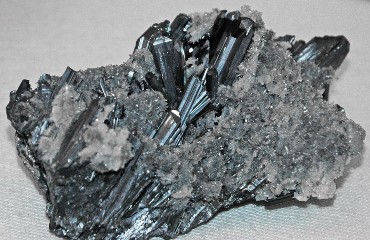
Stibnite - Image Credit: James St. John, CC BY 2.0 The Ichinokawa Mine is one of the most famous mineral localities in Japan and a historic source of world-class stibnite. Discovered in the 5th century and worked intermittently for antimony until the 20th century, the mine developed along hydrothermal veins cutting through Cretaceous and Tertiary conglomerates and the underlying Sambagawa schists and phyllites. These veins produced some of the largest and most brilliant stibnite crystals ever found, reaching lengths of 60 centimetres and rivalling those from the Wuning Mine in China's Jiangxi Province. The metallic-lustered crystals, often intergrown with quartz and calcite, made Ichinokawa specimens highly prized by collectors and museums worldwide. Closed in 1962, the mine produced the antimony used in the bronze casting of the Great Buddha of Nara in 748 AD. The veins have been totally worked out, and it is difficult to find even traces of stibnite here now. |
|
Hitachi Mine, Taga District, Ibaraki Prefecture (Honshu Island)
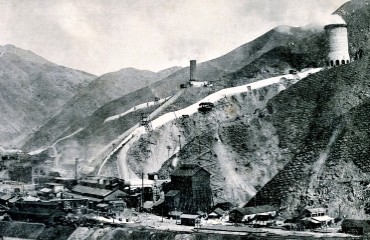
Hitachi Mine - Image Credit: Public Domain, The Hitachi Mine, active from the early 1900s to 1974, was one of Japan’s most productive copper deposits. It formed within altered rhyolitic tuffs through hydrothermal replacement and vein formation associated with volcanic activity. The mine yielded an impressive array of copper ore and some cobalt. Specimen minerals include chalcopyrite, sphalerite, galena, pyrite, and bornite, along with occasional native arsenic. The mine is the type location for the complex polymetallic sulfide, hitachiite. Today, Hitachi specimens are rare but valued for their diversity and historical significance in Japan’s early mining industry. |
|
Kawazu Mine, Rendaiji, Shimoda City, Shizuoka Prefecture (Honshu Island)
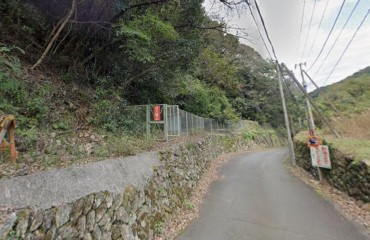
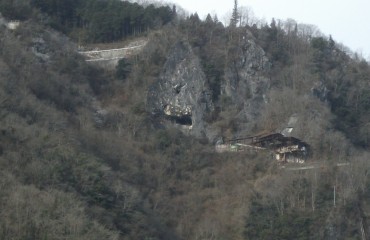
Entrance to Kawazu Mine - Image Credit: Google Earth, Located in the rugged terrain of the Izu Peninsula, the Kawazu Mine was historically worked for gold between 1915 and 1959. It consists of hydrothermal veins of chalcedonic quartz cutting through andesitic volcanic rocks. The gold occurs as fine, sharply terminated crystals set in quartz and calcite. Apart from gold, the mine is mineralogically very diverse and is one of the most species-rich locations in Japan. The hydrothermal solutions also carried silver, indium, vanadium, selenium, tin, tellurium, and manganese, which led to more than 120 recognised minerals, including tellurite. Kawazu is also notable for being an almost unique location for native tellurium and for being the type location for kawazulite and kinichilite. Collecting on the dumps was possible until the 1990s but is now difficult because of the vegetation and is mostly prohibited. |
|
Tsumo Mine, Masuda City, Shimane Prefecture (Honshu Island)
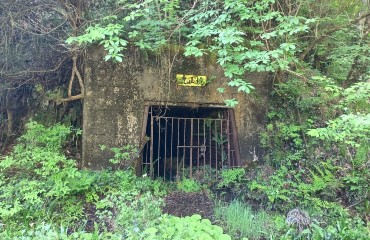
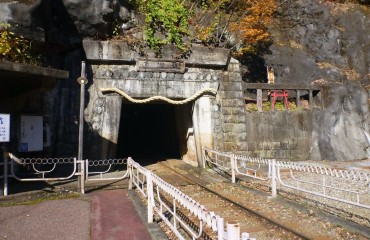
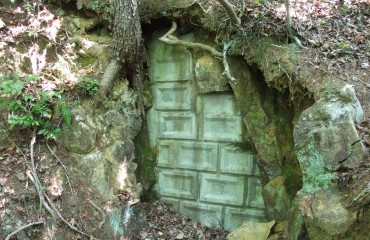
Entrance to Tsumo Mine - Image Credit: Hiroaki TANO, CC-BY-SA-3.0 The Tsumo Mine was a geologically complex deposit that worked primarily for copper, lead, and zinc. Written records first mentioned the mine in the 9th century, and it continued to operate until 1986. Situated within a sequence of volcanic and sedimentary skarns altered by hydrothermal fluids, the mine produced many rare and complex mixed bismuth, tellurium, and sulfide minerals, including aleksite, canfieldite, mawsonite, and wittichenite. Tsumo is also the type location for the bismuth telluride, tsumoite. These minerals often occur together in complex combinations in quartz, making Tsumo one of Japan’s most mineralogically diverse and collectible mineral localities. |
|
Aso, Unzen, and Sakurajima Volcanic Fields, (Kyushu Island)
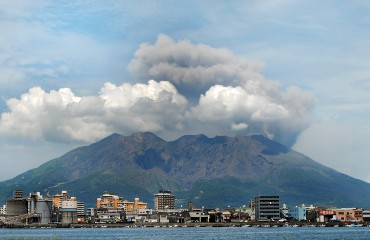
Sakurajima Volcano - Image Credit: Mstyslav Chernov, CC BY-SA 3.0 Kyushu is the third-largest island of Japan's five main islands and the most southerly of the four largest islands. Its active volcanoes provide important examples of ongoing mineral formation through volcanic sublimation. Sakurajima is one of the world's most active and erupts almost daily. Around their fumaroles, gases rich in sulfur and other volatiles precipitate crystals directly from the vapour. These deposits yield bright yellow to orange native sulfur crystals, sometimes transparent and gemmy, along with occasional realgar and orpiment. The ash ejected by eruptions often contains crystals of cristobalite and hematite. Though difficult to collect due to high temperatures and instability, these specimens are remarkable products of modern volcanic activity. |
|
Obira Coast, Rumoi Subprefecture, (Hokkaido Island)
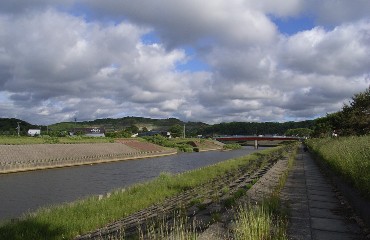
Rumoi River Obira Coast - Image Credit: MNRNSD, CC BY-SA 3.0 The Obira coast on the northeastern side of Hokkaido Island is renowned for placer deposits of precious metals of volcanic origin. These dark sands and gravels are a unique source of platinum group metals, many of which appear in their native form. These include gold, iridium, osmium, platinum and ruthenium. Their rarely occurring sulfides and tellurides are also present in some abundance as grains or inclusions, including braggite, cooperite, cuprorhodsite, erlichmanite, kashinite, laurite, and about ten others. Nowhere else on the planet is there an occurrence of such mineralogical and collecting significance and interest. |
|
Zeolite Deposits, Tohoku & Niigata, (Honshu Island)
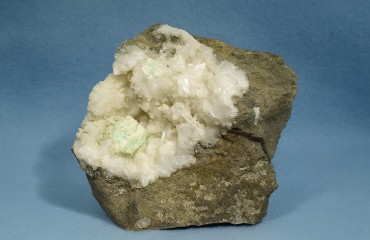
Apophyllite, Epistilbite, Chabazite - Image Credit: Robert M. Lavinsky, CC-BY-SA-3.0 Tohoku, Niigata and several other areas on Honshu Island, the largest of the Japanese islands, are renowned for their zeolite-bearing volcanic rocks. Widely distributed tertiary-age basalts and andesites contain amygdaloidal cavities filled with secondary minerals deposited by circulating hydrothermal fluids. Collectors have long prized the beautifully crystallised zeolites from these regions – analcime, natrolite, chabazite, laumontite, mordenite, heulandite, and stilbite – often forming sparkling colourful druses against black basalt surfaces. Many occurrences were discovered during construction projects in the 20th century, revealing the hidden beauty of Japan’s island’s volcanic geology. Others are actively mined for various uses in quarries like Maze and Shimane quarries. The zeolite mineral yugawaralite was first discovered and named after the Yugawara Hot Spring in Kanagawa Prefecture. |
|
Kochi Prefecture (Shikoku Island)
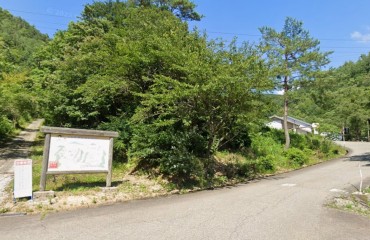
Kochi Mine - Image Credit: Google Earth Kochi Prefecture on the island of Shikoku hosts a number of small quartz-rich deposits where amethyst-like and smoky quartz form in manganese-bearing veins. These veins cut metamorphosed sedimentary and volcanic rocks, and the presence of manganese oxides lends the quartz its distinctive purple and violet hues. The minerals found alongside include rhodonite, hematite, and some rare manganese silicates like gageite, piemontite, and the type-location mineral bunnoite, first discovered at the Kamoyama mine, Ino, Agawa District. The coloured quartz from Kochi is sought after for its soft colouration and well-developed crystal forms that often show subtle zoning. |
|
Akagane Mine, Oshu City, Iwate Prefecture (Honshu Island)
Kitakami River - Image Credit: Daderot, CC0 1.0 Located near Ōshū City in the Kitakami Mountains, the Akagane Mine is a skarn-type copper-iron deposit, with associated tungsten, lead, zinc and gold, mined from 1912 until 1974. The deposit formed where Carboniferous greenstones and limestone were intruded by igneous rocks, producing skarn and a pyrometasomatic mineralisation. Specimen-wise, the mine is also known for a rare mineralisation involving bismuth and zirconium. Bismuth is in its native form, as well as the minerals bismuthinite, eclarite, and ikunolite. Zirconium is present in the rare silicate baghdadite. |
|
Naegi District, Gifu Prefecture (Honshu Island)
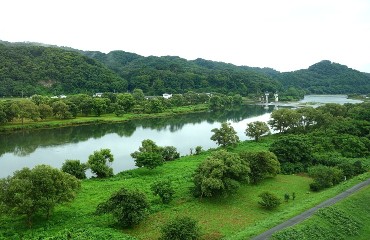
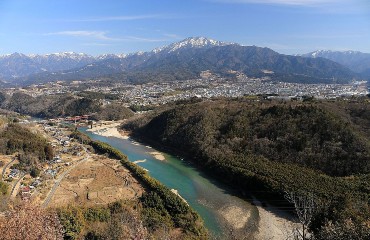
Kiso River and Mount Ena - Image Credit: Alpsdake, CC BY-SA 4.0 This pegmatite-rich area in central Honshu is unusual for volcanic terrain but renowned for its well-crystallized gems and mineral specimens. The granite-hosted pegmatites in the Naegi District produced large crystals of topaz (up to ~15 cm), beryl (including aquamarine), smoky quartz and microcline/orthoclase. The geological setting involves late-stage granitic intrusions that generated coarse-grained pegmatites, providing cavities and open spaces conducive to large crystal growth. |
|
Ogoya Mine, Ishikawa Prefecture (Honshu Island)
Ogoya Mine Museum - Image Credit: Google Earth The Ogoya Mine is a classic copper-ore locality that has long been noted for high-quality crystallised specimens. Among its merits are large plates of chalcopyrite and pyrite crystals, including curved chalcopyrite crystals up to 5 cm on plates 40 cm across. The deposit formed in a vein-type copper system where hydrothermal fluids exploited structural faults in metamorphic host rocks, creating vugs and cavities for crystal growth. The mine first opened in 1772 and worked until 1971, when it closed. The location is prized by Japanese collectors for its purplish pyromorphite crusts on amethystine quartz crystals, both purple minerals that complement each other. |
|
Teine Mine, Ishikari Subprefecture (Hokkaido Island)
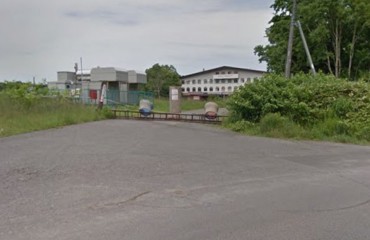
Teine Mine - Image Credit: Google Earth The Teine Mine was a gold mine operating between 1941 and 1971. It worked three lodes, called Bannosawa, Mitsuyama, and Koganesawa, which produced over 70 different mineral species. Gold occurred as the native metal, as well as the selenide fischesserite and the tellurides petzite and sylvanite. The mine is also especially noted for being the type locality of the minerals teineite and watanabeite and for producing impressive crystals of native tellurium and its minerals tellurite and enargite. It is situated in a complex geological setting where volcanogenic and hydrothermal processes intersect in Hokkaido’s tectonic regime, allowing rare tellurium mineralisation to form. |
|
Ashio Mine, Nikko City, Tochigi Prefecture (Honshu Island)
Ashio Mine - Image Credit: Kzaral, CC BY 2.0 The Ashio mine, discovered in 1610, was one of Japan’s oldest and largest copper producers and now operates as a tourist attraction and war memorial. It was first worked in a systematic way in 1877 by Furukawa Ichibei. However, this also led to its downfall, as the emission of toxic smoke and discharge of industrial wastewater caused serious pollution to the surrounding region. Many miners suffered from cadmium poisoning, and in 1907 they rioted for three days, demanding better treatment. During the riot a large part of the mining facilities was destroyed by fire. In World War II, the mine used POW slave labour, mainly consisting of Korean prisoners. Chinese POWs were also forced to work in the mines, and more than 100 were killed. The mine is therefore infamous in Japanese history for its pollution problems and its inhuman working conditions for both Japanese miners and foreign prisoners. The ore occurs in two main deposit types – telescoping veins and massive (Kajika) bodies – both developed in Tertiary rhyolitic tuff, with cavities that can reach up to 10 metres across. These pockets host beautiful crystals of many species, including calcite, arsenopyrite and apatite, with apatite crystals reaching lengths of up to three centimetres. The most celebrated mineral from Ashio is chalcopyrite, whose crystals are intensely iridescent and display a distinctive “velvet” or “moonlight” lustre, thought to result from microscopic striations on the crystal faces. |
|
Ani and Arakawa Mines, Ugo, Akita Prefecture (Honshu Island)
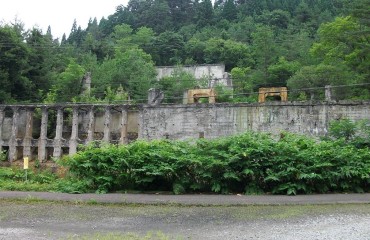
Ruins of Ani Mine - Image Credit: Hiroaki TANO, CC-BY-SA-3.0 The Ani Mine was discovered in the late 1600s and the Arakawa Mine in the early 1700s. Both were major Japanese copper producers, with vein-type deposits hosted in Tertiary rocks. Their veins contained abundant cavities lined with superb crystals of chalcopyrite, sphalerite, galena and calcite, often of exceptional sizes. Chalcopyrite from these mines is especially renowned for its diversity of crystal habits. The rare ‘triangular’ chalcopyrite crystals, first found at Arakawa in 1892 in chalcopyrite–sphalerite–galena–quartz veins, are unique to this locality and formed during the final stage of vein deposition. Many of the finest examples are preserved today in the Wakabayashi collection at the University of Tokyo. Another notable habit is the chalcopyrite ‘twin with ears’, a penetration twin in which the two individuals differ in size, reaching up to 10 cm across. More typical tetrahedral chalcopyrite crystals are also abundant, and large matrix specimens from Ani and Arakawa rank among the classic chalcopyrites in major mineral museums worldwide. These specimens are true classics and are highly sought after around the world. |
|
Otome Mine, Kurobera, Yamanashi Prefecture (Honshu Island)
Quartz 'Japan Law' twin - Image Credit: Robert M. Lavinsky, CC-BY-SA-3.0 The Otome Mine, hosted in granite and quartz pegmatite, is world-famous for superb rock crystal quartz, especially crystals showing the classic Japan twinning law. Single crystals, clusters and matrix specimens are all known, with flattened twins reaching up to 45 cm across, the largest known in the world. Old quartz specimens from here often bear the obsolete province name ‘Kai’. In reality, the name Otome Mine was applied to a series of several small mines spread over several villages and slopes, over parts of Kohfu city and neighbouring Makioka town. In Japan-law twins, the c-axes of the two individuals intersect at 84°34′, and a pair of prism faces lies in the same plane. This twinning law was first observed in 1829 by C. E. Weiss in crystals from La Gardette, France. The first Japanese specimen showing this law was identified by Mohnike in the late 19th century. He purchased it in Hakodate, Hokkaido, and brought it to Germany, where von Rath described it in Poggendorff’s Annalen. After 1895, the name for the habit began to be used regularly, reflecting the excellence and abundance of Japanese specimens. Outstanding Japan-law twins from the Otome Mine were exported worldwide, and the term “Japan Law” was adopted into universal use shortly after 1900. Although at least ten other Japanese localities produce such twins, none rival Otome. |
|
Naegi and Hirukawa Topaz, Gifu and Shiga Prefectures (Honshu Island)
Closed Topaz Mine - Image Credit: Hiroaki TANO, CC-BY-SA-3.0 Neighbouring Gifu and Shiga prefectures have produced some of Japan’s finest topaz. Key localities include Takayama in the Naegi District and Ebisu in the Hirukuwa District, both in Gifu Prefecture, and Tanokamiyama in the Otsu District in Shiga Prefecture. These locations consist of granite pegmatites, mined and quarried for centuries for their feldspar for the local ceramic industry. At Takayama and Tanokamiyama the topaz occurs in cassiterite–wolframite veins, cultivated soils and stream gravels. Takayama has yielded crystals of all sizes. Large crystals in the 7 to 15 cm range from brown and yellow to pale green, while smaller crystals are usually colourless and transparent and often associated with quartz, feldspar, beryl, schorl and muscovite. Tanokamiyama topaz is similar but smaller, 5 to 8 cm, and commonly shows colour zoning. Japanese topaz gained fame through late-19th- and early-20th-century exhibitions, and the finest suites, mostly collected before 1900, are now in the Wada collection. Large crystals are no longer found because crystal pockets have been almost completely worked out by miners and later by local mineral collectors. Tiny crystals can occasionally be found, but the areas are heavily overgrown. |
|
Fuka Mine, Bitchū, Takahashi City, Okayama Prefecture (Honshu Island)
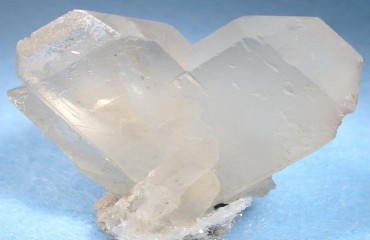
Fuka Mine - Image Credit: Hiroaki TANO, CC-BY-SA-3.0 The Fuka mine in Bitchū, Okayama Prefecture, is a small underground operation famous among mineralogists rather than miners. Originally worked for exceptionally pure calcite, used in products such as toothpaste, it later became renowned as a classic high-temperature calc-silicate skarn locality. The orebody is a crystalline limestone lens cut by monzonite, producing boron-rich, very low-iron skarns packed with unusual species. Fuka is the type locality for a suite of rare calcium borates and related minerals, including takedaite, uralborite, roweite, shimazakiite and okayamalite, typically occurring as small grains and veinlets in limestone near gehlenite–spurrite skarn. Additional species such as kusachiite and various Cu–Bi phases further underline the locality’s chemical complexity. Today collecting is strictly forbidden except for approved university researchers, so most specimens in collections derive from earlier work and are increasingly prized. |

Japan’s mineral localities may not enjoy the global recognition of the great specimen-producing regions of Europe, the Americas, or China, yet they reveal an extraordinary geological heritage shaped by the country’s volcanic and tectonic forces. From the classic stibnite crystals of Ichinokawa to the rare tellurium minerals of Teine and the brilliant zeolites of Honshu, these deposits demonstrate remarkable mineralogical variety and scientific value. Though many mines have long ceased operation, their specimens endure as tangible records of Japan’s complex geology and industrial history. Together, these sites reflect the quiet depth and diversity of Japan’s contribution to mineralogy - subtle, refined, and every bit as fascinating as the country’s more widely celebrated cultural and natural treasures.
If you are interested in adding specimens from Japan to your collection, click HERE


