
Namibia is an important mineral-producing country, distinguished by its vast desert landscapes, dramatic mountain ranges, and exceptionally rich geological heritage. Situated along the southwestern coast of Africa, Namibia is dominated by the Namib Desert - the oldest desert on Earth - and the Great Escarpment, which rises sharply into the central highlands and the interior plateau.
Beneath these striking landforms lies a geological foundation that spans more than two billion years of Earth’s history. Much of the country is underlain by the ancient rocks of the Angolan and Kalahari Cratons, stitched together by major Proterozoic mountain belts, most notably the Damara Belt. This belt, a deeply eroded mountain chain formed during the Pan-African orogeny around 550 million years ago, hosts many of Namibia’s most important mineral districts, including the Otavi Mountainland and the Erongo pegmatite fields.
Historically, Namibia’s mineral wealth has played a central role in shaping its economic development. Indigenous communities long made use of native copper deposits, but large-scale mining only began under German colonial rule from the late 1800s, accelerating dramatically during the 20th century. World-famous localities, such as Tsumeb, Erongo, and Brandberg, quickly gained international recognition for producing valuable ores and minerals of exceptional beauty, diversity, and scientific value. Today, Namibia remains a mineralogical treasure house, renowned for its gem-pegmatites, copper deposits, vanadium zones, and diamond-rich coastal sands.
For a Map of Mineral Locations in Namibia click HERE
|
Tsumeb Mine (Ongopolo Mine), Tsumeb, Oshikoto Region
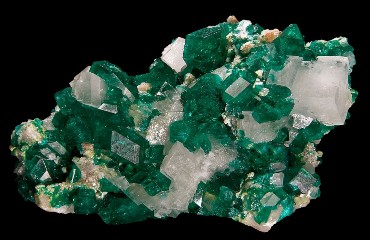
Dioptase - Image Credit: Didier Descouens, CC BY-SA 2.0 The Tsumeb Mine is arguably the most celebrated mineral locality on Earth. The deposit was discovered by Europeans in 1893, although it had been known for centuries by local Bushmen and exploited by them to recover copper. Commercial mining began in 1897 and continued until 1996, producing around 30 million tonnes of lead, copper, and zinc ore, along with silver, germanium, cadmium, and other by-products. Geologically the deposit is hosted in dolomite carbonate rocks of the Otavi Mountain Land (part of the Damara Orogeny), within a vertical ‘pipe.’ This structure was probably formed by the collapse of karstic rocks followed by infill, which was later mineralised by hydrothermal fluids. Oxidation and weathering subsequently formed three distinct supergene zones, each giving rise to a dazzling array of secondary minerals. With nearly 350 valid minerals recorded (of which 75 are type-localities at Tsumeb), the mine produced world-class specimens of azurite, malachite, dioptase, smithsonite, cerussite, wulfenite, mimetite, and many rare species. Numerous attempts have been made to reopen the mine exclusively for mineral specimens, but the costs of pumping out water have been too high for commercial success. Nevertheless, the mineralogical richness and uniqueness of mineral specimens already recovered secure Tsumeb’s place among the most important geoheritage sites globally. |
|
Erongo Mountains, Usakos and Omaruru
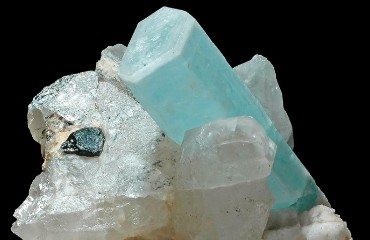
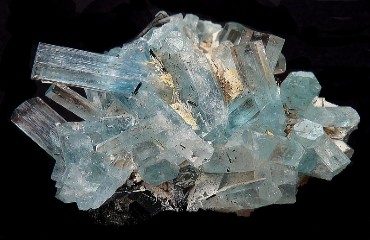
Beryl var. Aquamarine - Image Credit: Géry Parent, CC BY-ND 2.0 The Erongo Mountains form one of Namibia’s most celebrated mineral districts, renowned for their striking gem-bearing pegmatites and dramatic volcanic geology. The complex represents the eroded remains of a 125–140-million-year-old volcano, where a later granite intrusion into the volcanic core cooled slowly, creating ideal conditions for pegmatite formation. These pegmatites cut through both the central granite dome and the surrounding metamorphic rocks, with late-stage fluids concentrating rare elements such as beryllium, lithium, niobium, cerium, fluorine, and boron. As these fluids accumulated in fractures and cavities, they crystallized into a large suite of high-quality mineral specimens. A thick ring dyke of dolerite encircles the main complex, forming a pronounced feature visible on aerial and satellite images. The locality is particularly famous for aquamarine, often forming long, glassy, sky-blue crystals with sharp terminations. Equally notable are its schorl tourmaline clusters, vividly coloured fluorite in purple, green, or bi-coloured zones, and diverse quartz varieties, including smoky, sceptered, and fenster (window) quartz. Other minerals include topaz, feldspar, muscovite, goethite, and occasional garnets and other beryl varieties, including goshenite and heliodor. Erongo is a productive site for small local miners, who regularly discover new pockets due to the region’s rugged terrain and ongoing natural erosion. Its combination of geological complexity, aesthetic mineralisation, and continual new finds places Erongo among the world’s premier pegmatite mineral localities. |
|
Uis Tin Mine, Dâures Constituency, Erongo Region
Erongo Mountains - Image Credit: Erongoguy, CC BY-SA 4.0 The Uis Tin Mine was once one of the richest tin operations in southern Africa. Discovered in 1911 and active from the 1950s to the early 1990s, the mine exploited an extensive field of tin-bearing pegmatites of the Damara Orogen. These pegmatites, rich in cassiterite (SnO₂), formed during late-stage magmatic differentiation and contain a number of rare-element minerals associated with Li-Cs-Ta highly evolved pegmatite systems. Uis specimens often include sharp cassiterite crystals - black, brown, or reddish - embedded in white or pale-grey feldspar or muscovite, making them visually striking. The district also yields topaz, beryl (including aquamarine), schorl, mica, lepidolite, columbite–tantalite, and occasional rare tantalum minerals like wodginite. Though the mine no longer operates industrially, the large pegmatite field continues to yield excellent mineral specimens, particularly from shallow workings and abandoned trenches. Today, Uis remains an important destination for collectors seeking classic Namibian pegmatite minerals. |
|
Spitzkoppe Area, Dâures Constituency, Erongo Region
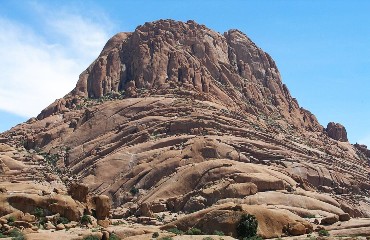
Spitzkoppe - Image Credit: Falense, CC BY-SA 3.0 The Spitzkoppe complex consists of two striking granite domes, the Gross and Klein Spitzkoppe, often referred to as the ‘Matterhorn of Namibia.’ These intrusions belong to the same Cretaceous magmatic province as the Erongo and Brandberg complexes. The granite crystallized from a magma system associated with continental rifting. Late-stage pegmatitic fluids enriched with fluorine, lithium, and volatile elements created vugs and pockets lined with gem minerals. Collectors prize Spitzkoppe for its spectacular water-clear topaz crystals, smoky quartz with well-defined terminations, feldspar, unusual fluorite habits, blue and green beryls, silky pyrophyllite, and occasional pale-green microcline (amazonite). The area is protected by Namibia’s conservation laws, limiting heavy excavation but permitting controlled collection. The dramatic landscape combined with fine-mineral potential makes Spitzkoppe one of Namibia’s most scenic and mineralogically interesting regions. |
|
Hohenstein & Hohenfels Pegmatites, Erongo Region
Beryl v. Aquamarine - Image Credit: Jamain, CC BY-SA 3.0 Located along the southern flank of the Erongo Massif, the Hohenstein and Hohenfels pegmatite fields form part of Namibia’s best-known gem-producing region. These pegmatites developed during late-stage differentiation of the Erongo granite and contain large miarolitic pockets rich in rare elements, including beryllium and cerium. The area is best known for exceptionally fine aquamarine crystals - often long, flawless, and richly coloured. Many are associated with jet-black schorl, creating striking colour combinations. These pairings frequently form within cavities lined with feldspar and muscovite. Other minerals include fluorite, quartz, topaz, tourmaline, and monazite. The fluorite from Hohenstein is also highly prized for its cubic, intensely coloured bottle-green crystals. The region as a whole has not been extensively mined, and the rugged terrain has retained many undisturbed pockets, which local artisanal miners continue to work for new high-quality specimens. Hohenstein remains one of Namibia’s premier gemstone pegmatite zones. |
|
Brandberg and Goboboseb, Dâures Constituency, Erongo Region
Brandberg West Mine - Image Credit: mroszewski, CC BY-SA 3.0 Brandberg Mountain is one of Namibia’s most iconic landmarks. Situated in the northwestern Namib Desert near the Atlantic coast, the massif covers an area of roughly 650 km² and rises dramatically above the desert floor. Its highest point, the Königstein, reaches 2,573 m, making it the tallest summit in Namibia. The name ‘Brandberg’ derives from the striking orange glow cast on the granite at sunrise and sunset, giving the impression that the mountain is ablaze. Geologically, Brandberg is a 25 km wide granitic intrusion created by magma eruptions around 130 million years ago. The rock hosts numerous miarolitic cavities where silica-rich fluids deposited quartz and other minerals. These cavities have produced some of the world’s finest quartz crystals - clear, smoky, and amethyst - often displaying remarkable internal features such as phantoms, enhydros, hematite ‘stars’, and the coveted ‘Brandberg window’ habit. Associated minerals include prehnite, calcite, feldspar, and occasional hematite rosettes. It should be noted that most of the recent specimens labelled as ‘Brandberg Quartz’ originate from the Goboboseb Mountains, located 15 km west of Brandberg itself. That’s because Brandberg is a national monument, and mineral collecting is strictly prohibited there. The quartz labelled as ‘Brandberg’ is therefore more accurately described as coming from the Goboboseb area, although the broader regional naming convention misleadingly continues in the mineral trade. |
|
Kandesei (Otjozongombe, Kaokoveld), Opuwo, Kunene
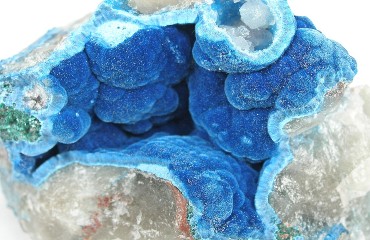
Shattuckite - Image Credit: Robert M. Lavinsky , CC-BY-SA-3.0 The Kandesei region is also known by several other local names, including Otjozongombe, Otjikotu, Okandawasi, and by many in the mineral collecting community as Kaokoveld. Located in Namibia’s remote northwest, it is a well-known source of copper ore and vibrant secondary copper minerals. The deposits occur in dolomite and sandstone of the Otavi and Mulden Groups, where hydrothermal fluids originally formed copper-lead-barite veins. Subsequent oxidation produced exceptionally colourful and well-formed secondary minerals. The district is globally recognised for its gemmy, dark-green dioptase, rivalling specimens from Tsumeb, and for its striking shattuckite, chrysocolla, and malachite. In some veins, the shattuckite forms velvety sky-blue coatings or pseudomorphs after cuprite, while dioptase occurs as sharp, lustrous prisms. The region is difficult to access, which has limited extensive mining and preserved many pockets. As local miners continue to work small exposures, new discoveries are periodically made, making Kandesei an active and continuously productive mineral district. |
|
Okorusu Fluorite Mine, Otjiwarongo, Otjozondjupa Region
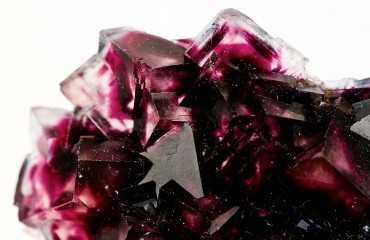
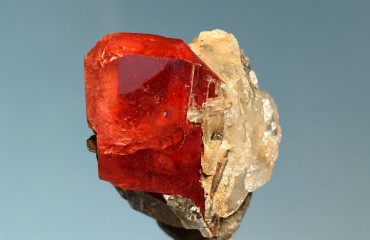
Okorusu Fluorite - Image Credit: Robert M. Lavinsky , CC-BY-SA-3.0 The Okorusu Mine is Namibia’s premier fluorite locality and one of the world’s best sources of colour-zoned multi-coloured fluorite crystals. Mined since the 1920s as an open pit, the deposit is part of a carbonatite complex intruded into quartzites and marbles of the Damara Belt. As the carbonatite magma cooled, fluids rich in fluorine replaced some of the rock, creating large amounts of solid fluorite However, later hydrothermal events dissolved and redeposited some of the fluorite in cavities, forming spectacular fluorite crystals. Okorusu fluorite is highly prized for its vivid colours - deep purple, blue, lime green, yellow, and dramatic multi-zoned combinations. Common associations include calcite, barite, quartz, celestine, and ankerite. Industrial mining from the 1920s to 2014 produced millions of tonnes of industrial fluorspar but also opened numerous pockets for specimen recovery. Until recently, collecting was a joint task between the mine-owning company and a small number of contracted individuals, with profits being used for community development. Okorusu remains one of the most iconic fluorite localities globally, known for both size and colour intensity. |
|
Abenab Mine, Grootfontein, Otjozondjupa Region
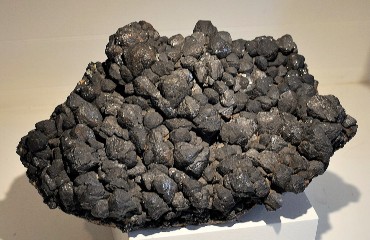
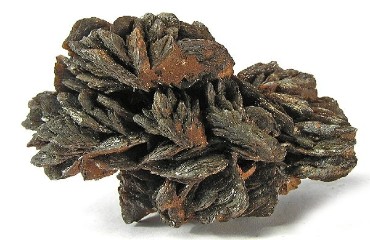
Descloizite - Image Credit: DerHexer, CC BY-SA 4.0 The Abenab Mine operated from 1921 to 1958 and was once the largest vanadium producer in the former British Empire. The deposit lies within Otavi Group dolomites and formed through hydrothermal replacement and veining. Oxidation of these primary ores created a spectacular suite of lead, vanadium and zinc minerals. Abenab is globally renowned for its superb descloizite, which forms lustrous, reddish-brown crystal fans and aggregates, and for its vanadinite, which forms clusters of large, sharp, tapered crystals. Both are considered among the finest examples of the species. Other minerals include smithsonite, cerussite, willemite, wulfenite, calcite, and mimetite. The mine’s mineralogical importance lies not only in specimen quality but also in the diversity of oxidation-zone mineralogy within a carbonate replacement system. Although long closed, Abenab continues to be a significant source of historic specimens found in collections worldwide. |
|
Berg Aukas Mine, Grootfontein, Otjozondjupa Region
Descloizite - Image Credit: Robert M. Lavinsky , CC-BY-SA-3.0 The Berg Aukas Mine is another major zinc, lead, and vanadium locality in the Otavi Mountains and is geologically related to Abenab. It operated between 1913 and 1978 and exploited replacement ores developed in Otavi Group dolomites. The oxidation of the primary ores produced richly coloured secondary minerals, making Berg Aukas another of Namibia’s sources of attractive mineral specimens. It is perhaps best known for its striking descloizite, forming elongated, lustrous, reddish-brown crystals often arranged in radiating clusters. Specimens occur in vug and fracture fill associated with karst breccia and usually occur in cavities adjacent to the zinc ore. Other important minerals include smithsonite in pastel pink, yellow and green botryoidal forms; white, crystalline willemite; honey-brown mimetite; blood-red vanadinite; olive-brown mottramite; rare transparent cerussite; and striking rhombohedral calcite. The mine is of scientific interest due to its complex vanadium paragenesis and remains a classic locality represented in many major museum collections. |
|
Aris Quarries, Aris, Windhoek, Khomas Region
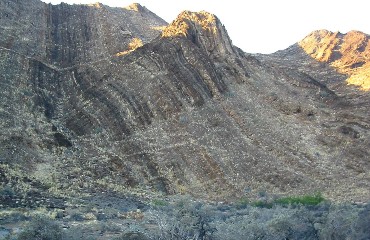
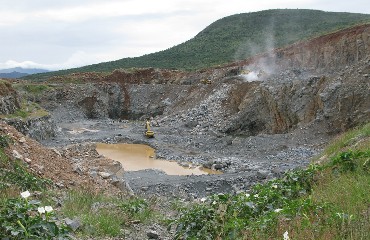
Ariskop Phonolite Quarry - Image Credit: Erongoguy, CC BY-SA 4.0 The Aris Quarries, located about 25 km south of Windhoek, are among Namibia’s most geologically significant sites for rare alkaline minerals. The locality consists of two phonolite quarries, the Railway Quarry to the west and the Ariskop Quarry to the east, situated less than one kilometre apart. Phonolite, the host rock, is a fine-grained, silica-undersaturated volcanic rock rich in alkali feldspar and nepheline. When struck, it can produce a ringing sound, giving the rock its name from the Greek phōnē, meaning ‘sound’. Although both quarries exploit phonolitic material, each intrusion is geochemically distinct, resulting in subtle mineralogical variations. The Railway Quarry has been inactive for more than a decade, while the Ariskop Quarry has remained active and is the source of nearly all modern specimens. Aris is renowned for its highly evolved alkaline mineralogy, comparable to classic localities such as Mont Saint-Hilaire in Canada. The quarries host numerous alkaline and labuntsovite-group minerals, villiaumite, nenadkevichite, and several species newly identified or still under study. Some minerals historically reported from Aris, such as canasite, gyrolite, hiortdahlite, and others, remain unconfirmed. Nevertheless, the site has yielded a number of rare and unusual type location species, including arisite, escheite and windhoekite. Ongoing research continues to reveal additional, potentially new-to-science minerals, confirming Aris as one of Namibia’s most scientifically significant mineral localities. |
|
Kombat Mine, Kombat, Otavi Constituency, Otjozondjupa Region
Nambulite - Image Credit: Robert M. Lavinsky , CC BY-SA 4.0 The Kombat Mine is one of Namibia’s most mineralogically important copper deposits, with a history dating back to its discovery in 1850. Serious commercial mining began around 1900, and although operations have been intermittent, the mine has remained a leading source of both ore and mineral specimens. Kombat exploits carbonate-hosted replacement ores of the Otavi Mountainland, formed when metal-rich hydrothermal fluids permeated existing dolomite and limestone. The primary copper ore assemblage includes chalcopyrite, bornite, and chalcocite, along with substantial lead and silver resources in the form of galena and native silver. The subsequent oxidation of these mixed ores created a diverse suite of colourful and exceptionally well-crystallised secondary minerals. Kombat is especially known for sharp azurite and malachite crystals, deep-red cuprite, occasional native copper, and attractive smithsonite, cerussite, and anglesite. The locality also yields rarer species such as salmon-pink nambulite. What sets Kombat apart, however, is its remarkable mineral diversity formed as a result of weathering in an unusual alkaline environment. To date, over 120 species have been recorded, including 17 type-locality minerals. These include unusual lead silicates and significant rarities such as kombatite, damaraite, yangite, jaffeite, and ribbeite. Although the mine has undergone periods of closure and revitalisation, it remains a classic Namibian locality, widely represented in museums and prized by mainstream and systematic collectors for its scientific and aesthetic importance. |
|
Kolmanskop & Lüderitz Diamond Fields, Sperrgebiet
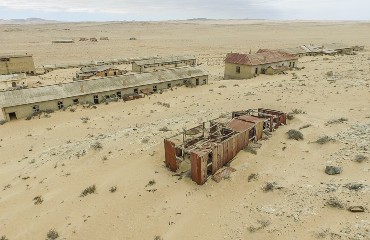
Kolmanskop Ghost Town - Image Credit: SkyPixels, CC BY-SA 4.0 Although Namibia’s diamond fields are neither as extensive nor as historically renowned as those of neighbouring South Africa, they remain a vital contributor to the country’s economy. Unlike South Africa’s kimberlite-hosted deposits, Namibia’s diamonds are predominantly marine placer deposits, formed through long-distance transport rather than in situ emplacement. The diamonds originally eroded from kimberlite pipes far inland in central Africa and were carried hundreds of kilometres by the Orange River before being deposited along the Atlantic coast near Lüderitz and the now-abandoned mining town of Kolmanskop. Persistent desert winds, coastal currents, and wave action concentrated the diamonds into rich pockets within dunes, beach gravels, and offshore terraces. Commercial mining began in 1908 and sparked a dramatic diamond rush, leading to the rapid rise and eventual abandonment of Kolmanskop, as richer deposits were discovered elsewhere along the coast. Today, Namdeb, a joint venture between De Beers and the Namibian government, operates both land-based and offshore mining systems. Although diamonds from this region are almost never present as mineral specimens in matrix, their exceptional clarity and the unique geological and geomorphological processes that created them make the Sperrgebiet one of Namibia’s most scientifically and economically important mineral provinces. |

Namibia stands as one of the world’s most diverse and geologically fascinating mineral regions, shaped by a deep and complex history that spans over two billion years. From the ancient cratons and Proterozoic mountain belts of the Damara Orogen to the dramatic Mesozoic intrusions of Brandberg and Erongo, the country hosts an extraordinary range of mineral-forming environments. These settings have produced iconic localities—such as Tsumeb, Kaokoveld, Okorusu, and the coastal diamond fields—each offering unique mineral assemblages, rare species, and specimens of exceptional quality. Pegmatites, carbonatites, marine placers, and carbonate-replacement deposits collectively contribute to Namibia’s reputation as a global mineralogical treasure house. Beyond their scientific importance, these minerals form an essential part of the nation’s economic and cultural heritage, supporting industries, scientific research, and collectors worldwide. As exploration continues and new discoveries emerge, Namibia’s geological wealth remains both a window into Earth’s past and an enduring source of wonder and study for generations to come.
If you are interested in adding specimens from Namibia to your collection, click HERE


