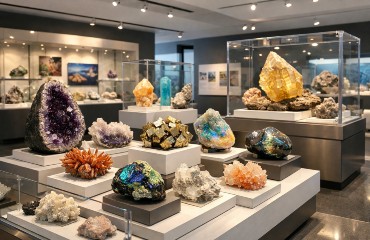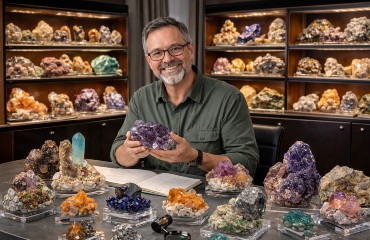
Building a mineral specimen collection is one of the most rewarding aspects of the hobby. Whether you are drawn to the scientific, aesthetic, or historical side of minerals, curating your own collection allows you to create something personal, meaningful, and potentially valuable. The key is to approach collecting with intention rather than simply accumulating specimens.
Define Your Focus
The first step in curating a collection is deciding what kind of collector you want to be. Without a clear focus, collections can quickly become cluttered and unfocused.
Some common approaches include:
- Single mineral species-based collections (i.e., focus on one single mineral) – from different locations or different forms/colours/habits
- Systematic collections – collecting single specimens of rare minerals to collect as many different species as possible
- Locality collections (specimens from a specific country or mine)
- Aesthetic collections (based on visual appeal)
- Theme-based collections (e.g. fluorescent minerals, radioactive minerals, minerals of a specific colour, or crystals with matrix)
There is no right or wrong approach, but having a defined theme gives your collection direction and helps guide future purchases.
Learn Before You Buy
Knowledge is one of the most valuable tools a collector can have. Understanding basic mineralogy, crystallography, and geological formation will help you recognise quality specimens and avoid common pitfalls.
Take time to:
- Study how minerals form (pegmatites, alpine-clefts, hydrothermal veins, etc.)
- Learn typical habits and associations
- Understand what makes a specimen desirable (crystal size, damage, colour, rarity)
The more you learn, the more confident your buying decisions will become – and the more satisfying your collection will be.
Prioritise Quality Over Quantity
A common mistake among new collectors is buying too many low-quality specimens. Over time, these pieces often get replaced, resulting in wasted money and a disjointed collection.
Instead, aim for:
- Well-formed crystals
- Minimal damage or repairs
- Good colour and contrast
- Balanced composition (especially with matrix)
One excellent specimen will always be more valuable – both aesthetically and financially – than several mediocre ones. Curating means selecting carefully, not collecting everything.
Pay Attention to Provenance
Where a specimen comes from can be just as important as how it looks. Classic localities and well-documented specimens often carry greater collector interest.
Important considerations include:
- Famous or historic mines
- Closed or depleted localities
- Well-documented origins
Always try to acquire specimens with accurate labels. A beautiful piece without locality information loses much of its scientific and collectible value.
Develop an Eye for Aesthetics
Mineral collecting is as much about art as it is about science. Over time, you will develop a personal sense of what makes a specimen visually appealing.
Look for:
- Symmetry and crystal form
- Colour contrast (e.g., bright crystals on neutral matrix)
- Overall balance and composition
- Surface quality and lustre
Spend time studying high-end collections, museum displays, and dealer inventories. This will refine your eye and help you recognise standout pieces.
Buy from Reputable Sources
Trust is crucial in mineral collecting. Misidentified specimens, repaired crystals, and incorrect localities are not uncommon in the market.
To minimise risk:
- Buy from established dealers
- Ask questions about provenance and treatments
- Be cautious of prices that seem too good to be true
Building relationships with reliable dealers can significantly improve the quality of your collection over time.
Store and Display Properly
A well-curated collection deserves proper care. Good storage and display not only protect your specimens but also enhance their visual impact.
Consider:
- Stable shelving or display cabinets
- Adequate lighting (neutral white light works best)
- Protection from dust and humidity
- Safe handling and positioning
For delicate or valuable pieces, individual boxes or mounts may be necessary. Labels should always be kept with the specimen.
Document Your Collection
Keeping records is an often-overlooked part of collecting, but it is essential for long-term organisation and value.
Record details such as:
- Mineral name
- Locality
- Purchase/acquisition source and date
- Price paid
- Any additional notes (repairs, treatments, history)
A well-documented collection is far more valuable and easier to manage, especially as it grows.
Refine and Upgrade Over Time
Curating a collection is an ongoing process. As your knowledge and taste evolve, you will naturally want to upgrade or refine your specimens.
This might involve:
- Replacing lower-quality pieces
- Narrowing your focus
- Selling or trading duplicates
A strong collection is not static – it improves through careful editing and thoughtful additions.
Enjoy the Process
Finally, remember that collecting minerals should be enjoyable. Whether you are hunting for a rare species, acquiring a classic locality piece, or simply admiring a beautiful crystal, the process itself is part of the reward.
Take your time, trust your instincts, seek advice and build a collection that reflects your own interests and standards. A well-curated mineral collection is not just a group of specimens – it is a personal journey through geology, history, and aesthetics.