Finding or buying a mineral specimen is only the beginning. Once back home, proper preparation, cleaning, and observation are essential to reveal its true quality and preserve its value.
Using the right equipment ensures that specimens are not damaged during cleaning and allows collectors to fully appreciate their mineralogical features.
This guide covers the key tools and equipment used after collecting.
Initial Cleaning Tools
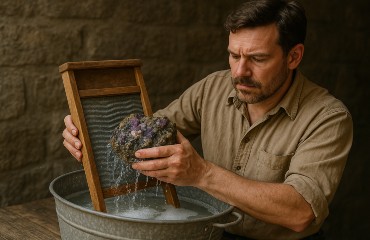
Most specimens require some level of cleaning to remove dirt, clay, or loose debris.
Soft brushes are the first and most important tool. They allow you to gently clean delicate crystal surfaces without causing damage.
Stiffer brushes can be used for tougher dirt or matrix but should be applied carefully.
Water is often sufficient for basic cleaning, sometimes combined with a mild detergent to break down grease or clay.
A bucket or tray is useful for soaking specimens and containing mess during cleaning.
Fine Preparation Tools
For more detailed work, specialised tools are required.
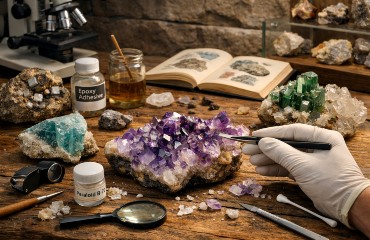
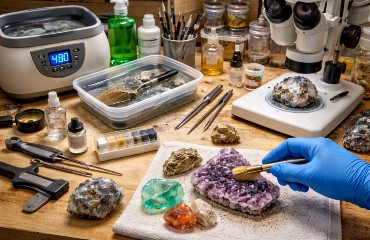
Dental tools or fine picks are commonly used to remove matrix from around crystals. These allow precise work in tight spaces.
A needle probe or similar tool can help clean between crystal faces or remove stubborn particles.
For more advanced collectors, air scribes or pneumatic tools may be used to remove hard matrix, though these require experience and care.
Advanced Cleaning Equipment
Some specimens benefit from more advanced cleaning methods.
An ultrasonic cleaner uses high-frequency vibrations to remove dirt from small crevices. It is particularly useful for robust minerals but must not be used on fragile or water-sensitive specimens.
In some cases, collectors use chemical cleaning solutions to dissolve matrix or stains. For example, iron staining may be removed with specific treatments, but these require careful handling and knowledge of mineral stability.
Safety precautions are essential when using chemicals, including gloves and proper ventilation.
Observation and Identification Tools
Once cleaned, examining your specimens in detail is a key part of collecting.
A hand lens (10x) remains indispensable for close inspection.
For more detailed study, a microscope can reveal fine crystal structures, inclusions, and surface features that are otherwise invisible.
Good lighting, such as LED lamps or adjustable desk lights, is critical for observing colour, lustre, and transparency.
A streak plate, hardness kit, and magnet can also be used at home for further identification and confirmation.
Storage and Display Equipment
Proper storage is essential to protect your collection over the long term.
Specimen boxes with padding help prevent damage and keep your collection organised.
For display, glass cabinets protect specimens from dust while allowing them to be viewed clearly.
Labels are extremely important. Using archival tags or labels, you can record locality, mineral name, and collection details—adding both scientific and collector value.
Documentation and Cataloguing
Serious collectors often maintain detailed records of their collection.
A catalogue system, whether written or digital, allows you to track specimens, their origins, and any treatments applied.
Photography equipment is useful for documenting specimens once cleaned. High-quality images are especially valuable for sharing online or selling.
Safety Considerations at Home
Even at home, safety should not be overlooked.
Some minerals are sensitive to water or chemicals, while others may release toxic dust or dangerous fibres if handled improperly.
Using gloves, wearing a respirator, working in a well-ventilated area, and understanding the properties of your specimens will help avoid damage and health risks.
Conclusion
Preparing and studying mineral specimens is an essential part of the collecting process. With the right tools, you can safely clean, preserve, and fully appreciate the beauty and scientific value of your finds.
From simple brushes and water to microscopes and specialised tools, your equipment can grow alongside your experience. Investing in proper preparation and observation tools ensures that every specimen reaches its full potential in your collection.