
Slovakia’s mineral wealth reflects its complex geological evolution within the Western Carpathians, where Variscan and Alpine tectonic events created a diverse mix of volcanic, metamorphic, and sedimentary rocks. These processes generated suitable conditions for ore-forming hydrothermal systems, skarn development and volcanic deposits, particularly in central and eastern Slovakia. As a result, the country hosts numerous ore fields of precious and base metals, along with many rare mineral species resulting from the oxidation and weathering of their primary sulfide ores.
Mining in Slovakia dates back to ancient times and flourished in the Middle Ages and Renaissance, when rich veins of gold, silver, copper, lead, mercury, antimony, and iron were exploited in districts such as Banská Štiavnica, Kremnica, and the Spiš-Gemer metallogenic belt. These centres became major European producers and technological leaders. Banská Štiavnica, in particular, was one of Europe’s leading silver and gold mining towns. During its history, Slovakia was formerly part of the Kingdom of Hungary and later the Habsburg and Austro-Hungarian empires, which explains why many locations in Slovakia have Slovak and old Hungarian and German names.
After the political changes of the 20th century and the end of large-scale mining, Slovakia emerged as an independent republic in 1993. Today its mining and mineralogical legacy survives in outstanding mineral specimens, especially siderite, chalcopyrite, scheelite, cobalt and nickel arsenides, sulfosalts and brightly coloured secondary copper minerals, highly valued by geologists, mineralogists and collectors worldwide.
For a Map of Mineral Locations in Slovakia click HERE
|
Pezinok District, Bratislava Region
Kermesite - Image Credit: The Assay House, Public Domain Pezinok is a historic town in southwestern Slovakia at the foothills of the Malé Karpaty (Little Carpathians), first mentioned in 1208 and long associated with mining. In the Middle Ages and later centuries, gold and pyrite were worked locally, but its most famous mineralisation is the antimony deposit at Kolársky Vrch, one of Slovakia’s largest antimony ore districts. Old German and Hungarian locality names for specimens from this area include Bösing, Bazin, Pösing and Bozen. Geologically, the Pezinok deposits lie within the Malé Karpaty Mountains, which form part of the Western Carpathians. Hydrothermal activity during the Devonian to Carboniferous periods produced a rich Sb–As–Au mineralisation, with early gold-bearing pyrite and arsenopyrite giving way to later antimony ores. Small-scale antimony mining began in the late 18th century and grew intermittently until 1991, making Pezinok the second largest antimony producer in Slovakia after Rožňava. To date, the deposit has yielded more than 130 mineral species, dominated by stibnite. The associated minerals include valentinite, berthierite, brandholzite, and gudmundite. There are also numerous bismuthinite-stibnite series minerals, including bournonite and rare species like chapmanite and garavellite. Pezinok is the type location for the complex sorosilicate modraite. However, the region’s signature mineral is kermesite, which occurs as sprays of fine purple-red needles. Although mining no longer takes place at Pezinok, the wealth of rare and unusual minerals, as well as its once economically important antimony ores, has made the region a leading locality in Slovak mineralogy. |
|
Banská Štiavnica District, Banská Bystrica Region
Chalcopyrite - Image Credit: Mineralysk, CC BY-SA 4.0 Banská Štiavnica, in central Slovakia, is one of Europe’s classic gold–silver districts and today a UNESCO World Heritage Site. Mining probably began in the 8th or 9th centuries, growing rapidly in the 12th–13th centuries, and by the 18th century the town was the largest gold mining centre in the Habsburg Monarchy, famed for technical innovations such as gunpowder blasting, a sophisticated water-pumping system and compressed air mechanical drilling. In old German and Hungarian, the location was known as Schemnitz and Selmeczbánya, respectively. Geologically, the ores are hosted in a 20-million-year-old stratovolcano caldera, where a hydrothermal Au–Ag–base-metal system developed in andesites and related volcanic rocks. The main ore assemblage comprises galena, sphalerite, chalcopyrite, pyrite and marcasite, with native gold and silver, as well as abundant quartz and various carbonates. Subsequent weathering produced cerussite, anglesite, goethite and up to 200 other recorded minerals. While the initial purpose of mining was silver and gold, by the 19th century their deposits began to run out, so the emphasis turned to zinc and lead. However, increasing depth and rising costs eventually led to the area’s closure in the late 20th century. Today, the town’s museums and numerous specimens in collections worldwide preserve its status as one of Europe’s most important historic mining and mineralogical localities. |
|
Banská Hodruša-Hámre District, Žarnovica, Banská Bystrica Region
Hodrusite - Image Credit: David Hospital, CC BY-SA 4.0 Banská Hodruša forms part of the same Štiavnica stratovolcano ore field as nearby Banská Štiavnica. The region hosts one of Slovakia’s most important intermediate-sulfidation hydrothermal Au–Ag–Pb–Zn–Cu deposits. Historic specimens from here also appear with labels giving the old German name Schemnitz or the old Hungarian name Selmeczbánya. Mining dates back at least to medieval times, and the district became one of the most productive European sources of silver and gold. The Rozália Mine is the only site still working today, making it the last active underground gold mine in Slovakia. It uses flotation to separate metal from finely crushed gangue. The mineralisation is hosted in a fine network of quartz veins through a highly complex combination of sulfide-rich carbonate and silica-rich breccia rocks. Significant minerals are native gold, electrum, galena, sphalerite, chalcopyrite, pyrite, and marcasite, along with silver sulfosalts, a suite of carbonates, and quartz. Banská Hodruša is the type location for the copper-bismuth-sulfide hodrušite, which occurs as silver-coloured flakes or needle-like crystals. Together with nearby Banská Štiavnica, Banská Hodruša remains a reference area for studying Carpathian hydrothermal ore systems in post-volcanic rocks and is a leading former source of high-quality Slovak gold specimens. |
|
Kremnica Region, Žiar nad Hronom District, Banská Bystrica Region
Antimonite - Image Credit: Jan Helebrant, CC BY-SA 2.0 Kremnica, in central Slovakia, is another classic Carpathian gold–silver mining town and home to one of the world’s oldest continuously operating mints. Gold mining here likely began by the 9th century, and in 1328 Kremnica was granted royal town status along with a royal mint, which went on to strike the famous high-purity Kremnica florins and ducats that circulated across Europe. The old German and Hungarian names for Kremnica were Kremnitz and Körmöcbánya. Geologically, Kremnica lies in the northern part of the same Central Slovakia Volcanic Field, within the remnants of an andesite stratovolcano. The Kremnica ore field hosts a large system of low-sulfidation hydrothermal Au–Ag veins developed along faults in andesite rocks associated with Miocene rhyolite magmatism. The main producer was the Šturec Mine, which is estimated to have extracted about 46 tonnes of gold during its life until closure in 1972. Significant reserves may still lie underground, and various trials have continued, but the costs associated with keeping the mine dry are likely to be too prohibitive for any future mining. The main ore assemblage includes native gold, electrum, acanthite, galena, sphalerite, chalcopyrite and pyrite, along with numerous Ag–Sb sulfosalts and locally selenium-rich phases in quartz–carbonate gangue. In total, around 130 minerals have been recorded. Today Kremnica’s mines, mint museum and numerous specimens in collections worldwide preserve its dual legacy as a centre of both coinage and Carpathian gold mineralisation. |
|
Špania Dolina, Banská Bystrica Region
Langite - Image Credit: Joachim Esche, CC BY-SA 3.0 DE Špania Dolina is another notable mineral deposit within the Banská Bystrica region of Central Slovakia. However, whereas the majority of the other local centres focused on gold and silver, mining here was dominated by copper. Exploitation dates back at least to the Bronze Age and expanded greatly during the medieval period. By the 15th and 16th centuries, Špania Dolina ranked among Europe’s leading copper producers, supplying the metal across much of the continent and contributing significantly to the wealth of the Kingdom of Hungary and later the Habsburg Empire. The area became well known for its advanced mining technology, including sophisticated water-management systems and long wooden pipelines that supplied water to mines and ore-processing works. Historically, Špania Dolina was known by its German name, Herrengrund, reflecting centuries of settlement by Carpathian Germans, while its Hungarian name was Úrvölgy. Geologically, the deposit lies within the Western Carpathians and consists of a copper mineralisation hosted within Permian sandstones, shales, and volcanic rocks. The ores formed through hydrothermal processes related to regional tectonism and volcanism. The primary ore minerals were chalcopyrite, tetrahedrite, bornite, chalcocite, and pyrite, while extensive oxidation produced classic secondary copper minerals. Špania Dolina is especially celebrated for superb specimens of native copper, azurite, malachite, chrysocolla, cuprite, chalcophyllite, clinoclase, cornwallite, cuprite, langite, liroconite and chalcanthite, forming vivid azure-blue crusts and often well-formed crystals. These minerals rank among the classic copper specimens of Europe and remain highly sought after by collectors, securing Špania Dolina’s enduring reputation in mineralogical history. |
|
Ľubietová, Banská Bystrica Region
Pseudomalachite - Image Credit: Robert M. Lavinsky, CC-BY-SA-3.0 Ľubietová is yet another mineral-rich area in the Banská Bystrica region, again notable for copper rather than gold or silver. In practice the name refers collectively to a group of three separate mining sites – Podlipa, Svätodušna and Kolba. All were important copper deposits, but the latter two also hosted cobalt, nickel and some silver ore. Mining began in the late 13th century and flourished during the medieval and early modern periods, when the district supplied copper to the Kingdom of Hungary and later the Habsburg Empire. Although never as large as nearby Špania Dolina, Ľubietová was a long-lived and productive mining centre whose mineral specimens gained international recognition. In old German and Hungarian the area was known as Libethen or Liebethbánya. Geologically, the deposit lies within the Western Carpathians and consists of similar hydrothermal copper veins hosted within Permian sandstones and volcanic rocks. The primary mineralisation is dominated by chalcopyrite, tetrahedrite, bornite, and pyrite, which were extensively altered by surface weathering. Like Špania Dolina, this oxidation also produced some of the finest secondary copper minerals in Europe. Ľubietová is especially famous for its intensely coloured euchroite, cyanotrichite, and annabergite, regarded as among the best in Europe, often forming sharp crystals and clusters. These are commonly associated with malachite, chrysocolla, pseudomalachite, cuprite, and limonite, creating striking and highly collectible specimens. The area is the type location for copper phosphate liebethenite. Today, Ľubietová is a classic European locality whose minerals are well represented in historic and modern collections, securing its enduring place in mineralogical literature and collecting tradition. |
|
Podrečany, Lučenec District, Banská Bystrica Region
Aragonite - Image Credit: Bergminerale, CC BY-SA 3.0 Podrečany, located in the south of Central Slovakia near Lučenec, is a lesser-known but mineralogically notable locality best known for its aragonite crystals of world-class significance and beauty. From about 1840 the deposit was mined for iron ore as limonite, with frenzied activity during both world wars. Additional prospecting in the early 1950s subsequently revealed a rich magnesite deposit, mined from 1956, first as an open-pit and later as an underground operation, until closure in 1990. In Hungarian, the location was known as Podrecsány. Geologically, the magnesite occurs in five major lenses within Paleozoic mica schists, phyllites and quartzites. Near the surface, these bodies altered to iron-ochre and limonite that were the focus of the earlier mining. It was within these ochres that the locality’s famous aragonites were eventually found as white, often water-clear, elongated, pyramidal crystals reaching about 30 cm, typically lining large geodes. The finest known specimen measured roughly 70 cm across, but others up to 40 cm were also quite common. Today, Podrečany is chiefly of interest to mineral collectors and researchers, although collecting is restricted due to the former open pit being flooded. |
|
Farbište, Poniky, Banská Bystrica Region
Euchroite - Image Credit: The Assay House, Public Domain The small copper deposit near Kubištová is known for a rich oxidation zone which has yielded a number of striking and highly collectible rare secondary copper carbonate and arsenate minerals. The mineralisation forms a 2 to 6 m thick deposit extending to a depth of 50 m. In addition to common malachite and azurite, it has yielded stunning, emerald-green euchroites; two different forms of olivenite – dark green crystals and white, radial aggregates; blue-green fan-shaped tirolite clusters up to 1.5 cm in size; pale green reniform strashimirite crusts; small, dark blue-green clinoclase crystals; reniform crusts of glassy cornwallite; and recently, blue-green aggregates consisting of a mixture of chalcanthite and melanterite. Crystals of the rare poitevinite have also occasionally been found alongside them. |
|
Nižná Slaná Region, Rožňava District, Košice Region
Jamesonite - Image Credit: Mineralysk, CC BY-SA 4.0 Nižná Slaná is located in the east of Slovakia within an area known as the Spiš–Gemer metallogenic belt and hosts one of the country’s most varied ore districts. Also known in German and Hungarian as Unterszlana or Alsó Sajó, mining began here in the 13th century for silver, gold and copper, reaching its peak output in the 18th century. A document dated 1701 also records the discovery of mercury ores, further expanding the range of metals from here. Then, when it looked like their ores might be running out, yet another metallic mineralisation was discovered in the 1840s, this time of iron in the form of siderite and ankerite. Known as the Manó deposit and accessed via the Gabriela shaft, the operation lasted until the late 2010s, with an estimated total output exceeding 30 million tonnes of iron ore, making it one of the largest iron mining operations in Europe. This exceptional mineralogical diversity is the result of several waves of hydrothermal circulation through highly fractured volcanic and sedimentary rocks associated with the uplift of the nearby Carpathian Mountains. Where these fluids carried iron, they dissolved the surrounding carbonate rocks, forming ore lenses extending over distances of 2 to 8 kilometres and in some places up to 70 metres thick. Where they encountered sulfide-bearing quartz veins, the deposits contain sulfosalts, including tetrahedrite-group minerals, boulangerite, bournonite and jamesonite. And lastly, where the hydrothermal solutions carried mercury, specifically in the Svätá Trojica area, they left behind a suite of mercury minerals, including red, transparent, multifaceted cinnabar crystals up to 4 mm, which are highly prized by collectors. Other notable mineral specimens from the area include rare sulfosalts, ankerite and limonite pseudomorphs after pyrite. |
|
Rožňava District, Rožňava, Košice Region
Krutovite - Image Credit: Leon Hupperichs , CC BY-SA 3.0 Rožňava, also in eastern Slovakia’s Spiš–Gemer metallogenic belt, is one of the oldest and most famous mining towns in Slovakia, historically tied to the extraction of gold, silver and copper ores from a dense network of highly mineralised veins in the surrounding hills. Mining in the area is documented from the 13th century, peaking in the 15th and 16th centuries, after which iron replaced gold and silver as the most important product. In the 1840s nickel and cobalt were also discovered and mined at Mária Baňa, and since the 1850s, the vicinity of Čučma was Slovakia's leading source of antimony. The presence of so many valuable metallic deposits around Rožňava made the area of great economic importance and constituted one of the most significant mining regions of the former Hungarian Empire. Before World War II, Czechoslovakia ranked as the sixth-largest antimony producer in the world. The German and Hungarian names for the region were Rosenau and Rozsnyó, respectively. The geology consists of a complex mix of Palaeozoic phyllite, conglomerate and sandstone rocks, intruded by granite bodies. Hydrothermal circulation subsequently introduced sulphide-bearing veins typically containing siderite-chalcopyrite and stibnite-gold, which form lenticular ore bodies and extensive vein systems, some up to 4.5 kilometres long. The most abundant ore minerals in these deposits include tetrahedrite, stibnite, chalcopyrite, pyrite, siderite, and arsenopyrite, with many sulfosalts like boulangerite, bournonite, and jamesonite described from specific veins. The weathering of these ores has led to a suite of almost 400 other mineral species, making this one of the mineralogically richest areas of Slovakia and a treasure trove of specimens for collectors specialising in sulfides, sulfosalts and other rare alteration minerals. |
|
Smolník District, Gelnica, Košice Region
Pyrite - Image Credit: The Assay House, Public Domain Smolník, in the Gelnica District of eastern Slovakia and again in the Spiš–Gemer metallogenic belt, is one of the country’s best-known historic pyrite-chalcopyrite and siderite-quartz-sulfide deposits. It has been known for a long time and is mineralogically renowned for its rich oxidation zone. Mining probably began as early as the 11th century, and by 1255, copper, silver, and reportedly even gold was being mined here. After declining in the late Middle Ages, the area saw a massive revival during the late 18th century, becoming one of the largest copper mines in Europe. It was especially famous for cementation copper (‘cement copper’) produced from copper-rich mine waters – an industry from the 14th to 19th centuries and regarded as an important export from the Kingdom of Hungary. Later, when the reserves of copper began to decline, Smolnik turned to iron ore, in the form of pyrite. Mining here and in the surrounding area eventually ceased in 1989. In German and Hungarian terminology, the area was known as Schmöllnitz or Schmolnok. Geologically, Smolník is associated with volcanogenic massive sulphide-style Cu–Fe mineralisation, with extensive pyrite oxidation leading to acidic waters which caused severe environmental damage. Ore and gangue minerals reported from the district include pyrite and chalcopyrite as key sulfides, commonly with quartz and siderite, and additional less frequent sulfides and sulfosalts recorded from specific workings. Smolnik is the type location for rhomboclase, szomolnokite and kornelite. For collectors, the area is best known for sulfide and carbonate specimens from historic mine dumps and noted workings like the Jan Krstitel and Najdenie Kriza mines, while its wider metallurgical legacy is underscored by nearby slag heaps linked to past metal smelting. |
|
Rudňany, Spišská Nová Ves, Košice Region
Cinnabar - Image Credit: The Assay House, Public Domain Rudňany, near Spišská Nová Ves in eastern Slovakia’s Spiš–Gemer metallogenic belt, is another of the country’s classic polymetallic mining districts. Activity is recorded from the 13th century, begun by German settlers from the Rhineland. Early workings focused on iron from limonite, before attention turned to copper and silver. In the late 17th century, a mercury mineralisation was discovered, and Rudňany became the leading mercury producer in the former Kingdom of Hungary. Unusually, the mercury occurs chiefly as a variety of tetrahedrite in which it substitutes for zinc or iron, prompting the construction of a dedicated processing plant that operated into the 20th century. Meanwhile, the mining emphasis returned to iron in the mid-19th century with the discovery of a major siderite deposit made up of several veins. The Droždiak Vein, about 7 km long, is among the world’s largest siderite veins, extending to roughly 1100 m depth and reaching 30–40 m in thickness. Rudňany remained Czechoslovakia’s largest siderite producer until mining ended in 1993. Afterwards, only limited barite extraction continued in the Poráč area until 1999, and since then, all mines have closed. The former German and Hungarian names for the area were Kotterbach and Ötösbanya. Geologically, the mineralisation occurs in fractured Paleozoic metabasalts, phyllites and sediments filled by hydrothermal fluids carrying Cu–Hg–Sb–Ag–Bi sulfides, later partly altered to carbonates. Notable minerals include siderite and barite with chalcopyrite, pyrite, arsenopyrite and mercury-rich tetrahedrite–tennantite. Collectors value Rudňany for lustrous rhombohedral siderite crystals and rare sulfosalts such as grumiplucite, cosalite, hauchecornite and lindströmite. |
|
Gelnica, Gelnica District, Košice Region
Pyrolusite - Image Credit: The Assay House, Public Domain Gelnica, once again in eastern Slovakia’s Slovak Ore Mountains, is a classic historic mining town whose prosperity was built on copper, silver and mercury from the 13th century onwards. Some veins were exceptionally rich in silver. However, these reserves were rapidly worked out, and silver mining declined rapidly in the 15th century. Nevertheless, mercury production continued in the Zenderling area, eventually ending in the 1920s. Thereafter, the focus was almost exclusively on copper, which came from the Krížová and Gelnická veins and the Boží area, producing over 1 million tonnes of ore between 1918 and 1944. This made Gelnica’s recent past almost entirely synonymous with copper. Eventually, however, even these reserves became uneconomic, and all the remaining mines closed in 1990. The old German and Hungarian names for Gelnica were Gölnitz and Gölnitzbánya. Geologically, the deposit lies within the Western Carpathians’ polymetallogenic belt, where hydrothermal vein systems formed in fractured Paleozoic metabasalts, phyllites, and sediments and were later modified by weathering. The ore assemblages are dominated by sulfides and sulfosalts, especially chalcopyrite and tetrahedrite-group minerals, and localised mercury-rich associations, underlying the region’s mineralogical diversity beyond ‘typical’ copper-silver veins. The region’s specimens most prized by collectors are the brightly coloured secondary copper minerals, including azurite and malachite, and the many rare copper species like atacamite, brochantite, cornwallite, covellite, langite, olivenite, posniakite and seligmannite. |
|
Dobšiná, Rožňava District, Košice Region
Serpentinite - Image Credit: The Assay House, Public Domain The town of Dobšiná and its surrounding mining area lie on the Slaná River in the Spiš–Gemer metallogenic belt of eastern Slovakia. However, while neighbouring districts are best known for iron, copper, silver and gold, Dobšiná is unique for the mining of Ni–Co–Fe arsenides and sulfarsenides, which made the district one of Slovakia’s most important sources of nickel and cobalt. Output peaked in the 1860s, but cheap competition from abroad led to the end of nickel mining in 1897. Smaller-scale production of mercury, copper, arsenic and bismuth continued into the mid-20th century until all the mines finally closed. The district also hosts a major serpentinite body identified roughly two centuries ago. It became the only asbestos operation in the former Austro-Hungarian monarchy, expanding again after Slovak independence, before all extraction ceased in 1999. Historically the town was known by the German and Hungarian names Dobschau and Dobsina. Geologically, the metal mineralisation occurs in hydrothermal veins dominated by siderite–ankerite and quartz–carbonate-fuchsite assemblages. These veins host complex Ni–Co–Fe–As mineral suites, later superimposed by Cu–Sb sulphides such as chalcopyrite and tetrahedrite. Dobšiná is best known for arsenide species such as nickeline and safflorite, alongside related sulfarsenides like enargite, gersdorffite, luzonite, and tangdanite. The ore field is also the type location for the pastel pink calcium arsenate dobšináite. The asbestos quarry is known for several attractive metamorphic minerals, including bright green crystals of demantoid and andradite garnets. |
|
Zlatá Baňa, Prešov, Prešov Region
Stibnite - Image Credit: The Assay House, Public Domain Zlatá Baňa, in the Slanské vrchy (Slanské Hills) of eastern Slovakia near Prešov, gives its name to an important ore field within the Eastern Slovak Volcanic Field. The first reliable records of mining date to the 14th–15th centuries, when precious and other non-ferrous metals were worked. Lead–zinc mining expanded in the 17th–18th centuries, but most operations ended in the early 19th century, and attempts to exploit gold and silver from the late 18th to early 19th centuries proved uneconomic. Antimony was extracted intermittently from the early 1600s – most notably from the Josef adits and the Gašpar adit – with the last attempt occurring between the World Wars. In Hungarian, Zlatá Baňa is known as Aranbánya. Geologically, the mineralisation is a hydrothermal polymetallic Pb–Zn–Cu–Au–Ag–Sb vein deposit close to the Dubník opal district. The ore bodies are hosted within the sediments, andesites and pyroclastic rocks within a caldera linked to the Effer stratovolcano. Veins reach up to 700 m in length and extend to about 500 m depth within a mineralised zone around 3 km long. For collectors, Zlatá Baňa is known for highly crystalline galena, sphalerite (including black crystals), pyrite, scheelite and chalcopyrite. However, the most prized specimens are superb elongated crystals of lustrous stibnite, as well as various examples of sulfosalts, including well-formed bournonite, boulangerite and rarer species like jamesonite, semseyite and stephanite. The district is also documented for telluride inclusions, including hessite, carvelleite, petzite and rickardite. |
|
Dubník Opal District, Červenica, Prešov, Prešov Region,
Precious Opal - Image Credit: Géry Parent, CC BY-ND 2.0 Dubník, in the Slanské vrchy (Slanské Hills) of eastern Slovakia, is Europe’s most famous source of precious opal and one of Europe’s classic gemstone localities. These deposits have been known since Roman times and were the leading source of opals before large Australian discoveries replaced Slovak stones, and commercial mining in the district ultimately ceased in 1922. The largest precious opal in Europe, weighing 594 grams, was found here around 1670 and is now on display at the Natural History Museum in Vienna. The area is known as Cservenitza in Hungarian. The opal-bearing zone lies on the margin of the Neogene Zlatá Baňa volcanic complex, where opal formed from post-magmatic hydrothermal fluids circulating through mainly andesitic volcanic rocks. Besides precious opal, associated minerals commonly reported include stibnite, pyrite, and marcasite, reflecting the broader Sb–S–Fe hydrothermal system accompanying the opal deposition. Today Dubník is best known to collectors and museums for its remarkably beautiful opals, a signature gem of Slovakia’s mineral heritage, and the area is held as a geoheritage site of global significance because of its long mining history and distinctive volcanic-hosted opal mineralisation. |
|
Maglovec Quarry, Vyšná Šebastová, Prešov, Prešov Region
Chabazite - Image Credit: The Assay House, Public Domain For a country with a significant volcanic past, Slovakia has a surprising lack of zeolite-type minerals. One exception is an area near Prešov, where several quarries operate in diorite porphyry exposures near the village of Vyšná Šebestová. Operating since 1954, the largest quarry, Maglovec, remains active and is a prominent location for zeolite minerals in Slovakia. It is especially renowned for superb chabazite-Ca, often considered the country’s finest, forming white to greenish crystals up to 5 cm, their colour caused by needle-like amphibole or palygorskite inclusions. The lower levels of the quarry contain large xenoliths of altered sedimentary rocks that host a rich assemblage of minerals, including other zeolite species, such as analcime, heulandite, natrolite and stilbite. In addition, the zone hosts striking, radiating danburite aggregates up to 10 cm, accompanied by pale green datolite rosettes. Other minerals include diopside and hedenbergite, as well as rarities such as thaumasite, apophyllite, prehnite, and axinite. Specific areas of the quarry also yield wollastonite and garnets (grossular and andradite), along with occasional selenite gypsum, rock crystal, amethyst, and fluorite. |
|
Novoveská Huta, Spišská Nová Ves, Košice Region
Tyrolite - Image Credit: The Assay House, Public Domain There is evidence to suggest that this region is one of the earliest mining sites in Slovakia, possibly first worked for copper back in the Bronze Age. The first written reference dates from the 13th century, followed by a period of sustained growth until the late 19th century. Later, gypsum was worked and some uranium ore mined in the mid-20th century, but the deposit is now abandoned. The ore field is notable for several episodes of mineralisation caused by waves of hydrothermal activity. First, by siderite–quartz–sulfide solutions in old Paleozoic rocks, then by uranium-bearing copper solutions within Permian volcanosedimentary rocks and finally by a Triassic episode creating nitrate, gypsum and anhydrite layers. The primary vein minerals include chalcopyrite, tetrahedrite, quartz and siderite, while stratiform ores contain bornite, tennantite, chalcocite and covellite. Collectors prize the oxidation zone on old spoil heaps for world-class tyrolite clusters up to 3 cm in size, plus clinoclase, chalcophyllite, strashimirite, cornwallite, cornubite, langite, posnjakite, brochantite, azurite, malachite and local cuprite. Among radioactive species from the uranium mineralisation are brightly coloured torbernite, autunite and zeunerite. |
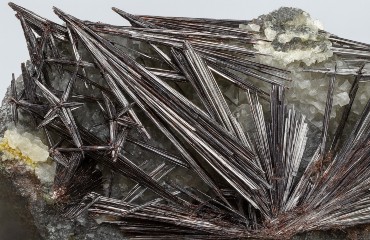
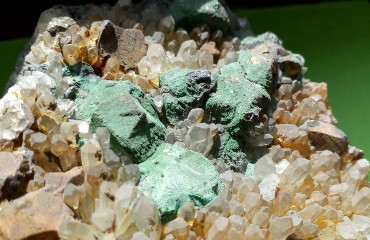

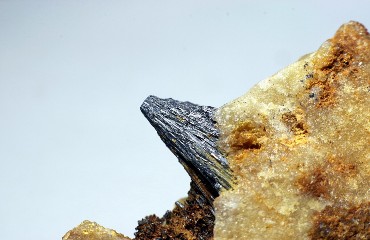
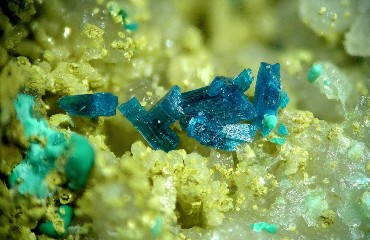


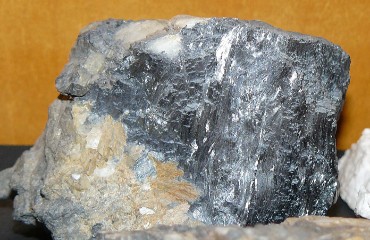


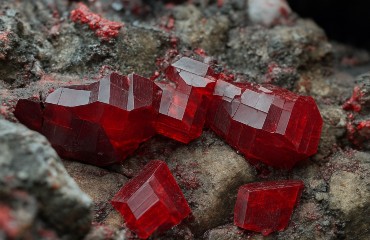


Slovakia is one of Central Europe’s most mineralogically diverse countries, shaped by a complex geological history within the Western Carpathians. Volcanic activity, hydrothermal systems, skarn formation, and sedimentary processes produced rich deposits of gold, silver, copper, iron, antimony, manganese, tungsten, mercury, and opal. From medieval mining centres such as Banská Štiavnica, Kremnica, and Špania Dolina to classic localities including Dobšiná, Rudňany, and Dubník, mining played a central role in the country’s economic and cultural development. Although large-scale mining has largely ceased, Slovakia’s historic districts remain internationally significant for their scientific importance and the high-quality mineral specimens they have produced.
If you are interested in adding specimens from Slovakia to your collection, click HERE