
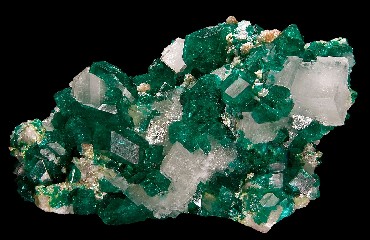

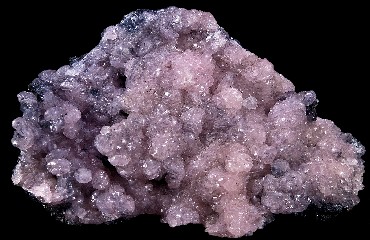
Dioptase, Tsumeb Mine Headframe, Cobaltosmithsonite Image Credits - CC Didier Descouens CC BY-SA 3.0, Olga Ernst CC BY-SA 4.0, Didier Descouens CC BY-SA 3.0
The Tsumeb Mine in northern Namibia is widely regarded as one of the greatest mineral localities in the world. The deposit, first discovered in the late 1800s, quickly gained fame for the sheer variety and quality of its minerals. More than 350 individual species have been identified from the mine, including almost 80 type-locality minerals described scientifically for the first time. For mineralogists, museums, and collectors, Tsumeb represents one of the pinnacles of natural mineralogical diversity.
Geologically, the deposit is extraordinary. The ore body consists of a massive vertical pipe of copper, lead, and zinc sulfides intruding into dolomite host rock. Over millions of years, groundwater oxidised the upper levels of the ore pipe, producing a unique geochemical environment that encouraged the formation of an astonishing suite of secondary minerals. Brilliant blue azurite, emerald-green dioptase, delicate cerussite twins, and lustrous smithsonite are among the classics. Rare minerals such as tsumebite, duftite, and scorodite added to the mine’s fame, making it a textbook locality for studying complex mineral paragenesis.
Mining began during the German colonial period and continued through much of the 20th century, later under South African administration and then independent Namibia. The mine was not only a mineralogical wonder but also an important industrial producer, yielding copper, lead, zinc, and silver that fuelled local economies. At its peak, the Tsumeb smelter was one of the largest industrial operations in the region.
By the 1990s, however, the famed oxidised zone had been worked out, and the mine’s output dwindled. A private venture tried mining exclusively for collector specimens, but operations eventually ceased, leaving behind an enduring legacy rather than new specimens. With closure, the market for Tsumeb minerals shifted dramatically. Collectors quickly realised that no further supply was possible, leading to an increase in the demand and cost of fine examples.
Today, the name 'Tsumeb' evokes passion among collectors. Its specimens remain the centrepieces of museums and private cabinets worldwide, admired for their beauty, rarity, and scientific importance. The mine stands as a symbol of how geology and chemistry can combine to produce wonders unlikely to be matched elsewhere – a mineralogical treasure of the first order.
If you are interested in mineral specimens from Tsumeb and Namibia for your collection, click HERE