
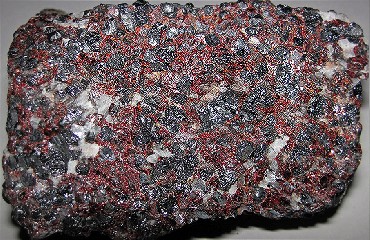
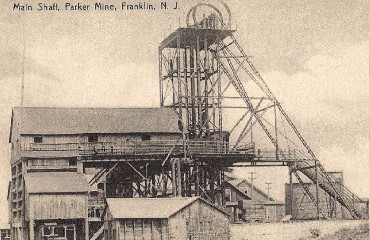

Zincite & Franklinite, Parker Shaft at Franklin Mine, Franklinite-Willemite-Calcite under UV light Image Credits - CC James St. John CC BY 2.0, Cristofono PD, James St. John CC BY 2.0
The Franklin mining district in Franklin, New Jersey, USA, holds a legendary place in mineralogy. Mining began in the late 18th century, when early settlers extracted iron and zinc ores from the region’s unique geological formations. By the mid-19th century, the area was dominated by the New Jersey Zinc Company, which developed Franklin and nearby Sterling Hill into one of the most important zinc-producing regions in the world. Mining operations thrived until the mid-1980s, shaping both the economy of the region and the scientific understanding of ore deposits.
What sets Franklin apart from other mining districts is not only its industrial output but also its extraordinary mineralogical diversity. More than 400 mineral species have been identified from the district, with over 70 species first discovered there. This makes Franklin one of the most mineralogically significant localities on Earth. Many of these minerals appear in unusual combinations and forms, offering collectors and scientists alike a wealth of study material.
Franklin’s remarkable variety of minerals comes from its unique geology. The area is made up of ancient Precambrian marbles, gneisses, and amphibolites that were infiltrated by hot fluids carrying zinc, iron, and manganese. Over time, heat and pressure transformed these rocks, creating the extraordinary diversity that Franklin is known for.
In particular, the district is world-famous for its fluorescent minerals, which glow brilliantly under ultraviolet light. Willemite fluoresces a glowing green, calcite a bright red, and hardystonite a striking blue, thereby creating dazzling displays that have earned Franklin the title of 'fluorescent mineral capital of the world'. Other notable species include franklinite, a distinctive black zinc-iron oxide found only in quantity here; zincite, with its rich red colouration; and rarities such as esperite and clinohedrite, which are highly prized by collectors.
Although mining ceased in 1986, Franklin’s legacy endures. The Franklin Mineral Museum and the nearby Sterling Hill Mining Museum preserve both the industrial history and the scientific importance of the region. Visitors can explore historic mine structures, see world-class displays of local specimens, and even collect their own fluorescent treasures from mine dumps.
Today, Franklin remains a name that resonates across the mineral world. Its unique geology, remarkable range of rare minerals, and spectacular fluorescent displays ensure its reputation as a locality without equal. For mineralogists, collectors, and historians, Franklin tells a story that bridges natural science, human industry, and enduring wonder.
If you are interested in mineral specimens from Franklin and the USA for your collection, click HERE