


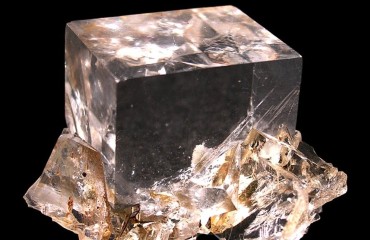
Ilvaite, Map of Dalnegorsk Mining Region, Optical Fluorite Image Credits - CC Robert M. Lavinsky CC-BY-SA-3.0, Public Domain, Robert M. Lavinsky CC-BY-SA-3.0
The Dalnegorsk mining area, located in Primorsky Krai in Russia’s Far East, ranks among the world’s most iconic mineral localities. Mining began in the late 19th century when rich deposits of lead and zinc were discovered in the surrounding limestone mountains. Originally developed to supply raw materials for the Russian Empire, the district expanded rapidly during the Soviet era, when it became a major producer of lead, zinc, and tin concentrates. Over time, Dalnegorsk gained a second reputation – one not for industry, but for producing some of the finest mineral specimens ever found.
The area’s most important mines include the Nikolaevskiy Mine, the 1st and 2nd Sovietsky Mines, the Verkhnii Mine, the Danburitovyi Mine and the Bor Pit, each renowned for its unique mineral associations and crystal habits. Bor Pit, in particular, is known for its boron mineralisation and is the type location for the mineral dalnegorskite. The Nikolaevsky Mine, which opened in 1982, is one of the world's premier localities for crystallised metal sulfides. The cavities in the limestones provided ample spaces for the hot sulphide-bearing solutions to crystallise, resulting in sharp galena cubes, spectacular sphalerite crystals, and superb pyrite crystals, often with a brilliant metallic lustre.
The Second Sovietsky Mine has produced some of the world’s finest colourless fluorite, particularly in delicate shades of green and blue. The perfect transparency of these crystals means that the matrix below can often be seen, and this clarity has ensured their use as ‘optical fluorite’ in scientific instruments where glass cannot be used.
Among Dalnegorsk’s other treasures are transparent pseudo-bipyramidal quartz crystals – doubly terminated and associated with sulfides - that have set a world standard for perfection. Equally famous are the sharply formed calcite crystals, which vary from colourless to honey yellow and sometimes show dramatic phantoms. Galena, sphalerite, and pyrrhotite occur in stunning combinations, frequently accompanied by dolomite or fluorite. Collectors also prize Dalnegorsk’s rarer species, such as ilvaite, hedenbergite, skutterudite, tetrahedrite and datolite, which often occur in remarkably aesthetically pleasing groupings.
Today, while large-scale mining has declined, Dalnegorsk remains a noted name in mineralogy. Specimens from its mines grace major museum collections and continue to appear on the market through old stock or small-scale collecting. The district’s blend of geological richness, mining heritage, and unmatched mineral beauty has secured Dalnegorsk’s reputation as one of the great mineral-producing regions of the modern era – a true jewel of Russia’s mineralogical history.
If you are interested in mineral specimens from Dalnegorsk and Russia for your collection, click HERE