
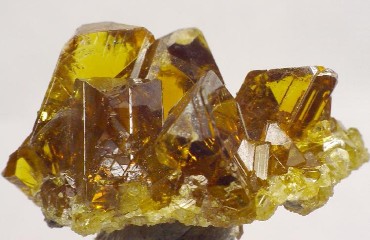
Image Credit – Robert M. Lavinsky, CC-BY-SA-3.0
Sphalerite, the principal ore of zinc, is found in a wide range of geological environments worldwide. While often overlooked, it can form highly lustrous, colourful, and well-crystallised specimens.
The following localities represent some of the finest and most historically important sources, prized for their beauty, associations, and significance to mineral collectors.
1. Áliva Mines, Camaleño District, Cantabria, Spain – Famous for producing some of the finest sphalerite specimens in the world, the Áliva mines yield lustrous honey-yellow to amber crystals. These are often transparent, sharply formed, and beautifully associated with fluorite, making them highly desirable among serious mineral collectors.
2. Cavnic, Cavnic Mining District, Maramureș, Romania – Cavnic is a classic European locality known for sharp, well-formed black sphalerite crystals with high resinous to submetallic lustre. These specimens frequently occur with galena and quartz, forming striking contrasts that are particularly prized by collectors of classic mineral assemblages.
3. Herja Mine, Baia Mare Mining District, Maramureș, Romania - The Herja Mine has produced complex and highly aesthetic sphalerite specimens, often in association with galena, pyrite, and quartz. Crystals are typically well-defined and occur in intricate groupings, representing classic mineralisation from Romania’s historically important mining districts.
4. Trepča Mine, Trepča complex, Mitrovica, Mitrovica District, Kosovo - Sphalerite from the Trepča Mine in Kosovo is prized for its rich, lustrous crystals, often displaying deep brown to black tones with resinous brilliance. Many crystals are twinned. These specimens commonly occur with galena and pyrite in well-formed clusters, reflecting the mine’s prolific lead-zinc mineralisation.
5. Huaron Mining District, Huaron District, Pasco Region, Peru – Huaron is a prolific source of sphalerite, producing lustrous, resinous crystals that are often red or dark brown to black. Specimens commonly occur with galena and pyrite, and the district is well known for its consistent output of high-quality collector material.
6. Casapalca District, Casapalca Mining District, Lima Region, Peru – Casapalca yields well-crystallised sphalerite specimens, often in association with galena, quartz, and pyrite. The locality is valued for producing attractive cabinet specimens with good crystal definition, making it a reliable and widely recognised source for collectors worldwide.
7. Elmwood Mine, Carthage District, Smith County, Tennessee, USA - Elmwood Mine is one of the world’s premier modern sources of sphalerite, producing large, gemmy crystals in shades of amber and brown. These often occur with fluorite, dolomite and calcite, forming highly aesthetic combinations that are considered among the finest contemporary specimens.
8. Tri-State District, Tri-State Mining District, USA - This historic mining district produced vast quantities of sphalerite, ranging from drusy coatings to well-formed pyramidal crystals. While much material is common, finer specimens with good crystal development remain important examples of classic American lead-zinc mineralisation.
9. Sweetwater Mine, Viburnum Trend District, Missouri, USA - Sweetwater Mine is known for producing sharp, honey-yellow to dark brown sphalerite crystals with excellent lustre and well-defined forms. Specimens often exhibit strong brilliance and occur in association with other sulphides, making them attractive examples of Midwestern United States mineralogy.
10. Franklin Mine, Franklin Mining District, Sussex County, New Jersey, USA - Franklin is one of the most famous mineral localities in the world, known for its unique zinc deposits. Sphalerite occurs alongside rare fluorescent minerals, and specimens are valued more for their mineralogical associations and historical importance than for crystal aesthetics.
11. Taolin, Rucheng and Yaogangxian Mines, Hunan Province, China - Hunan has become famous for its deep red to brown sphalerite crystals, often exhibiting exceptional transparency and aesthetic form. Specimens frequently occur with fluorite, and the province represents one of China’s most important modern sources of collector-quality material.
12. Dalnegorsk, Dalnegorsk Urban District, Primorsky Krai, Russia – The Dalnegorsk region hosts several zinc deposits producing attractive sphalerite specimens. These often feature good crystal sizes, rich black colours, and appealing associations, especially with white calcite and quartz. The area is particularly notable for tetrahedral crystals whose faces are often stepped or covered by pronounced striations.
13. Naica, Naica Mining District, Chihuahua, Mexico - Naica is best known for its giant gypsum crystals, but it also produces notable sphalerite within complex sulphide assemblages. Specimens typically occur with galena and other minerals, representing classic hydrothermal mineralisation from one of Mexico’s most famous mining districts.
14. Santa Eulalia, Santa Eulalia Mining District, Chihuahua, Mexico - Santa Eulalia is a classic Mexican locality producing well-crystallised sphalerite associated with galena and calcite. The district has a long mining history and is recognised for attractive sulphide specimens that display excellent crystal form and aesthetic combinations.
15. Vieille Montagne, Liège Province, Wallonia, Belgium - This historic locality is often claimed to be the type locality for sphalerite, making it significant in the development of mineralogy. Although specimens are not always visually outstanding, its importance lies in early scientific study and its role in European zinc mining history.
16. Freiberg, Freiberg Mining District, Saxony, Germany - Freiberg is one of Europe’s most historic mining regions, producing classic sphalerite specimens alongside silver-bearing ores. The most sought-after specimens come from the Beihilfe Mine. Crystals are typically well-formed and represent traditional Central European mineralogy, making them important for both collectors and historical context.
17. Harz Mountains, Harz Mining District, Germany – The Harz Mountains have yielded sphalerite for centuries, often in association with galena and other sulphides. Specimens are valued for their classic character and well-developed crystal forms, reflecting the long and rich mining history of this German region.
18. Tsumeb Mine, Otjikoto Region Mining District, Namibia - Tsumeb is a legendary mineral locality known for producing exceptional and complex specimens. Sphalerite occurs in association with a wide variety of rare minerals, and although rarely producing large crystals, specimens from this mine are highly sought after for their uniqueness and mineralogical interest.
19. Alston Moor, Cumbria, England, UK - Alston Moor is a classic British locality where sphalerite occurs with fluorite and galena in hydrothermal veins. While often secondary to fluorite, sphalerite specimens from the area are valued for their associations and representation of Northern England's mineralisation.
20. Tarnowskie Góry Smelter Stack, Upper Silesian Industrial District, Poland – The “Poland smokestack” locality is famous for unusual man-made sphalerite crystals formed in smelter environments. These specimens are highly distinctive, often delicate and unusual in habit, and represent a fascinating intersection between industrial processes and mineral formation. They are particularly notable for their colour, which ranges from red to green, orange and yellow, often in the same specimen.