
France has long stood at the crossroads of European mineralogy – a country where centuries of mining, diverse geology, and scientific curiosity have combined to reveal some of the world’s most beautiful and historically significant mineral specimens. Its mineral localities are inseparable from the country’s varied geological foundations. For instance, the uplift of the Alps created famous Alpine clefts rich in quartz, fluorite, and titanite. The formation of the Pyrenees produced skarns, pegmatites, and metalliferous veins across the south. In Alsace, Hercynian structures and rift basins generated major silver–copper–cobalt deposits such as Sainte-Marie-aux-Mines, while central France’s Massif Central preserves ancient volcanic systems and hydrothermal belts that yielded many of the country’s finest fluorite, barite, and polymetallic veins. Not forgetting France’s uranium mineralisations that rank among the most numerous and richest in Europe.
Generations of miners, geologists, mineralogists, and collectors have explored these deposits, contributing discoveries that shaped mineral science and filled museums and private collections worldwide. Today, even though most of the mines in France have fallen silent, their legacy endures in the vivid fluorites of Le Burg, the snow-white barites of Les Malines, the radiant pyromorphites of Les Farges, the flawless quartz crystals of La Gardette, and the world-class specimens of torbernite from the Margabal mine. Together, they represent the rich mineral heritage and enduring fascination of France’s geological treasures.
For a Map of Mineral Locations in France click HERE
|
Le Burg (Le Burc) Mine, Albi, Tarn, Occitanie
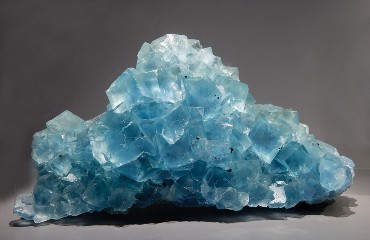
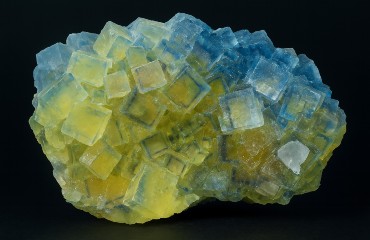
Fluorite - Image Credit: Marie-Lan Taÿ Pamart, CC BY 4.0 The Tarn region of southern France consists of thick Jurassic limestones formed on an ancient seafloor about 170 million years ago. A later collision of the Iberian and Eurasian tectonic plates uplifted these rocks into a high plateau. While this momentous event created the Pyrenees to the west, it also pushed molten granites and older metamorphic schists upward into the Tarn limestones at many places like Eglazines and Sidobre. As these intrusions cooled, hydrothermal fluids circulated through rock fractures, depositing fluorite, barite, galena, chalcopyrite, and quartz. The vein that hosts the Le Burg mine, near the town of Alban, is about 1200 metres long and 3 metres wide in black schists. First worked in antiquity for copper, the vein was rediscovered in 1945 and mined for fluorite from 1954 to 2006, producing roughly 650,000 tonnes to depths of 290 metres. When working, the mine was dominated by its famous blue and sometimes yellow fluorite crystals, with quartz, chalcopyrite, native copper, and siderite. Its vividly zoned, sharply formed sky-blue cubes are now probably the most prized of all French fluorites, securing Le Burg’s status as a classic French fluorite locality. |
|
Peyrebrune, Mont-Roc and Moulinal Mines, Réalmont, Tarn Occitanie
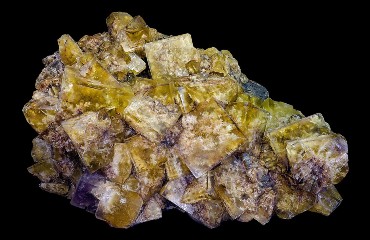
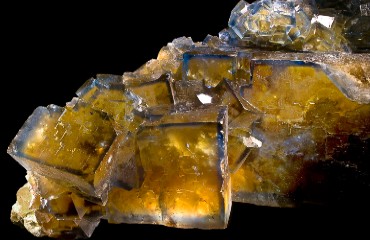
Fluorite - Image Credit: The Assay House, Public Domain This group of mines is also part of the wider mineralisation as Le Burg. The Mont-Roc Mine is located about 6 km southwest and was part of a larger complex with the Moulinal Mine. Together they worked two massive shallow veins, each over 1000 m long and 10 m wide. Like Le Burg, both were mined in antiquity for copper and were later operated as fluorite mines from the 1940s until 2006. Apart from blue and yellow specimens, Mont-Roc is known for its pale, transparent, green and lavender crystals, while some Moulinal specimens are prized for their deep blue colour and associations with siderite. The most mineralogically diverse location, however, is the Peyrebrune area, about 18 km southwest of Le Burg, near the town of Réalmont. Two separate mining operations took place here. The first consisted of the 520 m deep Peyrebrune mine, which worked lead, zinc and silver since Roman times until 1972. The second was a group of four quarries which were mostly worked for aggregates but which produced the bulk of the area’s mineralogical wealth of more than 100 documented species. Among them are the sulfides and other ores of copper, silver, lead, tin, zinc, iron, neodymium, manganese, indium, cadmium, cerium and vanadium, and their associated secondary weathering species. The Le Rivet Quarry is noted as the type locality for the silver-lead sulfosalt tubulite. Otherwise, the quarries, including Le Rivet, produced striking, perfectly transparent, cubic crystals of mostly yellow fluorite. Specimens so highly prized that many now reside in French museum collections. |
|
Le Beix Mine, Riom, Puy-de-Dôme, Auvergne-Rhône-Alpes
Fluorite - Image Credit: The Assay House, Public Domain The Le Beix deposit, in the heart of the Massif Central near the town of Lastic, lies in volcanic terrain cut by rich hydrothermal veins. Discovered in the 19th century, it initially produced sphalerite, galena, chalcopyrite and quartz, laid down in a classic French Alpine polymetallic hydrothermal system. However, when these ores began to dwindle, production turned to fluorite in 1906 and continued until 1977. During this time, Le Beix worked a large fluorite-quartz-baryte vein, 250 m long and 4 m wide, hosted within migmatitic granite. At the year of closure, the mine had reached a depth of 244 m, and 386 000 tonnes of fluorite had been produced. During its life, the mine was renowned for its striking ‘electric-blue’ fluorite crystals that formed in spacious quartz-lined cavities. Although the location is long closed, its vividly coloured, sharply formed specimens remain among the most admired fluorites from the Massif Central and possibly even from the whole of France. |
|
Les Malines District, Gard, Occitanie
Bournonite - Image Credit: Marie-Lan Taÿ Pamart, CC BY 4.0 Situated in the Cévennes mountain range, the Les Malines district was once ranked as the biggest lead-zinc deposit in France. Known since Roman times, it was worked industrially from 1885 by means of several mines which jointly produced 1,000,000 tonnes of lead and zinc ores until 1993. Geologically, the deposit consists of a vast network of hydrothermal veins within Cambrian dolomites and Bathonian limestones uplifted during the formation of the nearby Alps. The majority of the veins, and therefore the region’s mines, sit beneath the Pic d'Anjeau Mountain, the highest peak in the area. Eventually, many of the mines joined underground and were connected by a main adit, which became the main entrance and access point, called either the Les Vieux Travaux mine or the Vieille mine, which were the names of two former individual mines. Mineralogically, the district is best known for galena, sphalerite, chalcopyrite, pyrite, stibnite, goethite, cerussite, and a host of secondary lead, zinc, and copper minerals, including cerussite, anglesite, azurite, malachite, and pyromorphite. In addition, the area is famous for producing world-class specimens of bournonite and römerite. But perhaps best known of all are its snow-white rosettes of baryte crystals, many of which sit upon a matrix of contrasting dark-brown sphalerite. Unfortunately, all mines are now closed, but some large dumps remain on which various specimens can still be found. |
|
La Barre Mine (La Martinèche Mine), Riom, Puy-de-Dôme, Auvergne-Rhône-Alpes
Fluorite - Image Credit: The Assay House, Public Domain The La Barre fluorite mine, near the village of Saint-Jacques-d'Ambur, is one of France’s classic fluorite localities. The deposit consists of a large fluorite–quartz vein hosted in migmatitic rocks on the banks of the Sioule river. Working between 1918 and 1948, it produced around 80,000 tonnes of fluorspar before the mine closed. The adits were finally sealed around 2000, and only the old dumps remain. Access and collecting are now generally prohibited and tightly restricted. La Barre is renowned for its vivid blue to purple fluorite crystals, which typically form sharp cubes on quartz or chalcedony with minor baryte and galena. The most sought-after specimens display striking tricolour ‘phantom’ zoning – a yellow core, a blue-to-purple intermediate zone, and an outer colourless layer. These bright, well-formed cubes are among the most distinctive fluorites from the Massif Central. Some pieces are strongly UV reactive, their colours becoming pink, orange and blue under ultraviolet light, adding to the appeal of this celebrated but now inaccessible locality. |
|
Fontsante Mine, Tanneron, Draguignan, Var, Provence-Alpes-Côte d'Azur
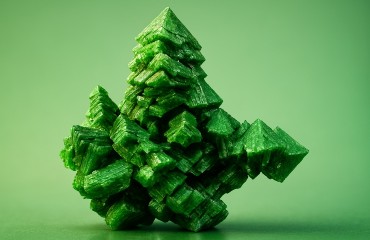
Fluorite - Image Credit: The Assay House, Public Domain The Fontsante Mine, near Tanneron in the Var, was another leading French fluorite deposit and became a classic Provençal locality. Mining began in 1919 and continued until 1987, during which almost 2 million tonnes of fluorspar were extracted from around 20 roughly parallel veins hosted in metamorphic gneisses. Today all adits are sealed, but large dumps and numerous outcrops still mark the site. The mineralisation occurred in several stages, beginning with early faulting of the gneiss and the deposition of purple and green fluorite with white quartz in narrow fractures. Later, the main veins were filled with massive green and white fluorite, locally associated with sellaite. In open spaces within this earlier fluorite, attractive vugs developed, lined with sharp yellow to colourless fluorite cubes accompanied by baryte and sulphides such as galena, sphalerite, pyrite and marcasite. The Fontsante Mine is famous for producing some of the finest fluorite specimens in Provence, including stepped “Aztec pyramid” crystals and vivid green, purple and yellow cubes. It is also known for its high-quality baryte and a variety of silver minerals, like proustite, acanthite, and stephanite, making it an important place for both display pieces and small samples. |
|
Les Rocs quarry, Buxières-les-Mines, Moulins, Allier, Auvergne-Rhône-Alpes
Fluorite - Image Credit: The Assay House, Public Domain Les Rocs Quarry, near Buxières-les-Mines in the Allier department, is a notable fluorite locality in the northern Massif Central. The quarry works a series of fluorite-bearing veins and lenses cutting through sedimentary and volcanic rocks. It is especially prized by collectors for its deep violet to purple fluorite, which often forms pseudo-spherical aggregates or stepped cubic clusters. These crystals often rest on drusy quartz and can be found alongside pyrite, sphalerite, baryte, and galena, making them visually appealing. Although primarily an industrial operation, Les Rocs has gained a strong reputation for producing aesthetic display pieces and fine cabinet specimens. |
|
Chaillac Mines, Chaillac, Le Blanc, Indre, Centre-Val de Loire
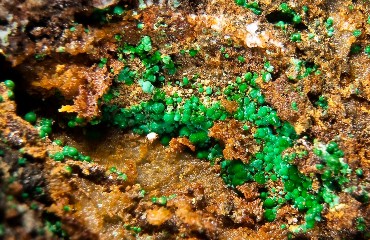
Pyromorphite - Image Credit: Christel45, Public Domain The Chaillac Mines, near Le Blanc in Indre, formed one of France’s well-known baryte–fluorite–lead deposits and was a recent classic for collectors. The district included the Le Rossignol deep fluorite mine and the Les Redoutières open cast baryte workings, which together produced several million tonnes of their respective concentrates, making Chaillac one of the largest mining sites in Europe. Le Rossignol was especially well known for mauve phantom crystals with yellow centres or, more rarely, yellow or purple specimens. Baryte was present in small quantities as large white or pink tabular crystals. The main lead ore was galena, accompanied by various secondary species, including bright-green pyromorphite crystals, cerussite and wulfenite. Les Redoutières, by contrast, was the source of the locality’s unusual red to orange baryte, coloured by iron oxides and sometimes forming dense, rice-grain or tabular crystal aggregates; blue baryte also occurred. Le Rossignol ceased production in 1997, and Les Redoutières now consists mainly of old dumps. Nevertheless, together, these workings make Chaillac a key French location for Pb–Ba–F mineral assemblages, from cabinet pieces to highly sought-after micromounts. |
|
Les Farges Mine, Ussel, Corrèze, Nouvelle-Aquitaine
Pyromorphite - Image Credit: Robert M. Lavinsky, CC BY-SA 4.0 Les Farges Mine, near Ussel in Corrèze, is a classic French lead–silver deposit famous worldwide among collectors. The mineralisation occurs in a network of veins within limestones and sandstones cut by granite and hydrothermal intrusions, forming a Pb–Zn–Ag orebody later enriched by oxidised secondary lead minerals. Lead mining probably began in Roman times, but the modern mine operated only from the early 1970s until its closure in 1981, producing lead and zinc concentrates, yet becoming far better known for spectacular specimens. Les Farges is a world-class locality for bright green to brown barrel-shaped pyromorphite, often on baryte and quartz, plus superb reticulated and twinned cerussite, striking yellow spheroids of mimetite and rare dark-orange tabular wulfenite, many of which may sit directly on pyromorphite. Together these classic minerals make this short-lived mine a cornerstone of French secondary lead mineralogy and specimen collecting. |
|
La Gardette Mine, Villard-Notre-Dame, Isère, Auvergne-Rhône-Alpes
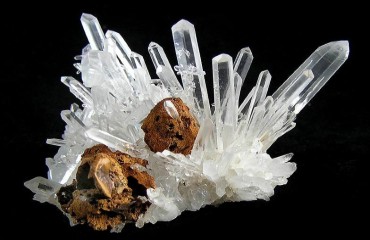
Quartz - Image Credit: Robert M. Lavinsky, CC BY-SA 4.0 Located near Bourg-d’Oisans in the French Alps, La Gardette is one of the world’s most celebrated quartz localities. The deposit is a narrow quartz–barite vein cutting Alpine gneisses overlain by Liassic limestones. Mining began in the early 17th century for rock crystals and briefly shifted to gold extraction between 1781 and 1788, a period during which spectacular quartz crystals were discovered in large vugs. These flawless, razor-sharp crystals soon made La Gardette famous, and many 18th–19th-century specimens now reside in major museums. The locality is especially noted for its distinctive quartz twins with an angle of 84°30', first described here and originally named ‘La Gardette twins’, though more recently known as Japan-law twins. In recent years, the site was worked mainly by local collectors as a quartz specimen mine until 2005, when the remaining adits were closed. La Gardette quartz remains a global benchmark for clarity, form, and crystallographic perfection. |
|
Chessy copper mines, Chessy, Rhône, Auvergne-Rhône-Alpes
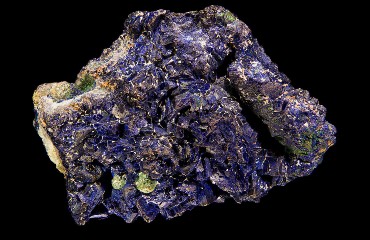
Azurite - Image Credit: Didier Descouens, CC BY-SA 3.0 Few names in mineralogy evoke the same prestige as Chessy-les-Mines. The mine is the first officially documented source of the deep blue copper carbonate mineral ‘chessylite’, named in honour of the location, but which later became renamed as azurite. This species is widely regarded as one of the world’s most iconic copper minerals. Chessy itself is an ancient deposit worked for copper from the Middle Ages until 1875. It is hosted in altered sodium-rich lavas linked to the Devonian Brévenne rift. The ore occurs as a dense three-dimensional mesh of small veinlets containing a mix of baryte, galena, sphalerite, and chalcopyrite, later buried beneath Triassic clays and sandstones. During a further period of hydrothermal activity, these rocks were mineralised again, and subsequent oxidation transformed the primary sulphides into vividly coloured secondary minerals, including azurite, malachite, cuprite, agardite, chrysocolla and many other rare species. Four zones were recognised by 19th-century miners: the Yellow Mine (primary sulphides), Black Mine (tenorite and native copper), Red Mine (cuprite in red clays), and the famed Blue Mine, opened in 1811 and filled with spectacular azurite cavities. These superb azurites, sharply terminated and intensely coloured, made Chessy famous and populate museums and private collections worldwide. Although the underground mine is closed, the dumps are preserved and periodically explored by the local geology association AMAC. |
|
Mont Blanc Massif, Bonneville, Haute-Savoie, Auvergne-Rhône-Alpes
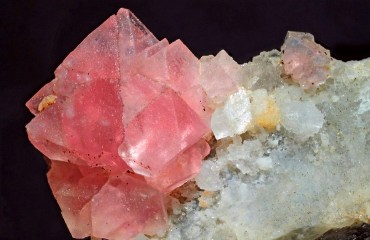
Fluorite - Image Credit: Géry Parent, CC BY-ND 2.0 The Mont Blanc Massif, straddling France, Switzerland, and Italy, is one of the world’s classic localities for Alpine minerals and the spiritual home of ‘cristalliers’ – the mountain crystal hunters who have searched its high cliffs and glaciers for centuries. The massif consists mainly of Hercynian-age granite intruded into high-grade gneisses and schists. During the Alpine orogeny, immense pressure fractured these rocks, creating fissures that later filled with hydrothermal fluids. As these fluids cooled, they deposited exceptional quartz, smoky quartz, amethyst, gwindel quartz, albite, adularia, chlorite, epidote, anatase, beryl, fluorite, titanite, and rarer minerals such as brookite and rutile. Mineral collecting around Mont Blanc dates back at least to the 17th century, but it flourished in the 18th and 19th centuries when local collector-dealers supplied European royalty and museums with perfectly transparent ‘Mont Blanc quartz’. Famous localities include the Argentière Glacier and Les Droites, best known for sharp smoky quartz and amethyst; Talèfre Glacier, known for superb gwindel quartz; Aiguille Verte, known for almost black smoky quartz; and Leschaux Glacier, for flat tabular rock crystal specimens. However, in modern times, the most prized mineral from the entire region is fluorite, which almost uniquely occurs here as stunning pink to deep red octahedral crystals. They are widely distributed, with the sources including the Argentière Glacier, Les Droites, Aguille Verte, Talèfre Glacier and Capucin du Requin. Les Courtes is the source of sea-green octahedral fluorite. However, despite their apparent abundance, specimens are extraordinarily difficult to obtain because the fluorite-bearing veins lie high up the mountainsides, nearly always requiring expert climbing skills. Small-scale personal collecting is generally allowed, but permits should be obtained from local officials. Many of the classic specimens now housed in major museums and collections were extracted by rope and axe from perilous high-altitude clefts, securing the Mont Blanc Massif’s legendary status in mineral collecting. |
|
Cap Garonne Mine, Le Pradet, Toulon, Var, Provence-Alpes-Côte d'Azur
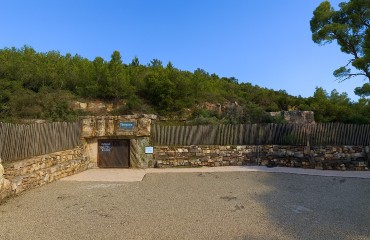
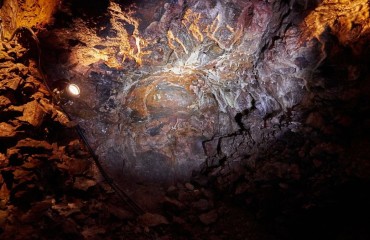
Cap Garonne Museum - Image Credit: The Assay House, Public Domain Overlooking the Mediterranean near Toulon, the Cap Garonne Mine is one of France’s most important and mineralogically diverse copper localities. Worked intermittently from 1862 to 1917, it operated in three main sectors around the Colle Noire hill: the North Mine – now a museum – the South Mine, and the smaller La Gavaresse adit. The deposit consists of a mineralised layer of Triassic conglomerates resting on Permian red sandstones, with primary sulphides introduced during or shortly after sedimentation by hydrothermal activity. Later oxidation of these sulphides created a spectacular suite of secondary minerals filling fractures and small cavities. Cap Garonne is celebrated for its dazzling copper mineralogy, including azurite, malachite, brochantite, and conichalcite, and for being France’s most prolific source of new mineral species, with 16 described to date and over 190 valid minerals recorded. These include the arsenates, sulphates and halides of Cu, Pb, Al, Zn, Fe, Co, Ni, U, Hg and Ag. Rare minerals such as pradetite, mahnertite, perroudite, and gobelinite were first identified here. Today, the site belongs to the Conservatoire du Littoral, and collecting is strictly forbidden, but the North Mine museum preserves its mining heritage and remarkable paragenesis for scientific study and public appreciation. |
|
Trimouns Talc Mine, Luzenac, Ariège, Occitanie
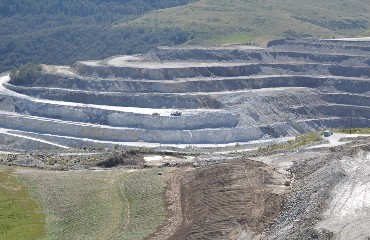
Trimouns Mine Terraces - Image Credit: Lucas Destrem, CC BY-SA 4.0 The Trimouns talc quarry, towering above the Ax valley at about 1,800 m, is the world’s largest talc mine. The mineral was exploited on a small scale in the early 19th century, when the soft white rock was ground in mills and the powder carried by mule to Toulouse for use in pharmaceutical products. The arrival of the railway in 1888 and the growth of the paper industry triggered massive industrial development. The Talc de Luzenac company was founded in 1905, and a number of improvements followed, including the construction of an aerial tramway. Today the open pit operates from roughly April to November, producing around 400,000 tonnes of talc per year. Geologically, Trimouns exploits a talc–chlorite lens formed about 300 million years ago along a fault between dolomitic marble and mica schist. Magnesium-rich fluids altered the dolomite to talc and converted the schists to chlorite. Besides massive and platy white talc with dolomite and calcite, the quarry is renowned for its rare-earth minerals, including allanite-(Ce), parisite-(Ce), bastnäsite-group species, synchysite, hingganite, iimoriite-(Y), trimounsite-(Y) and dissakisite, usually as superb micromounts, but also as attractive crystals of various species exceeding 1 cm. These minerals occur in dolomite vugs in a contact zone of the talc/chlorite deposit, where large-scale mining for talc may soon be ending. Guided visits run in season from Ax-les-Thermes, giving visitors a close view of this spectacular high-mountain operation. |
|
Sainte-Marie-aux-Mines Silver District, Colmar-Ribeauvillé, Haut-Rhin
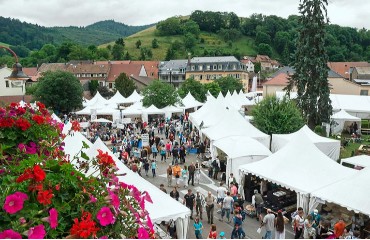
Ste Marie Mineral Show - Image Credit: Ville de Sainte-Marie-aux-Mines, CC BY-SA 3.0 Sainte-Marie-aux-Mines, set in the Vosges Mountains near the German border, is one of Europe’s oldest and most historically significant silver–copper–lead–cobalt-arsenic mining districts. Work here dates back at least to the 10th century, exploiting Hercynian hydrothermal veins cutting schists and gneisses. The district is famous for classic specimens of native silver, argentiferous galena, tetrahedrite–tennantite, cobalt minerals, barite, calcite, azurite, and quartz. At some stage, the area was subjected to the hydrothermal circulation of fluids carrying arsenic, leading to a uniquely rich abundance of mineral species. To date, more than 190 separate minerals have been identified, including 11 rare arsenates, for which the region is the type location. Among them are dervillite, sainfeldite, smamite, fluckite, rauenthalite, villyaellenite, and others. Today the underground workings are protected as an archaeological zone, but the town remains internationally known for hosting one of Europe’s major annual mineral shows. Historically, the valley was split between two political realms: the Lorraine side—home to rich mines such as the renowned Sanct Jacob—and the Alsatian side, itself divided into three sectors. Altenberg, the oldest, may have been worked since the 10th century; Neuenberg opened in 1549; and Bluttenberg developed on the adjacent Brézouard massif. Conflict, plague, and exhausted veins caused widespread closures in the 17th century, and later attempts in the 18th century saw frequent bankruptcies. A renewed phase of exploration in the 1960s rediscovered around 40 km of galleries, revealing the complexity of the district’s hydrothermal ores. Many early specimens bear the historic label “Markirch”, the German name for Sainte-Marie-aux-Mines. |
|
Melle silver mines, Niort, Deux-Sèvres, Nouvelle-Aquitaine
Silver Ore at Melle Mine - Image Credit: Jacques Bodin, CC BY 2.0 Melle, in Deux-Sèvres, western France, is one of Europe’s best-preserved early-medieval silver-mining districts. Silver-bearing galena beneath and around the town was worked intensively from about the 7th to late 10th centuries, feeding a royal mint that struck silver deniers for Merovingian and Carolingian kings such as Dagobert I and Charlemagne. The deposit is a Mississippi Valley–type orebody hosted in karstified Jurassic limestones, with thin, laterally extensive lenses of argentiferous galena carrying only around 0.1–0.5% silver, yet economically vital at the time. Mining left some 20 km of galleries, a short section of which is now open as the tourist site Mines d’Argent des Rois Francs. Occasional mineral specimens include galena, secondary cerussite and anglesite, with minor pyromorphite and other lead supergene species. |
|
The Hautes-Alpes region
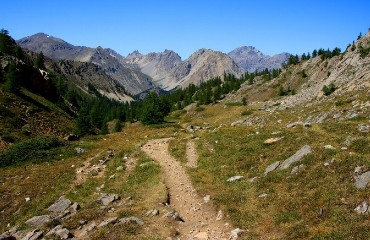
Névache north of Briançon - Image Credit: Guillaume Baviere ., CC BY SA 2.0 The Hautes-Alpes department, in the southern French Alps, hosts a remarkable range of Alpine mineralisations linked to the complex collision between the African and European plates. The area’s rocks are mainly ancient marine carbonate sediments, severely deformed and metamorphosed during the Alpine orogeny, giving rise to numerous hydrothermal veins and skarn and limestone-hosted ores. Mining has occurred since at least medieval times, notably at L’Argentière-la-Bessée where argentiferous galena veins produced lead and silver from the Middle Ages to the early 20th century. In contrast, the nearby Le Grand Clot mine at La Grave and Les Clausis mine at Saint-Véran worked native copper–bornite mineralisations from prehistory through to the 20th century. Significant ore species from these locations are galena, sphalerite, chalcopyrite, pyrite and arsenopyrite with silver minerals such as pyrargyrite and proustite, plus colourful weathering minerals including cerussite, anglesite, malachite, azurite and smithsonite. However, of particular significance is a thallium-enriched hydrothermal stratiform deposit in Triassic dolomitic limestones at Jas Roux. Originally tried as a copper prospect in 1822, it has yielded 11 type-locality species, including several rare silver-thallates, including chabournéite, dewitite, écrinsite, ginelfite, routhierite, and vallouiseite. |
|
Salsigne mine, Salsigne, Carcassonne, Aude, Occitanie
Cornubite - Image Credit: Didier Descouens, CC BY-SA 3.0 Salsigne, in the Montagne Noire north of Carcassonne, was France’s main gold mine and the world’s largest arsenic producer. Industrial mining began in the late 19th century, with large-scale gold and arsenic extraction from 1908 until final closure in 2004. The deposit is a late Variscan Au–As–Bi–Ag–Cu orebody hosted by deformed Cambrian–Devonian metasediments on the southern rim of the Massif Central. The mineralisation occurs in shear zones and quartz veins with several stages: early arsenopyrite–quartz, followed by pyrite, then pyrrhotite–chalcopyrite with native gold, silver and bismuthinite. Salsigne yielded over 100 tonnes of gold, plus significant silver, copper, bismuth and about 500,000 tonnes of arsenic, leaving a complex legacy of contamination. Classic collectable species include arsenopyrite, pyrite, chalcopyrite, boulangerite, and attractive aragonite specimens from late-stage carbonate veins. Numerous, rare arsenate species are also regularly found, including brassite, clairite, geminite, olivenite, scorodite, tyrolite and the type-location species yvonite. Another notable gold deposit in France is the St-Yrieix gold mining area in Haute-Vienne, including the Le Bourneix Mines, which have been mined since ancient times until fairly recent closure. As a result, no commercial goldmining takes place in France today. |
|
Uranium Deposits
Torbernite from Margabal - Image Credit: Robert M. Lavinsky , CC BY-SA 3.0 France has many widely scattered uranium deposits, totalling around 200 locations, mostly in the Massif Central in south-central France and the Armorican Massif in the northwest. Together they produced about 76,000 tonnes of uranium, making France a leading producer in Europe, though most of the country’s occurrences were small and often had only mineralogical interest.
|
|
Valzergues, Villefranche-de-Rouergue, Aveyron, Occitanie
Fluorite - Image Credit: Didier Descouens, CC BY-SA 4.0 Valzergues is an ancient fluorite mine in the southwestern Massif Central, worked for hydrothermal fluorite–barite–base-metal veins. Now closed, it is famed among collectors for sharp cubic fluorite crystals, especially the ‘yellow vein’ habit – crystals with golden to honey-yellow cores with blue to violet edge zoning, often gemmy and highly fluorescent. Associated species include quartz, malachite, conichalcite and rare Cu–As secondary minerals. |

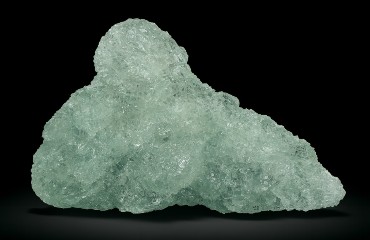
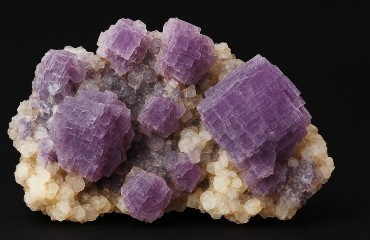
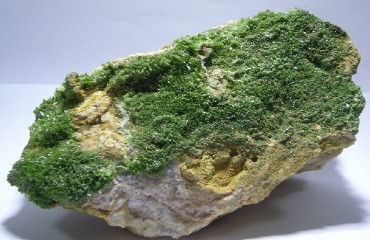
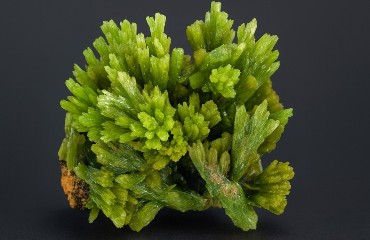
France’s mineral wealth reflects the remarkable diversity of its geological history—from Alpine uplift to ancient volcanism and deep-seated hydrothermal systems. Though most mines have closed, the specimens they produced continue to inspire scientists and collectors alike. The country’s classic fluorites, azurites, barites, pyromorphites, and Alpine quartz remain benchmarks of quality and beauty, ensuring that France’s mineral heritage endures long after the workings have fallen silent. Together these treasures stand as a testament to the nation’s unique place in the story of European mineralogy.
If you are interested in adding specimens from France to your collection, click HERE


