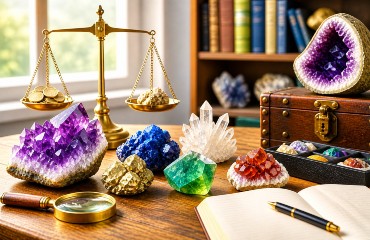
The idea of buying mineral specimens as an investment is an appealing one – after all, few assets combine natural beauty, scientific interest, and tangible ownership in quite the same way. A fine mineral specimen can sit proudly on display, admired daily, while potentially increasing in value over time. But is this a realistic investment strategy, or more of a passion-driven pursuit with occasional financial upside? The answer lies somewhere in between.
Understanding the Market
Unlike stocks, bonds, or property, the mineral specimen market is relatively niche and unregulated. Prices are driven by a combination of rarity, aesthetics, provenance, and collector demand, rather than by standardised valuation models. This means that while exceptional specimens can appreciate significantly, the market lacks the liquidity and predictability of traditional investments.
High-end mineral specimens, particularly those from famous or closed localities, have historically shown strong price growth. Pieces from classic mines such as Tsumeb (Namibia), Bisbee (USA), Panasqueira (Portugal), or Cornwall (England) have often increased in value over decades. However, this growth is not uniform across the market. Many average-quality specimens see little to no appreciation.
What Drives Value?
To understand whether mineral specimens can function as an investment, it’s crucial to understand what determines their value:
Rarity: Specimens from limited or exhausted deposits tend to become more valuable over time.
Aesthetics: Colour, crystal form, size, and overall visual impact are all critical. Two specimens of the same mineral can vary dramatically in value based on appearance alone.
Condition: Damage, repairs, or poor preparation can significantly reduce value.
Provenance: Specimens with a well-documented history, especially from notable collections, often command higher prices.
Locality: Some locations are highly sought after by collectors, particularly if they are no longer producing material.
These factors make mineral collecting both an art and a science, but they also introduce subjectivity that can complicate investment decisions.
The Investment Case: Pros
There are several reasons why mineral specimens can be attractive as an alternative investment:
1. Tangible Asset
Unlike digital or paper investments, minerals are physical objects you can own, display, and enjoy.
2. Limited Supply
Mineral deposits are finite. Once a mine closes or a pocket is exhausted, no more specimens of that quality and origin will emerge, which can drive long-term value.
3. Passion Meets Profit
Collectors often derive personal enjoyment from their specimens, making it a hobby that may also have financial upside.
4. Strong Top-End Performance
Museum-quality specimens have shown impressive appreciation, particularly those with exceptional aesthetics or historic significance.
The Investment Case: Cons
However, there are important drawbacks to consider:
1. Poor liquidity
Selling mineral specimens can take time. Unlike shares, you cannot instantly convert them into cash at a known price.
2. Specialist Knowledge Required
Success in this market depends heavily on expertise. Without a solid understanding of minerals, it is easy to overpay or buy poor-quality material.
3. Subjective Valuation
Prices can fluctuate based on trends, collector preferences, and market sentiment.
4. Risk of Fakes and Treatments
The market includes artificially enhanced or misrepresented specimens. Without experience, these can be difficult to identify.
5. Limited Broad Market Growth
While top-tier specimens may appreciate, the majority of lower- to mid-range material often does not increase significantly in value.
6. Limited Market Appeal
The market appeals little to the wider public because it is limited to collectors of mineral specimens. As a result, the size of the market is small, which makes the sale of specimens more difficult and time-consuming than other investment products or collectibles.
Investment vs. Collecting
A key question to ask yourself is whether you are approaching mineral specimens as an investor or a collector. The most successful participants in this market are usually collectors first and investors second.
Buying purely for investment can lead to poor decisions, particularly if you focus only on perceived future value rather than quality. In contrast, collectors who buy what they genuinely appreciate tend to build stronger, more desirable collections over time – collections that may ultimately hold or increase their value.
Best Practices If You Choose to Invest
If you are considering mineral specimens as part of your investment portfolio, a few guiding principles can improve your chances of success:
- Buy Quality Over Quantity: A single exceptional specimen is often a better investment than multiple average pieces.
- Focus on Provenance and Locality: Classic localities and well-documented specimens tend to perform better over time.
- Learn the Market: Study auction results, dealer pricing, and collector trends.
- Buy from Reputable Dealers: This approach reduces the risk of misrepresentation or undisclosed treatments.
- Be Patient: Appreciation in this market typically occurs over years or decades, not months.
A Balanced Perspective
Mineral specimens should not be viewed as a substitute for traditional investments such as stocks or property. Instead, they are best considered an alternative asset – one that combines financial potential with personal enjoyment.
For most people, the ideal approach is to treat mineral collecting as a passion-driven activity with the possibility of long-term value retention or appreciation. If financial return is your sole motivation, there are more predictable and liquid investment options available.
Conclusion
So, should you buy mineral specimens as an investment? The honest answer is, 'only if you also enjoy collecting them.' The market rewards knowledge, patience, and a genuine appreciation for the material. While exceptional specimens can indeed increase in value, they do not guarantee success.
If you approach mineral collecting with curiosity and care, focusing on quality, authenticity, and aesthetics, you may find that your collection becomes both a source of personal satisfaction and a store of value over time.