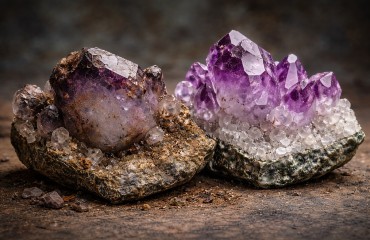
As mineral collecting grows in popularity and value, the number of fakes, fabrications, and “enhanced” specimens entering the market has increased dramatically. While many dealers are reputable, the temptation for some to create desirable but fraudulent pieces is always present. For collectors at any level, learning to recognise the warning signs is essential to protecting both their wallets and the integrity of their collections.
One of the most common fabrications is glued crystals. Small but attractive crystals – often quartz, calcite, or fluorite – are attached to a matrix to create a specimen that never existed in nature. Careful inspection with a loupe often reveals glue traces, mismatched crystal orientation, or unnaturally placed crystals. Some glues fluoresce under UV light, so always take a small UV torch when visiting a mineral fair. Similarly, repaired or “reconstructed” specimens may be sold without disclosure. Clean, straight fracture lines, perfectly aligned breaks, or slight colour changes along glue seams are tell-tale signs of repair.
Another red flag is unnatural colour. Dyed quartz and agates, artificially brightened malachite, and heat-treated citrine are widely sold, especially in tourist resorts. Overly vivid colours, uneven saturation, or colour lingering in cracks can reveal the alteration. Some specimens – such as chalcanthite or halite clusters – are sometimes grown artificially using chemical solutions. These pieces often appear too perfect, too vibrant, or show growth patterns unlike natural material.
Composite specimens – two or more different minerals from unrelated sources glued together – are another deception. A classic example is “dioptase on quartz”, where good crystals of dioptase are glued onto a quartz matrix, despite the combination being geologically improbable. Another popular mineral fraud are quartz geodes with various other minerals glued inside, including cubes of galena or crystals of pyrite or chalcopyrite.
Collectors should also beware of incorrect localities. Assigning a famous or closed locality to a common specimen instantly boosts its price. Cross-checking locality claims with known geology, photos in trusted databases, and reputable publications can prevent costly mistakes.
The final deception is misattributing specimens to famous collections or collectors. This practice of falsifying provenance is another means of inflating the price of 'ordinary' specimens.
Ultimately, the best defence against fakes is experience, careful observation, and buying from trusted sources. With patience and a critical eye, collectors can navigate the market safely and build a collection that is both authentic and enduring.