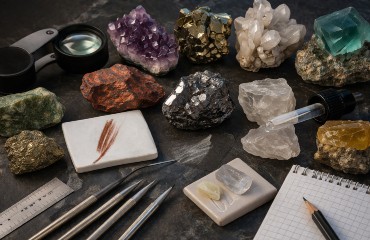
Correctly identifying mineral specimens is one of the most rewarding aspects of collecting, but it is also one of the areas where mistakes are most frequently made. Beginners and even experienced collectors can fall into common traps, often relying on incomplete observations or misleading assumptions. Understanding these pitfalls is essential for building a reliable and meaningful collection.
Relying on Colour
One of the most widespread mistakes is relying too heavily on colour. While colour is often the first feature noticed, it is rarely diagnostic on its own. Many minerals occur in a wide range of colours due to impurities or structural variations. Quartz, for example, can be colourless, purple (amethyst), yellow (citrine), or smoky brown. Conversely, very different minerals can share similar colours - green minerals such as fluorite, apatite, and tourmaline are often confused. Colour should therefore be treated as a preliminary clue, not a definitive identifier.
Ignoring Streak
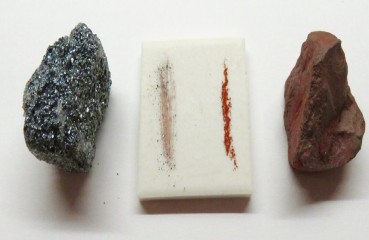
Closely related to this is the tendency to ignore streak. The streak - the colour of a mineral in powdered form - is often far more consistent than the external colour. For example, hematite may appear metallic grey or earthy brown, but its streak is always reddish-brown. Skipping this simple test can easily lead to misidentification.
Overlooking Physical Form
Another frequent error is overlooking the specimen's crystal habit and form. Minerals often have characteristic shapes or growth patterns that provide strong identification clues. Cubic crystals suggest minerals such as pyrite or fluorite, while prismatic forms may indicate quartz or tourmaline. However, collectors sometimes focus only on colour or size, missing these structural indicators entirely.
Not Checking Hardness
Hardness is another property that is commonly misunderstood or poorly tested. The Mohs hardness scale is a fundamental tool, yet many collectors either avoid testing hardness for fear of damaging specimens or perform the test incorrectly. Light, controlled testing on inconspicuous areas can provide valuable information. Confusing a soft mineral like calcite with a harder one like quartz is a classic mistake that a simple scratch test could prevent.
Being Misled by Similarity
Confusion between similar-looking minerals is also extremely common. For example, pyrite and gold are famously mistaken for one another by beginners. While their superficial appearance may be similar, differences in hardness, density, and crystal form quickly distinguish them. Likewise, galena and graphite can both appear metallic and grey, but their weight and cleavage are entirely different. Developing the habit of checking multiple properties helps avoid these errors.
Relying on Locality Assumptions
Another major issue is relying on locality assumptions. While certain minerals are strongly associated with specific locations, it is dangerous to assume that a specimen must be a particular mineral simply because it comes from a known locality. Many sites produce a range of minerals, and mislabelling at source or during resale is not uncommon. Provenance can guide identification, but it should never replace proper analysis.
Ignorance of Tampering
The influence of treatments and alterations is an increasingly important source of mistakes. Heat-treated amethyst sold as citrine, dyed agates, and artificially enhanced specimens can all mislead collectors. Without awareness of these practices, even experienced collectors can misidentify treated material as natural.
Relying on a Single Property
Finally, one of the most significant mistakes is relying on a single property rather than taking a holistic approach. Accurate identification typically requires considering multiple factors together: colour, streak, hardness, crystal form, lustre, and locality. No single characteristic is usually sufficient on its own.
In Conclusion
Mineral identification is a skill that develops with careful observation and experience. By avoiding common mistakes - such as over-reliance on colour, neglecting basic tests, and making assumptions based on locality - collectors can greatly improve their accuracy. A methodical approach not only reduces errors but also deepens understanding, making the process of collecting far more rewarding.