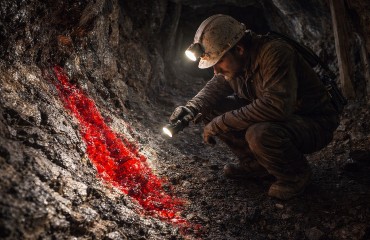
In the mineral world, collectors often talk reverently about “closed localities.” The phrase suggests rarity and exclusivity and implies high value – but is that always true? While minerals from long-closed mines and quarries can command premium prices, the reality is more nuanced.
A closed locality is one where access or mining has ceased, making further collecting impossible. Classic examples include Tsumeb in Namibia, Franklin in New Jersey, and the mines of Cornwall, England. Specimens in circulation from these sites are finite, which naturally increases demand. A perfect crystal of smithsonite from Tsumeb or a fluorescent willemite from Franklin carries both historical and geological significance.
However, not every closed mine produced valuable minerals. If a locality was never known for high-quality specimens, its closure doesn’t magically create worth. Rarity alone doesn’t equal desirability; the minerals must also possess aesthetic or scientific importance. Furthermore, mines sometimes reopen, making their “rare” minerals suddenly common again – as happened with Milpillas in Mexico and Elmwood in Tennessee.
As a result, collectors should view closed localities as part of a mineral’s story, not its sole measure of value. Provenance, condition, and quality still matter more than scarcity. A damaged crystal from a famous mine may be worth less than a pristine example from an active one.
The true value of closed localities lies in their history – they represent moments in time that can never be repeated. Owning such specimens connects collectors to geology, mining heritage, and the generations of people who first unearthed them. But the wise collector knows that rarity should inspire appreciation, never just financial speculation.