
Morocco is one of the world’s leading mineralogical regions, its geology ranging from ancient Precambrian rocks of the Anti-Atlas to Paleozoic sediments of the Atlas Mountains and vast Mesozoic–Cenozoic phosphate basins along the Atlantic margin. This variety has produced hundreds of mineral species and countless beautiful specimens.
Mining in Morocco dates back to Phoenician and Roman times, when copper, lead, and iron were extracted from the Atlas Mountains. During the Middle Ages, Berber and Arab miners continued to exploit the country’s mineral wealth on a small scale, trading metals and pigments across the Sahara. Modern industrial mining began under French rule in the early 20th century, leading to large-scale development of lead, zinc, and especially phosphate deposits.
Today, Morocco ranks among the world’s top phosphate producers, with major operations along a 200-kilometer belt from Khouribga to Youssoufia. Other key resources include cobalt and silver from Bou Azzer, lead and zinc from Mibladen and Touissit, fluorite from El Hammam, and fine agates from Kerrouchen. Besides commercial mining, the country is a leading source of spectacular mineral specimens - notably vanadinite, erythrite, barite, and fluorite – mined mostly by local artisanal miners.
Blending ancient tradition with modern extraction, Morocco remains a land where geological richness continues to yield treasures year after year.
For a Map of Mineral Locations in Morocco click HERE
|
Mibladen (Aouli & ACF Mines), Midelt Province, Drâa-Tafilalet Region
Vanadinite on Goethite - Image Credit: Didier Descouens, CC BY-SA 3.0 Mibladen is one of Morocco’s most famous mineral localities, known for producing over 60 mineral species, including several world classics. Its Jurassic limestones and sandstones, now forming part of the Atlas Mountains, were mineralised by a Mississippi Valley-Type (MVT) hydrothermal system rich in galena, baryte, and chalcopyrite, later altered to numerous secondary minerals. In spite of these rich mineral resources, commercial mining operations in the area were surprisingly few. The Aouli Mine, active under French control from the 1920s to the 1970s, once produced lead ore and is now prized for golden-yellow, blue-fluorescent fluorite. The nearby ACF Mine, also abandoned, yielded baryte and cerussite, later becoming world-famous for its vivid red and orange vanadinite crystals on white baryte. Although commercial mining has ceased, local miners still recover specimens from old workings and small shafts across the district. For this reason, it is impossible to attribute most specimens to any specific location, and instead, these are often labelled simply as ‘Mibladen.’ Other notable minerals from the area include cerussite, descloizite, anglesite, wulfenite, and goethite stalactites. |
|
Touissit–Bou Beker District (Zellidja Mine), Jerada Province, Oriental Region
Anglesite - Image Credit: Space Pen, CC BY-SA 3.0 This mining district, near the Algerian border, developed around lead–zinc deposits in folded Paleozoic carbonate sedimentary rocks. The oxidation of these veins produced superb secondary lead minerals, including bright wulfenite, cerussite, and anglesite. Other metallic minerals include striking examples of azurite, smithsonite, and vanadinite. For most of its working life the primary mining site was the Zellidja Mine, but since its closure small-scale artisanal mining has taken place throughout the surrounding area for the mineral collecting market. As a result, most specimens are labelled as 'Toussit', rather than a specific location. Remarkably, the vanadinite from Toussit occurs as brown, barrel-like crystals, rather than the vivid red-orange tabular crystals from Mibladen. Otherwise, Touissit has been compared to the famous Tsumeb Mine in Namibia for its mineral diversity and specimen quality. |
|
Bou Azzer District, Amerzgane Cercle, Ouarzazate Province, Drâa-Tafilalet Region
Erythrite - Image Credit: Leon Hupperichs, CC BY-SA 3.0 The Bou Azzer area is a geologic rarity – one of the world’s only primary cobalt-nickel-arsenide hydrothermal deposits. The veins cut through serpentinised ultramafic rocks and Precambrian sediments of the Anti-Atlas craton. The unusual chemical content and weathering of these deposits have created a range of spectacularly coloured specimens of erythrite, roselite, skutterudite, safflorite, and sainfeldite, sometimes associated with native silver, gold, and other rarer cobalt and nickel minerals. The region remains an active cobalt producer and a celebrated locality for collectors. Among the region’s leading mines is the Bou Azzer mine itself, celebrated for its strikingly beautiful specimens of roselite, erythrite, and lavendulane. The nearby Aghbar Mine, part of the same geologic system, has an arguably richer suite of various cobalt minerals, including pink-purple crystals of wendwilsonite. The Oumlil Mine is particularly rich in numerous metallic arsenides, including pharmacosiderite, scorodite, and skutterudite. The contrast between these metallic arsenides and the associated vivid pink secondary cobalt minerals makes Oumlil one of Morocco’s most photogenic localities. Finally, the Aït Ahmane mine is a modern discovery, worked mainly for collector specimens of roselite, skutterudite, and associated arsenides. |
|
Kerrouchen, Khénifra Province, Béni Mellal-Khénifra Region
Agate from Kerrouchen - Image Credit: The Assay House, Public Domain The geology of Kerrouchen is characterised by a Triassic basin filled with sediments, including fluvial sandstones and mudstones, and capped by Triassic basalts. These rocks are notable for producing beautiful agate nodules, as well as hosting a rich hydrothermal copper mineralisation which has produced striking crystals of azurite and malachite. Kerrouchen agates are both monocentric and polycentric, exhibiting striking internal patterns. The monocentric agates are often pastel pink, grey, white, and yellow, and primarily consist of low quartz with some moganite. The polycentric and pseudostalactitic agates are typically brown and red and contain minerals like hematite and goethite. |
|
Imilchil area, Midelt Province, Drâa-Tafilalet Region
Vesuvianite - Image Credit: Lech Darski, CC BY-SA 3.0 The geology of the Imilchil area in Morocco's central High Atlas mountains is defined by folded Jurassic and Cretaceous sedimentary layers, with magmatic intrusions from the Jurassic-Cretaceous period. Most of the minerals labelled as coming from ‘Imilchil’ originate from several localities in the region, not the town itself. Specifics are difficult to obtain since the majority of specimens come from alpine fissures scattered widely throughout the countryside and worked by local miners for the mineral specimen trade. Their target are superbly crystallised specimens of minerals resulting from metamorphic activity, including rosettes of radiating green epidote, crystalline white microcline, pink orthoclase, and sea-green prehnite. The area around Takat is particularly notable for chabazite and dark green titanite. |
|
Taouz area, Errachidia Province, Drâa-Tafilalet Region
Vanadinite on Goethite - Image Credit: Parent Géry, CC BY-SA 3.0 Located along the Moroccan–Algerian frontier, the mineralisation within the Taouz area consists of hydrothermal metal-bearing veins running through a platform of Paleozoic rocks overlain by Cretaceous sediments. The ore deposits were mainly worked for lead and sphalerite, the principal operation being the Mefiz Mine. Accessory minerals include pyrite, chalcopyrite, barite, goethite, and pyrolusite. However, the wider area is presently best known for its lustrous, crystalline, white crystals of cerussite. The region is also renowned for its own specimens of vanadinite, which, unlike the white baryte of Mibladen, sit on a jet-black matrix of manganite or goethite. A very different, yet aesthetic contrast. Today’s various mineral specimens are recovered from numerous scattered shafts, so precise attribution is difficult, and most are labelled simply as 'Taouz'. |
|
Sidi Rahal, El Kelaâ des Sraghna Province, Marrakesh-Safi Region
Agate from Sidi Rahal - Image Credit: Robert M. Lavinsky, CC-BY-SA-3.0 The Sidi Rahal area, together with nearby Tizi-n-Tichka and Asni, in the northwestern Atlas Mountains, are famous for their attractive agate and quartz geodes. The region’s geology consists of Triassic basalt flows that were once filled with gas bubbles. Over time, silicate-rich groundwater deposited layers of silica within these cavities, leaving behind its mineral content. As erosion later removed the surrounding rock, these silica-filled voids became geodes encased in a resistant outer shell. They are either found loose on the surface or are easily dug out of the soft ground. Agate geodes from Sidi Rahal often show a pink opal rim, a red-brown iron-rich layer, and a blue- to white-grey quartz interior. Quartz geodes are typically hollow, lined with colourless crystals of quartz or with lavender-coloured crystals of amethyst. Though first discovered in the 1940s, geodes from all three areas were largely untouched until recent collector demand spurred local mining in recent years. |
|
Nador Hematite Occurrence, Nador Province, Oriental Region
Hematite - Image Credit: The Assay House, Public Domain The Nador area includes skarn and hydrothermal iron deposits associated with volcanism in earlier Jurassic-Cretaceous sediments. Replacement of the limestones by iron-bearing solutions created magnetite–hematite ore bodies later enriched by oxidation. Originally mined for iron, in recent years attention has turned to recovering flattened, sharp, highly lustrous, metallic hematite crystals, highly sought by collectors. Associated minerals include pyrite, quartz, and iridescent goethite, making Nador an important source of aesthetic iron-bearing minerals. |
|
Jebel Ouichane Quarry, Guelaia Cercle, Nador Province, Oriental Region
Baryte - Image Credit: Lech Darski, CC BY-SA 3.0 Jebel Ouichane lies in the same iron deposits as neighbouring Nador Hematite Occurrence and was also worked for iron. However, it has recently become popular for top-quality baryte specimens of light‑blue colour which form blade‑like tabular crystals with superb transparency and lustre. Specimens first came to market in the early 2010s and have since then continued to rank among the world’s most desirable baryte crystals due to their size, colour contrast with their red matrix, and attractive blade-like habits. The best specimens came from the walls of the quarry, and the search for quality specimens continues. Baryte from here is often erroneously labelled ‘Sidi Lahcen’. |
|
Agouim, Ighrem N'Ougdal Caïdat, Ouarzazate Province, Drâa-Tafilalet Region
Draa River - Image Credit: Krzysztof Ziarnek, CC BY-SA 4.0 Agouim lies in volcanic terrain of the Anti-Atlas, where silica-rich fluids filled gas cavities in rhyolitic lava flows. The result is large geodes filled with strikingly beautiful agates, often accompanied by hematite and calcite. The geologic setting is comparable to volcanic geode occurrences elsewhere in the world, including Sidi Rahal elsewhere in Morocco, and these specific Moroccan specimens are also highly admired for their rich colour and symmetry. |
|
Gourrama Cäidat, Er-Rich Cercle, Midelt Province, Drâa-Tafilalet Region
Quartz - Image Credit: The Assay House, Public Domain The Gourrama Cäidat mountainous region is famous for its quartz specimens. The mineral occurs in several different forms including large, hedgehog-like clusters of crystal-clear radiating crystals. Another common form is that of single scepters, often associated with siderite. However, the most sought after are crystals of faden quartz, a variety characterised by a central, thread-like inclusion that runs through the length of a usually flattened crystal that forms in the narrow confines of an alpine cleft. |
|
Imiter Mine, Imiter mining district, Tinghir Cercle, Tinghir Province, Drâa-Tafilalet Region
Native Silver and Acanthite - Image Credit: Robert M. Lavinsky, CC BY-SA 3.0 The Imiter Mine, Africa’s largest silver producer, lies deep in Morocco’s Anti-Atlas Mountains. Operated by the Managem Group since 1978, the site has a much older history - archaeological remains show that silver was mined here in ancient times. Geologically, Imiter is one of the world’s oldest ore vein system, formed around 550 million years ago when hydrothermal fluids circulated through volcanic and sedimentary rocks along the Imiter fault zone. The mineralisation is hosted mainly in black shales and felsic volcanic rocks. The mine is world-famous for its high-purity native silver, often forming intricate wire silver crystals. The primary product is refined silver metal with a purity of 99.5%. Other notable minerals include acanthite (silver sulfide) and imiterite, a rare silver–mercury sulfide first described from this locality. Pyrite, cinnabar, and small amounts of cobalt and nickel sulfides are also present. While the Imiter Mine is key to Morocco’s economy, it has been the focus of local protests concerning environmental damage and water use in the arid Anti-Atlas region. |
|
Irhoud Mine, Youssoufia Province, Marrakesh-Safi Region
Hematite - Image Credit: The Assay House, Public Domain The geology of the Irhoud area is dominated by karstic limestone outcrops intersected by recent baryte-bearing hydrothermal veins. The site was discovered in 1961 by local miners searching for minerals and quickly developed into a productive baryte mine. Soon after, fine specimens began reaching collectors, featuring cream-coloured tabular baryte crystals and striking rosette-like aggregates of laminar blades on matrix. These were soon followed by spectacular jet-black, metallic botryoidal hematite - specimens that made the Irhoud Mine even more famous among mineral enthusiasts. Beyond its mineralogical significance, Irhoud has achieved even greater scientific fame as the site of the oldest known fossils of Homo sapiens. Initially misidentified as Neanderthal remains, these fossils - dated to around 300,000 years ago - represent the earliest evidence of our own species and mark Irhoud as one of the most important paleoanthropological discoveries ever made. |
|
El Hammam Mine, El Hammam, Ait Mimoune Caïdat, Khémisset Cercle, Rabat-Salé-Kénitra Region
Fluorite - Image Credit: The Assay House, Public Domain The El Hammam mine in Morocco is the largest fluorite mine in North Africa, located about 80 kilometres from Meknès. It has a long history of operation, with modern mining dating back to the 1930s, although fluorite extraction has presently been scaled back in favour of processing tin ores from nearby locations. Geologically, the deposit is a Variscan, post-Carboniferous hydrothermal vein system hosted within Paleozoic schists, limestones, and volcanic rocks of the Moroccan Central Massif. The mineralisation occurs in an extensive system of at least seven veins along a major shear zone related to the Triassic-Jurassic rifting of the Pangea supercontinent. The main minerals found are fluorite, which is highly crystalline and comes in many shades of green, purple, or yellow, and has high rare earth element (REE) content, and calcite. Specimens are commonly associated with minor sulfides, including pyrite, pyrrhotite, galena, sphalerite, and chalcopyrite. |

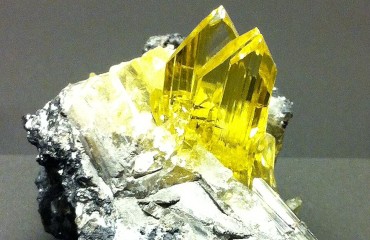


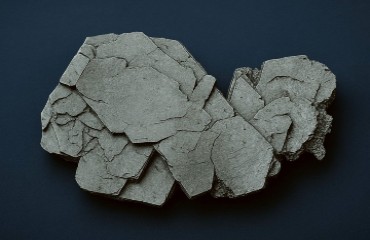


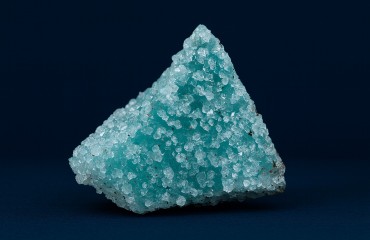
Morocco’s geological variety - Precambrian cobalt veins, Hercynian fluorite systems, Mesozoic lead–zinc replacements, and Cenozoic phosphate beds - has created an unparalleled range of mineral species and specimen types. From brilliant vanadinite in the Atlas to vivid erythrite in the Anti-Atlas, Moroccan minerals continue to captivate collectors and scientists alike. Few countries combine such geological complexity, historical depth, and aesthetic mineral diversity.