
Canada’s vast and varied geology has produced some of the world’s most remarkable mineral localities, from Arctic tundra deposits to ancient metamorphic terrains and volcanic coastlines. The country’s mineral diversity reflects its complex geological history – spanning billions of years of continental collisions, mountain-building, and volcanic activity.
Collectors and geologists alike have long been drawn to these sites for their natural beauty, scientific value, and historical significance. From the rare alkaline minerals of Mont Saint-Hilaire and the vibrant fluorite veins of St Lawrence to the zeolite-lined basalts of the Bay of Fundy, each locality tells a unique story of Earth’s processes and Canada’s rich mining heritage. The following list highlights some of the most celebrated Canadian mineral localities, renowned for their geological importance and the exceptional specimens they continue to yield.
For a Map of Mineral Locations in Canada click HERE
|
Mont Saint-Hilaire and the Poudrette Quarry, Montérégie, Quebec
Epididymite - Image Credit: Robert M. Lavinsky, CC-BY-SA-3.0 Mont Saint-Hilaire, in Quebec’s Monteregian Hills, is one of Canada’s most celebrated mineral localities, famous for its remarkable diversity of over 430 mineral species, of which more than 70 were first discovered there. Saint-Hilaire is one of a series of several hills stretching west to east. All are the remnants of a series of Cretaceous-age alkaline igneous intrusions caused by magma rising into the Earth's crust. The heat and pressure transformed the original sedimentary rock into metamorphic rocks, later exposed by erosion to become Mont Saint-Hilaire and its neighbouring hills. At the heart of the mountain lies a complex of nepheline syenite, which contains a wealth of rare and unusual silicates and oxides caused by metamorphism, including serandite, eudialyte, schizolite, hilairite, and pectolite. The northeast flank of Saint-Hilaire has been mined extensively since the 1960s for aggregates at a site known as Poudrette Quarry. As excavation progressed, the quarry soon became renowned for uncovering beautifully crystallised and scientifically important specimens, including the type minerals gaidonnayite, gaultite, steacyite, and rouvilleite. Between them, Mont Saint-Hilaire and the Poudrette Quarry remain icons of mineralogical discovery and a cornerstone of Canada’s geological heritage. |
|
Bancroft Area, Bancroft, Hastings County, Ontario
Eagles Nest Bancroft - Image Credit: Fridge Eater, CC BY-SA 4.0 Often called the 'Mineral Capital of Canada', the Bancroft area covers a broad region around the town of Bancroft rather than being a single, defined deposit. Situated within the Grenville Geological Province, it features an exceptional variety of rock types – mafic intrusions, marbles, gneisses, calcite veins, granite pegmatites, and nepheline syenites – creating a rich mosaic of geological environments. Due to this fragmentation, large-scale mining never developed beyond small mica and feldspar quarries and limited uranium exploration, but the diversity of rock types has produced an outstanding range of minerals scattered across the wider area. Nearly 200 species have been recorded, including several first described. Today, Bancroft is most famous for its enthusiastic group of rock collectors and the yearly Rockhound Gemboree, where local pegmatites produce beautiful crystals of fluorapatite, zircon, titanite, feldspar, sodalite, and amphiboles. |
|
Rapid Creek and Big Fish River, Yukon
Baricite - Image Credit: Robert M. Lavinsky, CC-BY-SA-3.0 Discovered during exploration in the 1970s, the Rapid Creek and Big Fish River localities in northern Yukon have become world-renowned for their phosphate minerals. These deposits occur in Cretaceous shale and sideritic ironstone concretions within the Richardson Mountains, forming under low-temperature hydrothermal conditions. The area is particularly famous for rare blue lazulite crystals along with augelite, vivianite, and wavellite. In addition, the location is host to several rare phosphate species for which it is the type location, including barićite, dondoellite, penikisite, and gormanite - specimens that rank among the world’s most unusual minerals. Access is limited to short Arctic summers and often requires helicopter transport, adding to the mystique of the site. |
|
Madoc and Marmora, Hastings County, Ontario
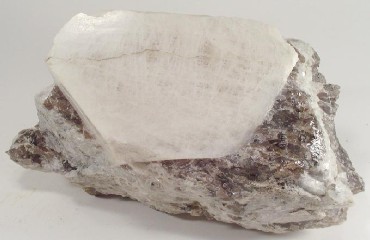
Madocite - Image Credit: James St. John, CC BY 2.0 The Madoc district of eastern Ontario has a long mining history dating back to the mid-1800s, when iron, zinc, and lead were extracted from metamorphosed skarn deposits. After the metallic deposits began to run out in the mid-20th century, operations turned to talc, although production has now also ceased. The talc occurs as hydrothermal replacement bodies in dolomitic marble. The largest zone, the Henderson deposit, was a steeply dipping, east-west trending sheet of white talc up to 20 m wide and 300 m long. Its metamorphic contact zone was rich in tremolite, tourmaline, and dravite. Even though the metal mining era is long past, collectors still prize historic specimens of sphalerite, magnetite, calcite, actinolite, talc, and fluorapatite. The Marmora area nearby played host to the Cordova Gold Mines. Discovered in 1890, mining took place intermittently until the early 1980s. The mines produced fine specimens of native gold as well as numerous metallic sulfides like marcasite, pyrite, chalcopyrite, and pyrrhotite. Madoc and Marmora remain classic localities illustrating Ontario’s early mining heritage and complex geology. |
|
Jeffrey Mine, Val-des-Sources, Estrie, Quebec
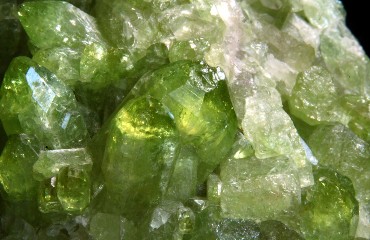
Vesuvianite - Image Credit: Lech Darski, CC BY-SA 4.0 The Jeffrey Mine, located in Quebec, was once the world's largest chrysotile asbestos producer and is famous for its extraordinary suite of colourful silicate and carbonate minerals. Mining began in 1879 as an open pit exploiting serpentinised ultramafic rocks of the Appalachian Ophiolite Belt. By the time the asbestos had run out in the early 2000s, the opencast mine had a diameter of 2 km and reached 350 m in depth, requiring the repeated relocation of the adjacent town. Underground exploration was deemed uneconomic due to the global fall in the demand for asbestos when its carcinogenic properties became known. Nevertheless, over more than a century of operation, the mine produced exquisite mineral specimens that are now treasured worldwide. Collectors prize its vivid green, yellow, and purple crystals of vesuvianite and grossular garnet, as well as clinochlore, diopside, and pectolite, all formed in metamorphosed skarn zones. |
|
Thunder Bay, Ontario
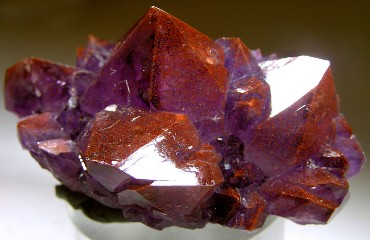
Quartz (Var: Amethyst) & Hematite - Image Credit: Robert M. Lavinsky, CC-BY-SA-3.0 Thunder Bay, on the north shore of Lake Superior, is Canada’s best-known source of amethyst. The deposits were discovered in the 1950s within Proterozoic volcanic rocks of the Keweenawan Supergroup, where silica-rich hydrothermal fluids filled fractures with quartz. The amethyst here is distinguished by its deep purple colour and hematite inclusions that give a distinctive red flash. Today, several small mines operate for gem and lapidary material, and Thunder Bay remains a major destination for collectors. Key minerals include amethyst, hematite, calcite, and goethite, often forming striking combinations in quartz-lined cavities. |
|
Francon Quarry, Montreal, Quebec
Dresserite - Image Credit: Leon Hupperichs , CC BY-SA 3.0 The Francon Quarry in the centre of Montreal is another classic locality of the Monteregian Hills, where alkaline igneous intrusions cut into the surrounding limestone. Operated for aggregate until the late 1980s, the site became famous for beautifully crystallised zeolites, carbonates, and phosphates. Overall, the site is known for more than 80 different minerals, as well as being the type locality for 10, including franconite, montroyalite, sabinaite, dresserite, and doyleite. Though collecting is no longer allowed, historical specimens from the site are prized for their diversity and sharp form. The quarry’s mineralogy reflects late-stage hydrothermal alteration of nepheline syenite, producing analcime, natrolite, apophyllite, gmelinite, and strontianite. Francon remains an important chapter in Canadian mineralogical history. |
|
St. Lawrence, Burin Peninsula, Newfoundland
Fluorite - Image Credit: Public Domain, CC0 1.0 St. Lawrence, on the Burin Peninsula of Newfoundland, earned the title 'Fluorite Capital of North America' during its mid-20th-century mining boom. Rich fluorite deposits were discovered in the 1930s and extracted for the steel industry until the 1970s. They originate from hydrothermal deposits, which cut through granitic host rocks. Mining eventually ceased due to excessive lung cancer rates among the miners, caused by radioactive radon gas released by the decay of trace radioactive elements present within the rocks. Though no longer readily available, the locality remains famous for large, vivid green and purple fluorite crystals often intergrown with galena, barite, and quartz. The town’s history is both industrial and tragic, making St. Lawrence a significant site in both mineralogy and Canadian social history. |
|
Tanco Mine, Bernic Lake, Manitoba
Beryl - Image Credit: Robert M. Lavinsky, CC-BY-SA-3.0 The Tanco Mine at Bernic Lake is one of the world’s premier rare-element pegmatite deposits, producing lithium, beryllium, caesium, and tantalum ores, discovered in 1930 and working since 1954. The pegmatite, intruded into Archean granite of the Bird River Belt, is zoned and exceptionally rich in rare minerals. To date, over 90 valid minerals have been reported, of which Tanco is the type locality for seven, including groatite, tancoite, and wodginite. Tanco remains a key source of caesium in the form of pollucite and has yielded outstanding specimens of spodumene, petalite, lepidolite, and tantalite-(Mn). As both a major industrial mine and a mineralogical treasure, it stands among Canada’s greatest geological localities, illustrating the economic and scientific value of pegmatite deposits. |
|
Cobalt, Timiskaming District, Ontario
Cobaltite - Image Credit: James St. John, CC BY 2.0 The historic Cobalt silver camp in northeastern Ontario is one of the most significant mining districts in Canadian history. Discovered in 1903 during railway construction, it sparked a silver rush that helped shape the development of northern Ontario. The veins occur in Archean and Proterozoic rocks and are composed of native silver and complex cobalt-nickel arsenides within calcite and quartz. The deposit is mineralogically very diverse, consisting of at least 150 valid minerals, and is a type location for 10 species. Although large-scale mining ended decades ago, Cobalt remains a classic mineral locality where collectors can still find native silver, skutterudite, safflorite, and nickeline. Its specimens and history symbolise the birth of Canada’s modern mining industry. |
|
Bay of Fundy, Nova Scotia and New Brunswick
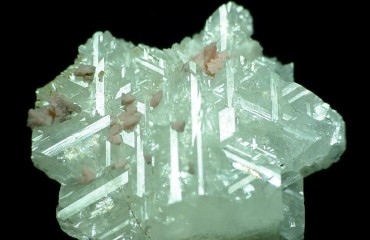
Chabazite - Image Credit: Robert M. Lavinsky, CC-BY-SA-3.0 The towering basalt cliffs along the Bay of Fundy, between Nova Scotia and New Brunswick, are world-famous for their spectacular zeolite mineralisation. Formed in the Triassic–Jurassic basalts of the Fundy Rift Valley, gas bubbles in the ancient lava flows were later filled by low-temperature hydrothermal fluids that deposited colourful zeolite minerals. Since the 19th century, the region has attracted geologists and collectors alike for its dramatic coastal exposures and richly mineralised cavities. Classic collecting sites such as Wasson’s Bluff, Partridge Island, and Cape D’Or yield superb specimens of stilbite, heulandite, analcime, chabazite, and natrolite – often lining geodes with brilliant orange, pink, and white crystal clusters that rank among the finest zeolites in North America. |
|
Nanisivik Mine, Qikiqtaaluk Region, Baffin Island, Nunavut Nansivik Ore - Image Credit: Mike Beauregard, CC BY 2.0 Located high in the Canadian Arctic, the Nanisivik Mine on Baffin Island operated from 1976 to 2002 as one of Canada’s northernmost lead-zinc mines. The deposit formed within Proterozoic dolostone and shale, where hydrothermal activity produced rich sulfide mineralization. Despite its remote location, Nanisivik is celebrated among mineral collectors for its fine crystallised galena, sphalerite, pyrite, and calcite specimens, often remarkably sharp and lustrous. The mine’s isolation and harsh environment make specimens from Nanisivik rare, and they stand as lasting reminders of Canada’s mining reach into the Arctic Circle. |
|
Diavik and Ekati Diamond Mines, Northwest Territories
Diavik Diamond Mine - Image Credit: Planet Labs, Inc., CC BY-SA 4.0 These two mines transformed Canada into a major diamond producer after their discovery in the 1990s. Situated near Lac de Gras, they exploit kimberlite pipes that intruded Archean basement rocks. The geology represents one of the most studied kimberlite fields in the world. The mines produce gem-quality diamonds alongside mantle xenoliths containing garnet, ilmenite, and chromite. Their discovery, led by geologists Chuck Fipke and Stewart Blusson, was a landmark moment in Canadian mineral exploration. Raw diamonds and accessory minerals from these mines are greatly prized by collectors. |
|
Mont Saint-Bruno and St Lawrence Columbium Mine, Oka, Quebec
Mont Saint-Bruno - Image Credit: Veillg1, CC BY-SA 4.0 These sites are smaller members of the wider Monteregian alkaline complex jointly with Mont Saint-Hilaire and the Francon Quarry but have produced their own unusual minerals from carbonatite and syenite dikes by a process of highly localised magmatic differentiation. The St. Lawrence Columbium Mine, in particular, is known for its niobium-bearing minerals such as pyrochlore, columbite, and ancylite. Although it closed in 1977, the operation was once one of the largest niobium mines in the world. It is likely that significant reserves of pyrochlore still remain underground, but the mine is unlikely to reopen until the price of niobium rises appreciably. Nevertheless, while rare, collectors greatly value the diversity of niobium and other rare earth minerals from these mineralogically exotic locations. |






From the zeolite-lined basalts of the Bay of Fundy to the rare-element pegmatites of Manitoba’s Tanco Mine and the Arctic outcrops of Nanisivik, Canada’s mineral localities showcase the immense geological diversity of a country shaped by billions of years of Earth’s history. Each site tells a distinct story – of ancient volcanoes, mountain-building, and the persistence of collectors and miners who revealed nature’s hidden artistry. Together, these localities not only highlight Canada’s scientific and economic contributions to mineralogy but also inspire ongoing exploration and appreciation of the minerals that connect people to the deep processes of the planet.